Common Background Verification Mistakes Companies Make
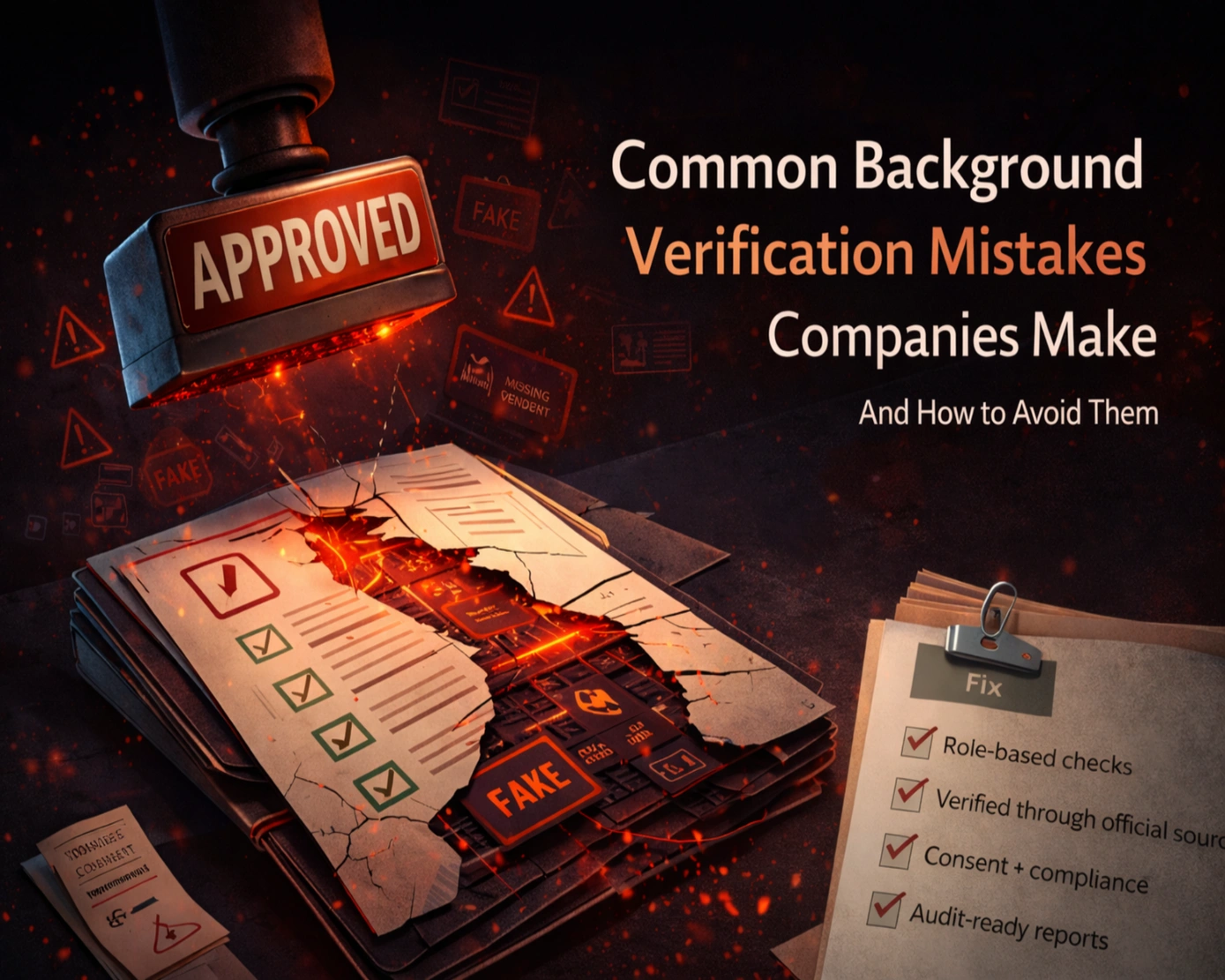
Hiring mistakes rarely happen because companies hire bad people intentionally.
They happen because verification processes are rushed, incomplete, or treated as a formality.
As organizations scale faster, onboard remote teams, and operate under tighter compliance expectations, background verification mistakes quietly create long-term legal, financial, and reputational risks.
Understanding these mistakes helps HR leaders build safer hiring systems.
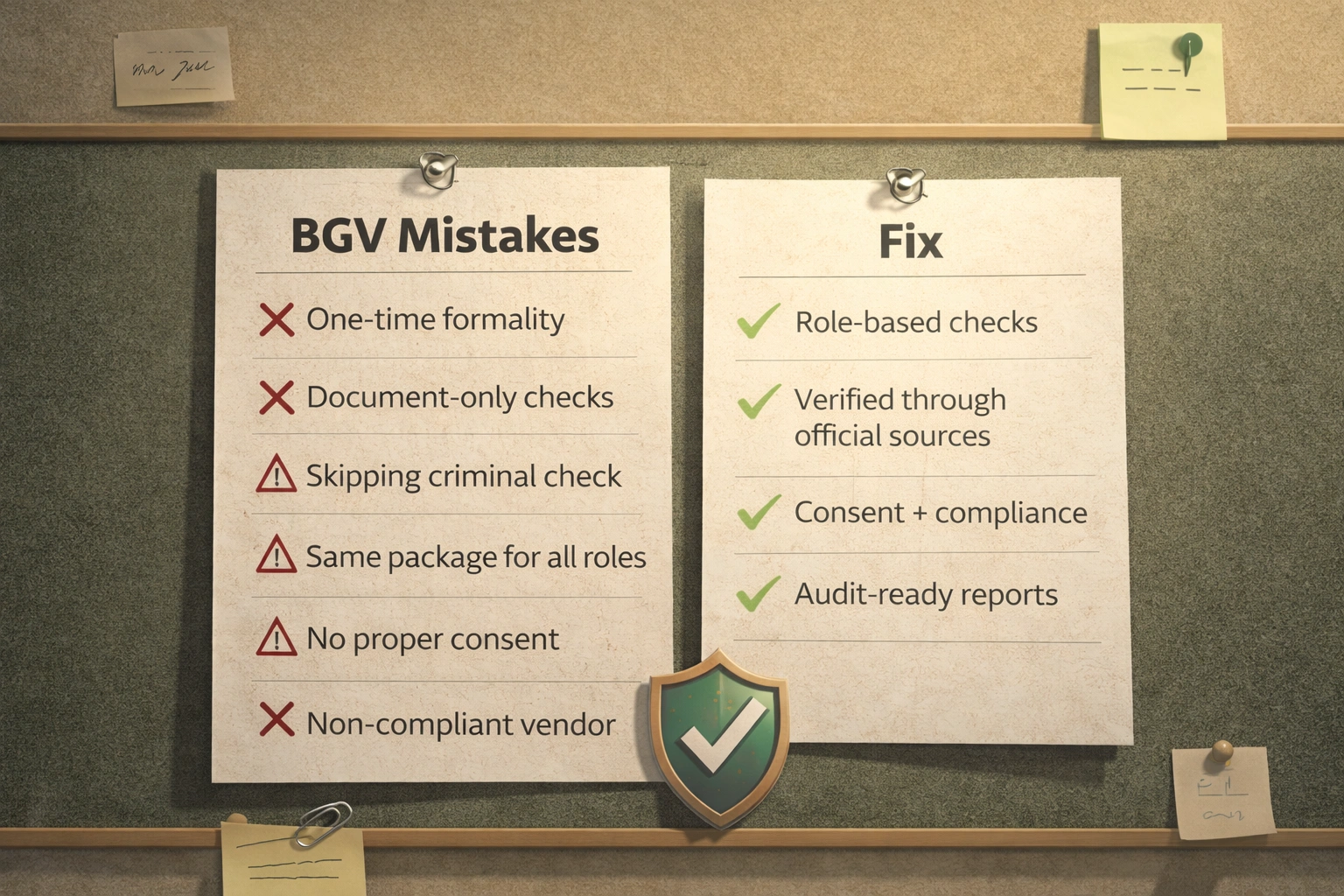
Treating BGV as a One-Time Formality
Many companies perform background verification only for initial hiring and never revisit it again. Over time, employees change roles, gain access to sensitive data, or move into leadership positions — but their risk profiles are never re-evaluated.
Periodic re-verification for sensitive roles ensures long-term safety and compliance.
Relying Only on Documents Provided by Candidates
Accepting photocopies of certificates and experience letters without institutional validation is one of the most common mistakes. Fraudulent documents can look genuine but carry serious long-term risks.
Always ensure verification is conducted through official sources, not just candidate submissions.
Skipping Criminal Checks to Save Time
Criminal record checks are often avoided to speed up onboarding. This creates serious workplace safety and compliance exposure — especially in customer-facing, logistics, BFSI, and healthcare roles.
Using the Same Verification Package for All Roles
Every role carries a different level of risk. Applying a uniform BGV checklist for all positions either increases cost unnecessarily or leaves critical risk areas uncovered.
Role-based verification frameworks provide better protection and cost control.
Not Taking Candidate Consent Properly
Skipping formal consent or using outdated consent formats can lead to data protection compliance violations under India’s DPDP regulations.
Working With Non-Compliant Vendors
Choosing verification partners based only on price without checking compliance, data security, and audit readiness can expose organizations to regulatory trouble.
How CaseXpert Helps Avoid These Risks
CaseXpert provides compliance-aligned, role-based, and technology-driven background verification frameworks with PAN-India coverage and real-time tracking.
Final Thought
Strong hiring systems are built not by speed alone — but by structured, compliant verification processes that protect your organization from silent risks.
Leave a comments