The Future of Background Verification in India: Trends HR Leaders Should Watch
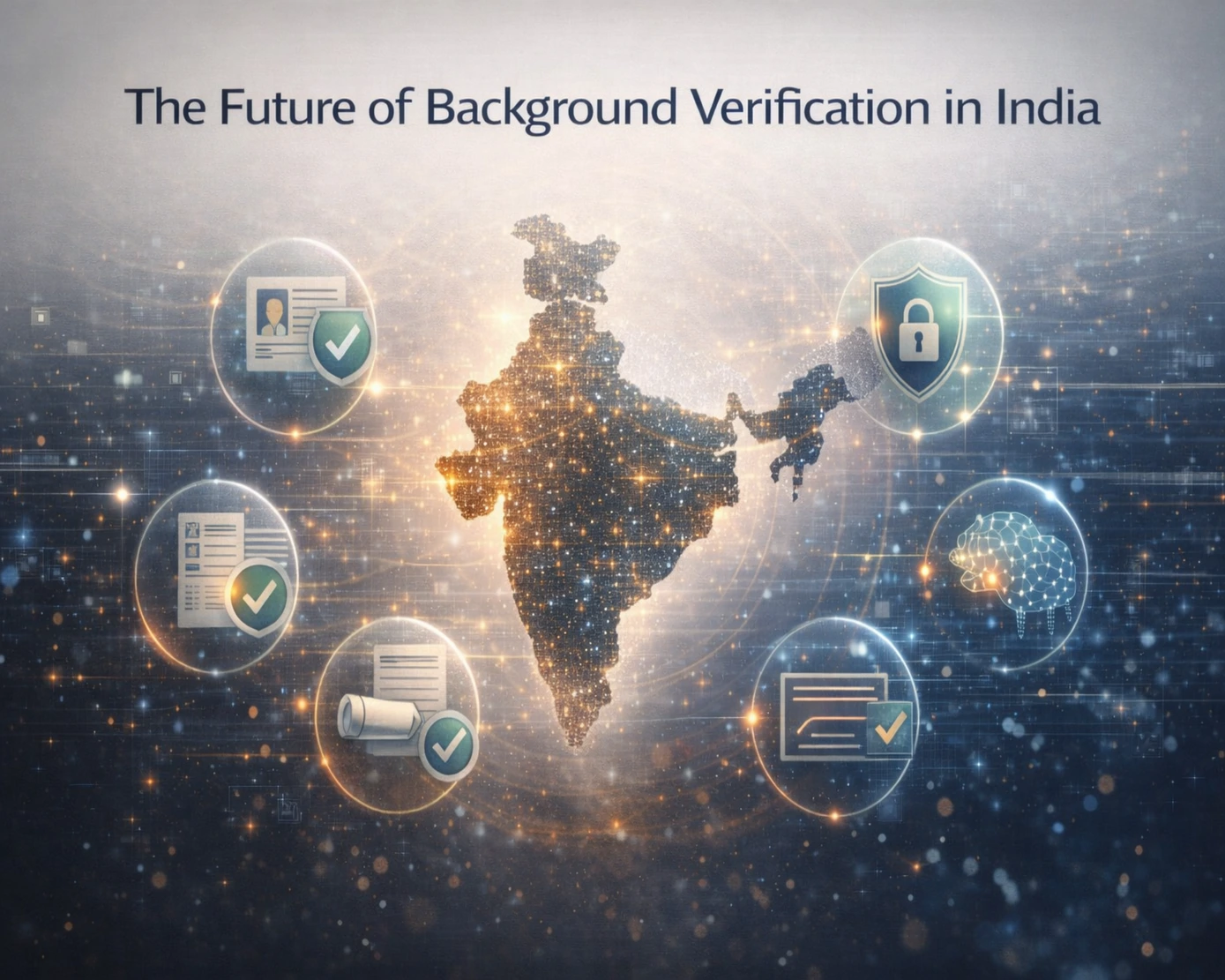
Background Verification Is Evolving Rapidly
Background verification in India is no longer a static process limited to document checks and phone calls. As hiring models evolve, regulations tighten, and technology advances, verification practices are undergoing a significant transformation. HR leaders and founders who understand these changes early will be better positioned to manage risk, maintain compliance, and scale confidently.
The future of background verification is shaped by speed, accuracy, data security, and the growing expectation of transparency from both candidates and regulators.
Increased Adoption of Digital-First Verification
Digital verification is becoming the default rather than the exception. Government databases, institutional portals, and API-driven validations are reducing dependency on manual processes. This shift allows faster turnaround times and more consistent results, especially for organizations hiring at scale or across multiple locations.
As digital infrastructure improves in India, verification processes will become more standardized, predictable, and auditable.
Greater Focus on Data Privacy and Compliance
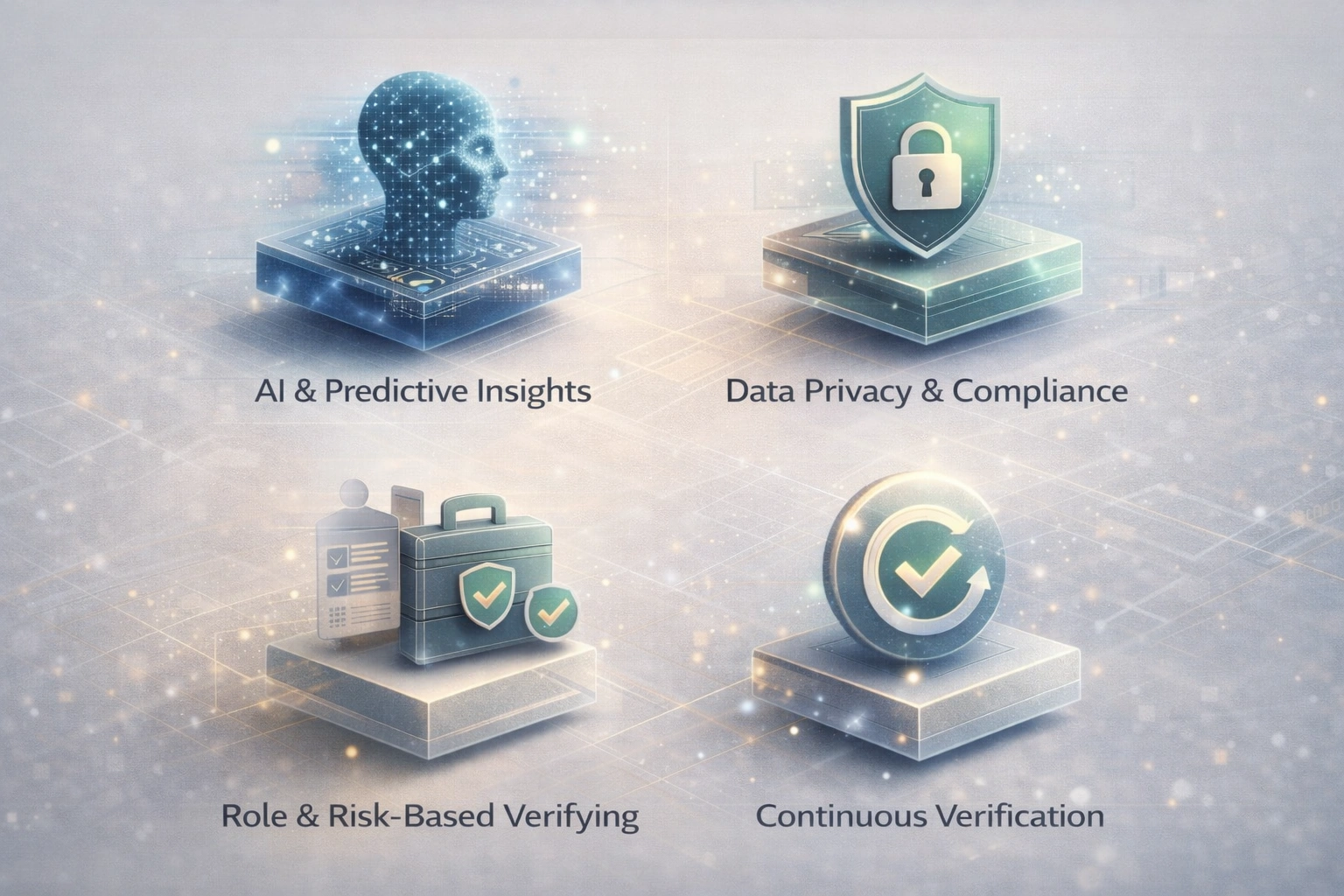
With the enforcement of the Digital Personal Data Protection (DPDP) Act, background verification will increasingly be viewed through the lens of data governance. Consent management, secure data storage, controlled access, and defined retention policies will become central to verification workflows.
Companies will be expected to demonstrate not just that verification was conducted, but that candidate data was handled responsibly and lawfully throughout the process.
Role-Based and Risk-Based Verification Models
The future of BGV lies in smarter, more targeted verification. Rather than applying uniform checks to all roles, organizations are moving toward role-based and risk-based models. This approach aligns verification depth with access level, responsibility, and regulatory exposure.
HR leaders will increasingly collaborate with legal and security teams to define verification frameworks that reflect real business risk.
AI and Predictive Risk Insights
Artificial intelligence is beginning to play a larger role in identifying patterns, inconsistencies, and anomalies in candidate data. While human judgment remains critical, AI-driven insights help flag potential risks earlier and more accurately.
Over time, predictive risk indicators may help organizations proactively refine hiring criteria and verification thresholds based on historical data.
Continuous and Post-Hire Verification
As roles evolve and employees gain greater access, organizations are recognizing the need for ongoing verification. Periodic checks for sensitive roles, leadership positions, and compliance-critical functions will become more common.
Background verification will shift from a one-time hiring step to a continuous risk management practice.
Final Thought
The future of background verification in India is defined by intelligence, accountability, and trust. Companies that embrace digital tools, prioritize compliance, and adopt role-based verification frameworks will be better equipped to manage hiring risks in a rapidly changing workforce.
For HR leaders, recruiters, and founders, staying ahead of these trends is not optional — it is essential for building resilient, compliant, and future-ready organizations
Leave a comments