AI in Hiring: Can Background Verification Be Fully Automated in 2026
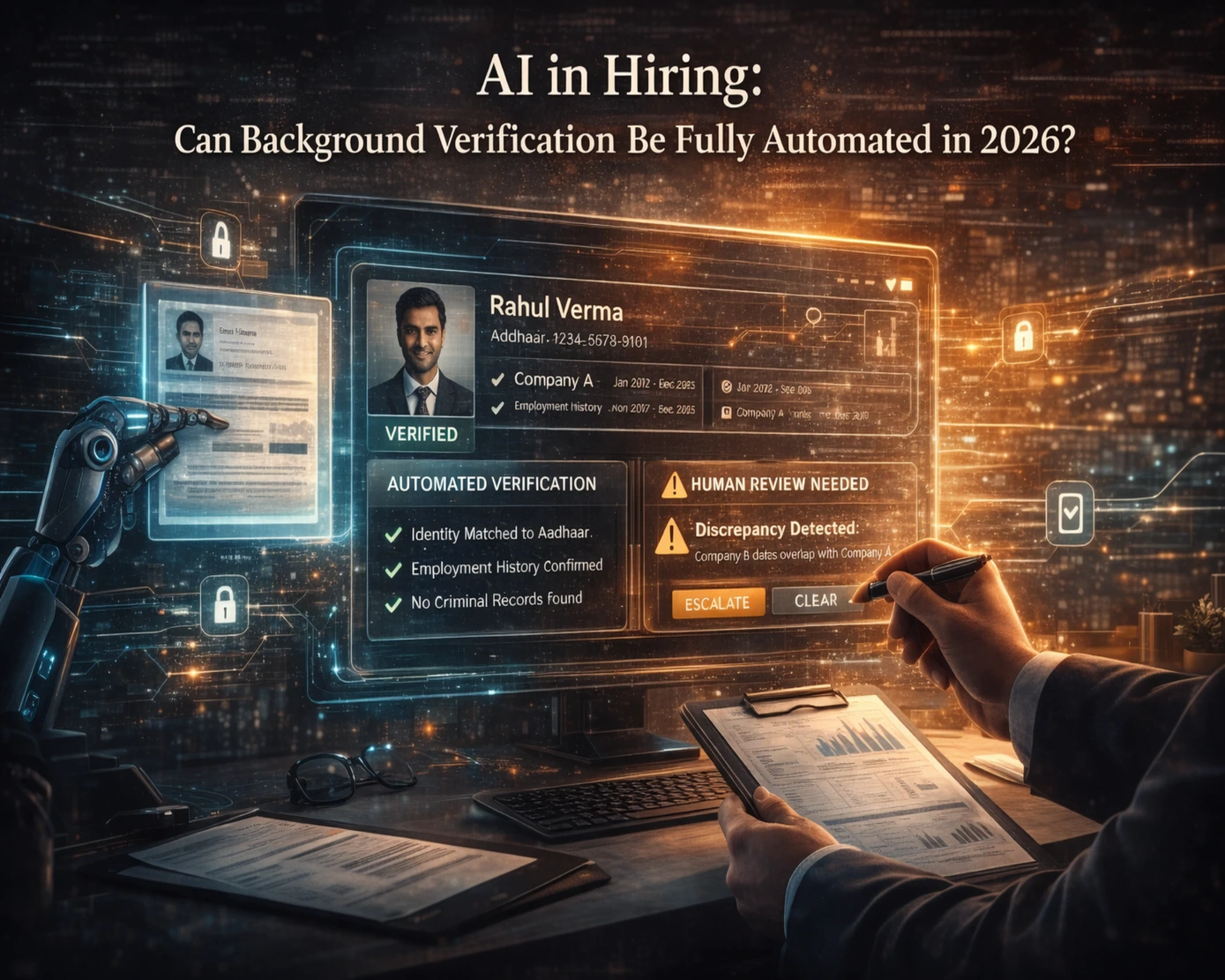
Why AI in Hiring Is Under Serious Scrutiny
By 2026, artificial intelligence is deeply embedded in hiring workflows. Resume screening, interview scheduling, skill assessments, and even behavioral analysis are now partially automated. As a result, many HR leaders and founders are asking a critical question — can background verification also be fully automated using AI?
The interest is understandable. Faster hiring, lower operational cost, and reduced manual effort are attractive benefits. However, background verification operates at the intersection of risk, compliance, and legal accountability, making blind automation a serious concern.
What AI Can Reliably Automate in Background Verification
AI has significantly improved efficiency in specific areas of background verification. Document analysis, data matching, and pattern detection are now far more accurate than manual review alone.
AI-powered systems can:
-
Scan and validate documents using OCR
-
Detect inconsistencies in names, dates, and formats
-
Flag overlapping employment timelines
-
Identify suspicious patterns across resumes and records
-
Automate status tracking and report generation
These capabilities reduce human error and speed up verification cycles — especially in high-volume or remote hiring.
Where Full Automation Breaks Down
Despite technological advances, background verification cannot be fully automated in 2026 — and attempting to do so creates risk.
Employment verification often requires contextual judgment. A previous employer’s response, role responsibilities, reason for exit, or organizational restructuring cannot be accurately interpreted by AI alone. Education verification may involve institutions with inconsistent records, legacy systems, or manual confirmation processes.
Criminal record interpretation is another sensitive area. Legal context, case status, jurisdiction differences, and relevance to role risk require human oversight to avoid unfair or non-compliant decisions.
AI Lacks Accountability — Companies Do Not
One of the biggest limitations of AI is accountability. If an automated system clears a fraudulent candidate or wrongly flags a genuine one, responsibility does not sit with the algorithm — it sits with the employer.
In 2026, regulators, courts, and clients expect human oversight in high-impact decisions. Fully automated background verification without review creates defensibility gaps during audits, disputes, or investigations.
This is especially critical under India’s DPDP framework, where data handling, fairness, and transparency are closely monitored.
The Risk of Over-Reliance on AI
Organizations that rely exclusively on AI for verification risk false confidence. AI systems work on available data — but fraud often hides in what is missing, not what is visible.
Shell companies, fabricated experience letters, informal employment, and undisclosed parallel work frequently escape automated detection. Human-led verification fills these gaps through contextual analysis and escalation judgment.
AI accelerates verification — it does not replace responsibility.
The Right Model in 2026: AI + Human Verification
The most effective background verification frameworks in 2026 use AI as an enabler, not a decision-maker.
AI handles:
-
Speed
-
Scale
-
Pattern recognition
-
Workflow automation
Humans handle:
-
Risk interpretation
-
Discrepancy resolution
-
Fairness and policy alignment
-
Legal and compliance judgment
This hybrid model delivers both efficiency and defensibility — which is what leadership, regulators, and clients expect.
What HR Leaders Should Ask Before Adopting AI-Based BGV
Before adopting AI-heavy verification solutions, HR and leadership teams should ask:
-
Where is human review mandatory?
-
How are false positives and negatives handled?
-
Is decision logic transparent and auditable?
-
Does the system comply with DPDP requirements?
-
Who is accountable when something goes wrong?
Vendors unable to answer these clearly are introducing risk, not reducing it.
Final Thought
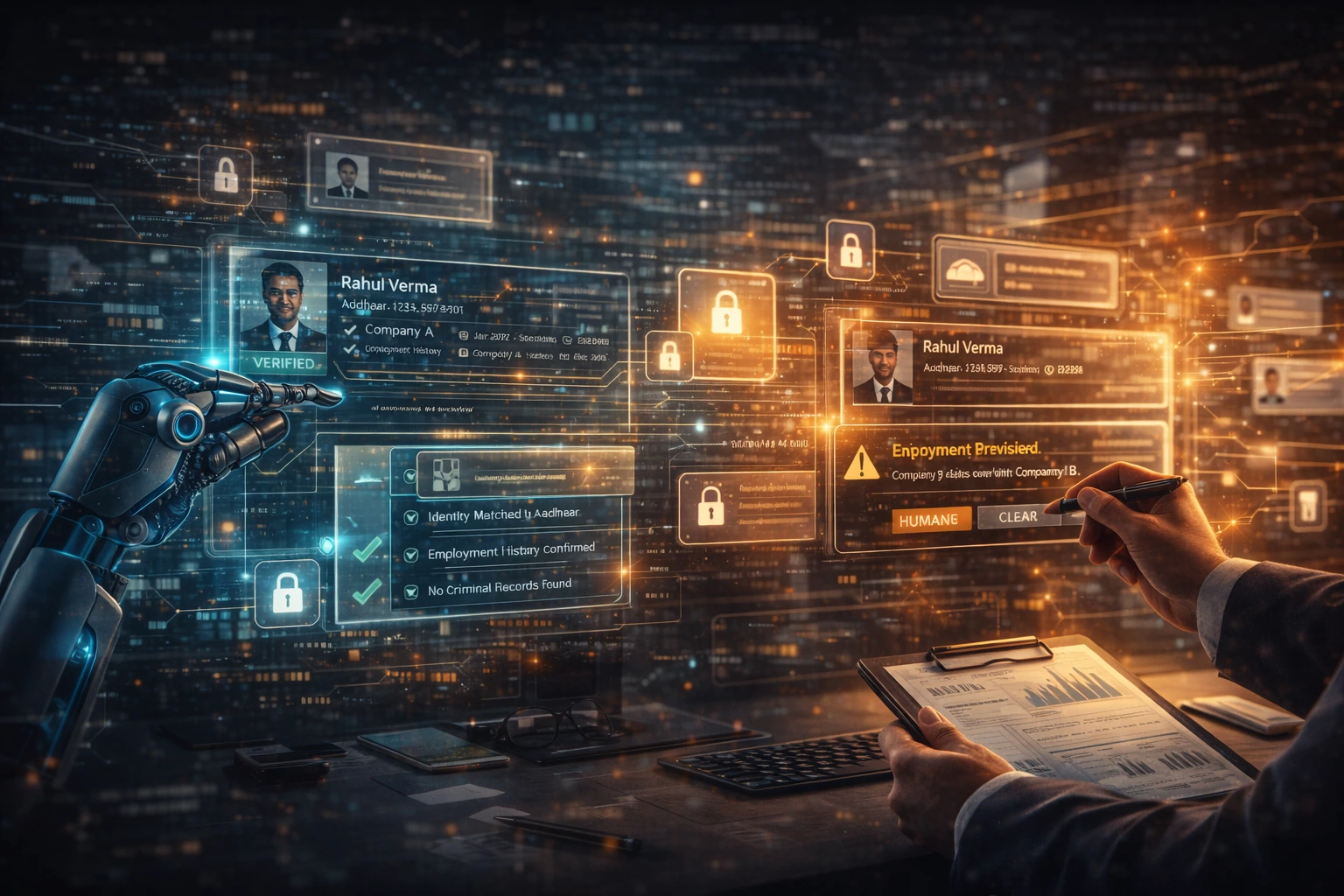
In 2026, AI has transformed background verification — but it has not replaced human responsibility.
Companies that chase full automation risk speed at the cost of safety. Those that combine AI efficiency with professional human verification hire faster and safer.
The future of background verification is not AI alone —
it is AI with accountability.
Leave a comments