What Happens During a Background Verification Audit
Why Background Verification Audits Happen
Background verification audits are usually triggered when organizations face regulatory reviews, client due diligence, internal governance checks, or compliance assessments. In many cases, audits are not about finding faults but about confirming that hiring processes meet expected standards of diligence, transparency, and legality.
For HR leaders and founders, an audit reflects how seriously the organization treats hiring risk. Background verification records often form a key part of this evaluation.
Reviewing Consent and Data Handling Practices
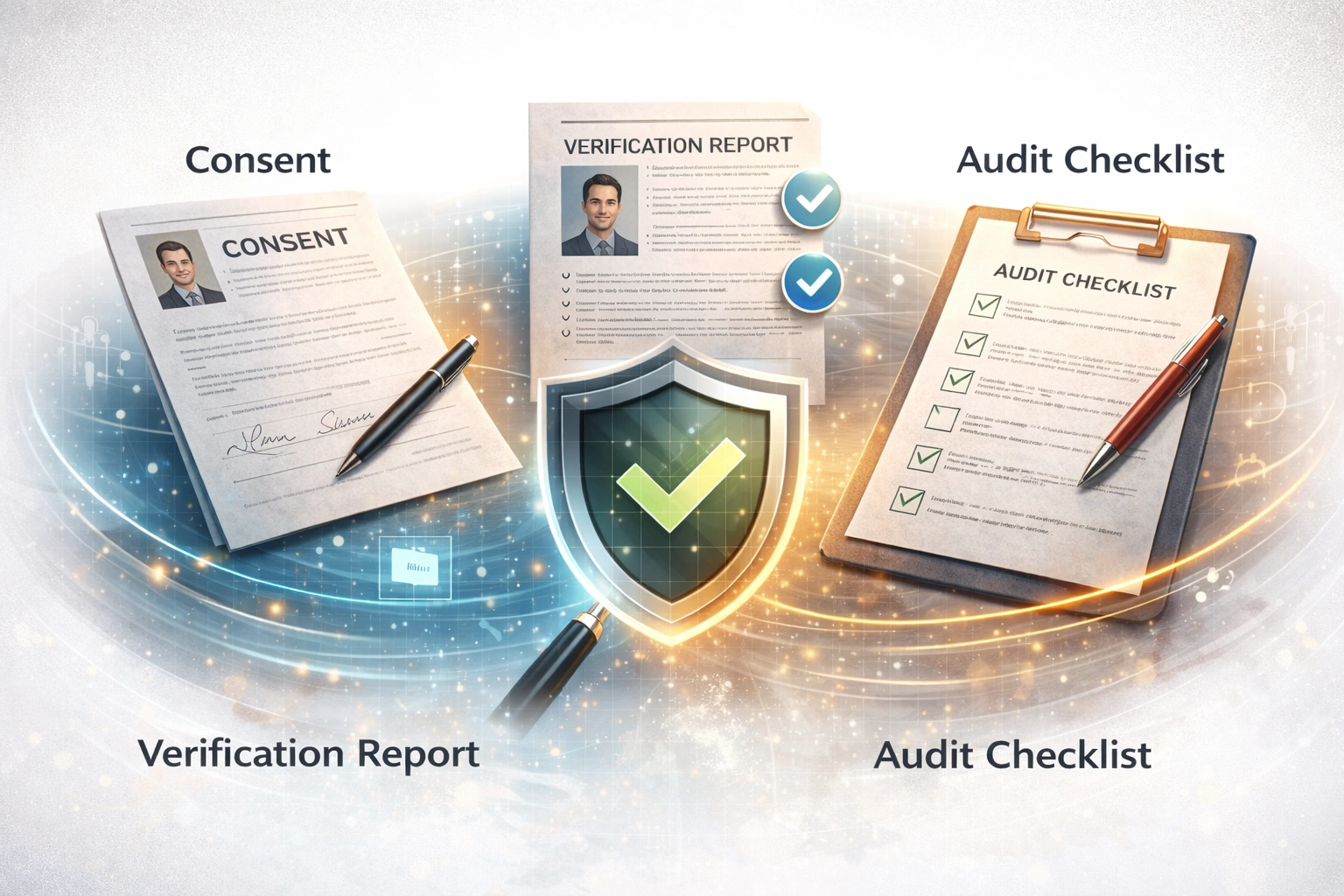
One of the first areas auditors examine is how candidate consent is collected and stored. Audits assess whether candidates were informed about verification scope, whether consent was obtained before checks began, and whether data handling aligns with applicable data protection laws.
Improper consent or weak data governance practices can expose organizations to compliance risk, even if verification itself was conducted correctly.
Validation of Verification Scope and Coverage
Auditors review whether the organization’s verification framework aligns with role responsibilities and industry expectations. This includes checking which verification components were applied — identity, education, employment, criminal checks, or role-specific screenings.
Gaps between role sensitivity and verification depth often surface during audits, especially when one-size-fits-all approaches are used.
Accuracy and Traceability of Reports
Audit teams focus heavily on documentation quality. Verification reports must be clear, complete, and traceable to authoritative sources. Auditors look for evidence that findings were verified through legitimate channels and that discrepancies were addressed responsibly.
Incomplete reports, unclear status labels, or missing supporting evidence weaken audit outcomes and raise governance concerns.
Handling of Discrepancies and Decision Records
Auditors also assess how organizations respond to verification findings. This includes reviewing records of candidate clarifications, risk assessments, and final hiring decisions.
Clear documentation of how discrepancies were evaluated and resolved demonstrates fairness, consistency, and defensible decision-making — all critical from a compliance perspective.
Role of Professional Verification Partners in Audits
Organizations that partner with professional background verification providers are generally better prepared for audits. Structured workflows, standardized reports, and audit-ready documentation reduce last-minute scrambling and uncertainty.
Professional partners also help HR teams align verification practices with evolving regulatory and client expectations.
Preparing HR Teams for Audit Readiness
Audit readiness is not a one-time exercise. It requires consistent processes, clear policies, and disciplined documentation. HR teams that treat background verification as part of governance rather than an administrative task are better positioned to handle audits confidently.
Periodic internal reviews of verification practices help identify gaps before external audits occur.
Final Thought
A background verification audit is a reflection of an organization’s hiring discipline. Companies that maintain structured, compliant, and well-documented verification processes not only pass audits more smoothly but also demonstrate strong governance and leadership accountability. Background verification, when done right, becomes an asset during audits — not a liability
Leave a comments