How Background Verification Helps Companies Meet Client Due Diligence Requirements

Client Due Diligence Goes Beyond Contracts
Client due diligence is no longer limited to financial checks or service-level agreements. Today, clients — especially large enterprises, global firms, and regulated organizations — closely evaluate how vendors hire and manage their workforce. People risk has become a key component of vendor risk assessment.
Background verification plays a central role in this evaluation. Clients want assurance that individuals working on their projects are verified, compliant, and trustworthy.
Why Clients Care About Hiring Practices
Clients entrust companies with sensitive information, systems, customers, and brand reputation. Any misconduct, data breach, or compliance failure caused by an unverified employee reflects directly on the client.
As a result, clients increasingly expect vendors to demonstrate structured background verification practices. This expectation applies across industries such as IT services, BFSI, healthcare, logistics, and staffing.
Verification as Evidence of Due Diligence
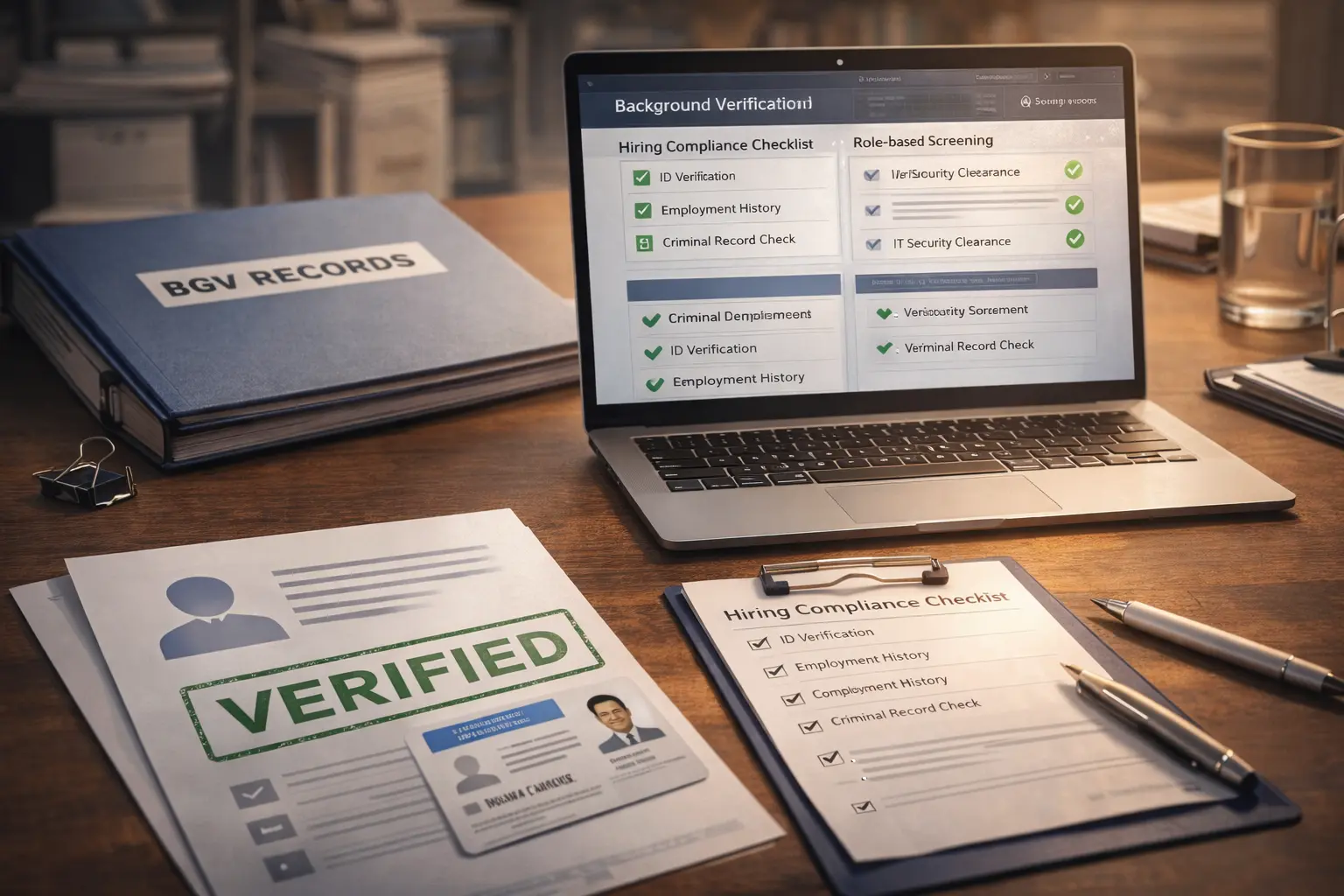
During client audits or onboarding assessments, companies are often asked to share hiring and verification policies. Background verification reports, consent records, and role-based screening frameworks serve as concrete evidence that due diligence is being exercised.
Organizations that can produce clear documentation are viewed as lower-risk partners and are more likely to pass vendor assessments smoothly.
Supporting Enterprise and Global Client Requirements
Enterprise and global clients often operate under strict compliance frameworks. They expect vendors to align with similar standards, including data protection, employee screening, and risk management.
Background verification helps bridge this gap. It demonstrates that hiring processes meet international expectations and that employees accessing client systems or data have been properly vetted.
Reducing Client Risk and Escalations
Many client escalations originate from employee-related issues — access misuse, misconduct, or operational errors. Background verification reduces the probability of such incidents by ensuring that employees are verified before being assigned to client work.
This proactive approach strengthens client relationships and minimizes disruptions caused by preventable hiring failures.
Building Long-Term Client Trust
Trust is built over time through consistent performance and responsible governance. Companies that integrate background verification into their client delivery model signal maturity and reliability.
Over the long term, this trust supports renewals, expansions, and strategic partnerships — especially with risk-conscious clients.
Final Thought
Client due diligence is ultimately about trust. Background verification provides the assurance clients seek — that the people representing your organization are credible, compliant, and accountable.
Companies that treat verification as part of their client risk strategy position themselves as dependable partners in competitive and regulated markets
Leave a comments