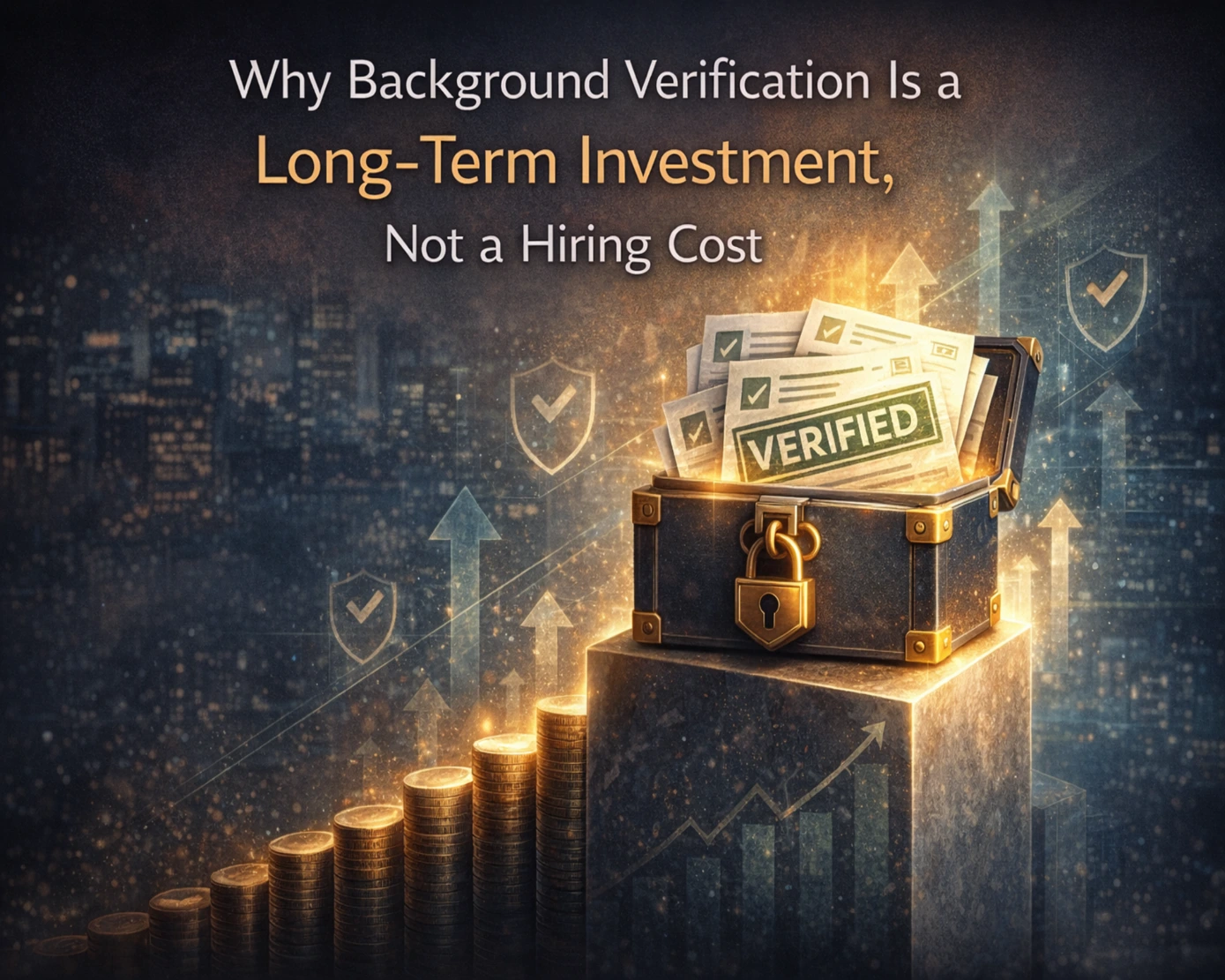
Why Background Verification Is a Long-Term Investment, Not a Hiring Cost
Rethinking the Cost of Hiring
Many organizations still view background verification as an added hiring expense rather than a strategic necessity. When budgets are tight or hiring volumes increase, verification is often one of the first areas questioned. This perspective, however, focuses only on immediate cost and ignores long-term consequences.
Hiring is not a transactional activity. Every employee brings ongoing influence on operations, culture, compliance, and brand reputation. Background verification protects that long-term value by ensuring the foundation of each hire is solid.
The Hidden Cost of a Wrong Hire
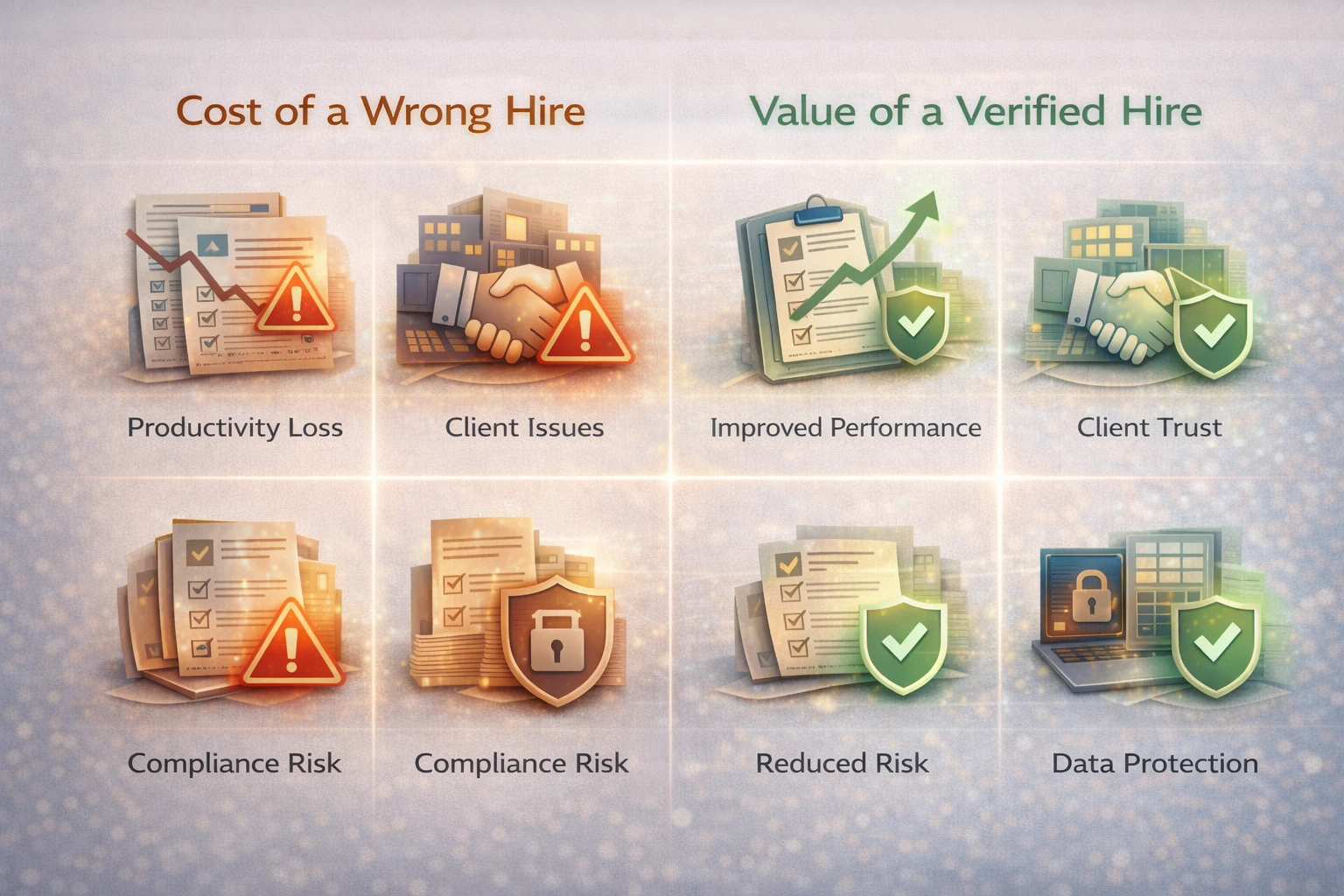
The real cost of a wrong hire rarely appears on a balance sheet immediately. It shows up later as productivity loss, client dissatisfaction, internal disruption, or compliance exposure. In some cases, it escalates into legal disputes, data breaches, or reputational damage that takes years to repair.
Compared to these risks, the cost of background verification is marginal. One verified hire can prevent losses that far exceed the total annual verification budget for many organizations.
Protecting Business Continuity and Growth
As companies grow, they rely heavily on people to execute strategy, manage customers, and safeguard systems. Unverified employees increase uncertainty in these critical areas. Background verification reduces this uncertainty by ensuring that individuals in key roles are qualified, accountable, and trustworthy.
For leadership teams, this translates into smoother scaling, fewer internal disruptions, and greater confidence in delegation and decision-making.
Compliance and Risk Management Benefits
Indian companies operate under increasing regulatory scrutiny. Data protection laws, workplace safety regulations, and industry-specific compliance frameworks all require employers to demonstrate due diligence in hiring.
Background verification creates documented evidence of responsible hiring practices. Over time, this documentation becomes a valuable compliance asset — supporting audits, client due diligence, and legal defense if disputes arise.
Long-Term Impact on Company Culture
Employees notice how organizations hire. When verification is taken seriously, it signals that integrity and accountability matter. This strengthens internal trust and reinforces ethical standards across teams.
Conversely, repeated hiring mistakes due to poor verification erode confidence in leadership and create cultural instability. Background verification supports long-term cultural health by setting clear expectations from the outset.
Viewing Verification as Business Insurance
The most effective investments are those that prevent loss rather than generate immediate visible returns. Background verification functions much like insurance — it protects against risks that may never materialize precisely because safeguards were in place.
Organizations that understand this shift from cost to investment approach verification with greater consistency and maturity.
Final Thought
Background verification is not an operational expense to minimize. It is a long-term investment in safety, compliance, trust, and business continuity. Companies that treat verification as part of their risk management strategy build stronger teams, avoid costly mistakes, and grow with confidence
Leave a comments