How Background Verification Supports Remote and Hybrid Hiring in India
The Shift to Remote and Hybrid Work
Remote and hybrid work models have permanently changed how companies hire in India. Teams are no longer limited to one city, and onboarding often happens without any physical interaction. While this flexibility has expanded access to talent, it has also introduced new hiring risks. When interviews, documentation, and onboarding are entirely digital, the margin for misrepresentation increases.
Background verification becomes a critical control in this environment. It allows organizations to validate candidates independently, even when HR teams and employees may never meet in person.
Reduced Visibility Increases Hiring Risk
In traditional office-based hiring, informal checks often occurred naturally — face-to-face interactions, office visits, and local references helped build confidence. Remote hiring removes these layers of visibility. Employers rely heavily on resumes, video interviews, and digital documents, all of which can be manipulated.
Background verification compensates for this lack of physical visibility by confirming identity, employment history, education, and address through verified sources. It ensures that remote employees granted system access and responsibilities are genuinely qualified and trustworthy.
Verifying Identity and Location in Distributed Teams
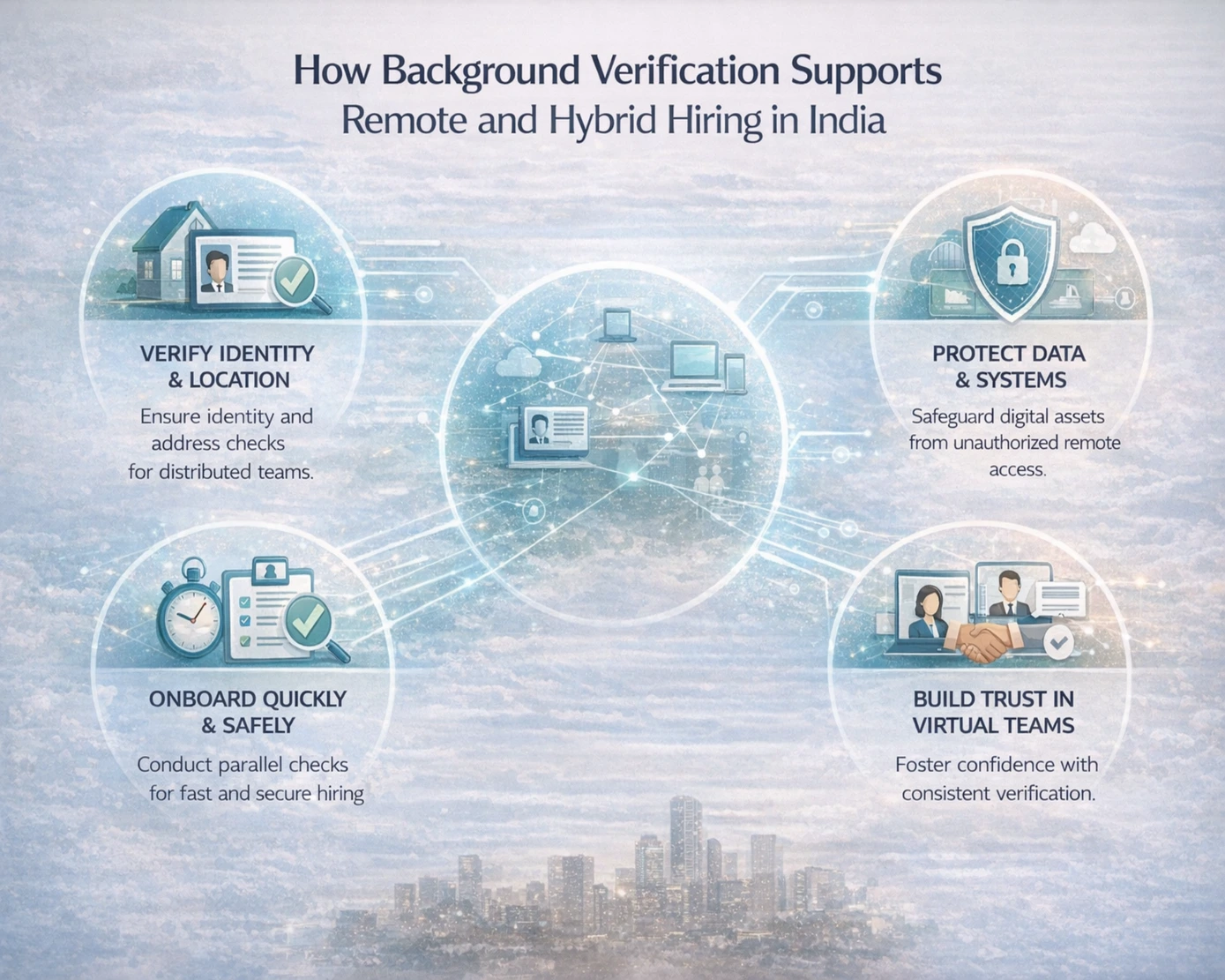
Remote teams often operate across cities, states, or even countries. Verifying identity and residential details becomes essential for traceability, compliance, and emergency accountability. Address verification and government ID validation help organizations establish a reliable record of where employees are based, even when they work remotely.
This is especially important for companies handling sensitive customer data, financial transactions, or regulated services, where accountability cannot be compromised.
Protecting Data and Systems in Remote Environments
Remote employees frequently access internal systems, customer data, and proprietary tools from outside the corporate network. This increases the risk of data misuse, unauthorized access, and security breaches.
Background verification reduces this risk by ensuring that individuals with system access have been properly vetted. Employment verification, criminal checks, and role-based screening help organizations protect their digital assets and intellectual property in remote work setups.
Supporting Faster and Safer Remote Onboarding
Remote hiring often demands speed. Projects move quickly, and teams need talent onboarded without delays. Professional background verification services enable parallel verification, allowing companies to onboard employees provisionally while maintaining oversight.
Technology-enabled verification workflows, real-time status tracking, and structured reporting allow HR teams to manage remote hiring efficiently without sacrificing due diligence.
Building Trust in a Virtual Workplace
Trust is harder to build when teams are not co-located. Employees need confidence that their colleagues are credible, qualified, and accountable. Background verification reinforces this trust by ensuring consistent hiring standards across locations and work models.
For leadership, it also provides assurance that remote growth is supported by strong governance and risk controls.

Final Thought
Remote and hybrid hiring offer flexibility and scale, but they also demand stronger safeguards. Background verification provides the structure, confidence, and accountability needed to hire safely in distributed work environments. Indian companies that embed verification into remote hiring frameworks protect their operations, their data, and their people — regardless of where teams are located
Leave a comments