BGV vs Reference Check – Understanding the Real Difference in Hiring
Hiring decisions are often made on the basis of resumes, interviews, and references. While these steps provide a surface-level understanding of a candidate, they do not fully address the risks that modern organizations face — data security, regulatory compliance, workplace safety, and brand reputation.
This is where background verification and reference checks come into play. Although these two terms are often used interchangeably, they serve very different purposes and address different layers of hiring risk.
Understanding the difference between them helps HR teams design safer, more reliable recruitment processes.
What Background Verification Covers
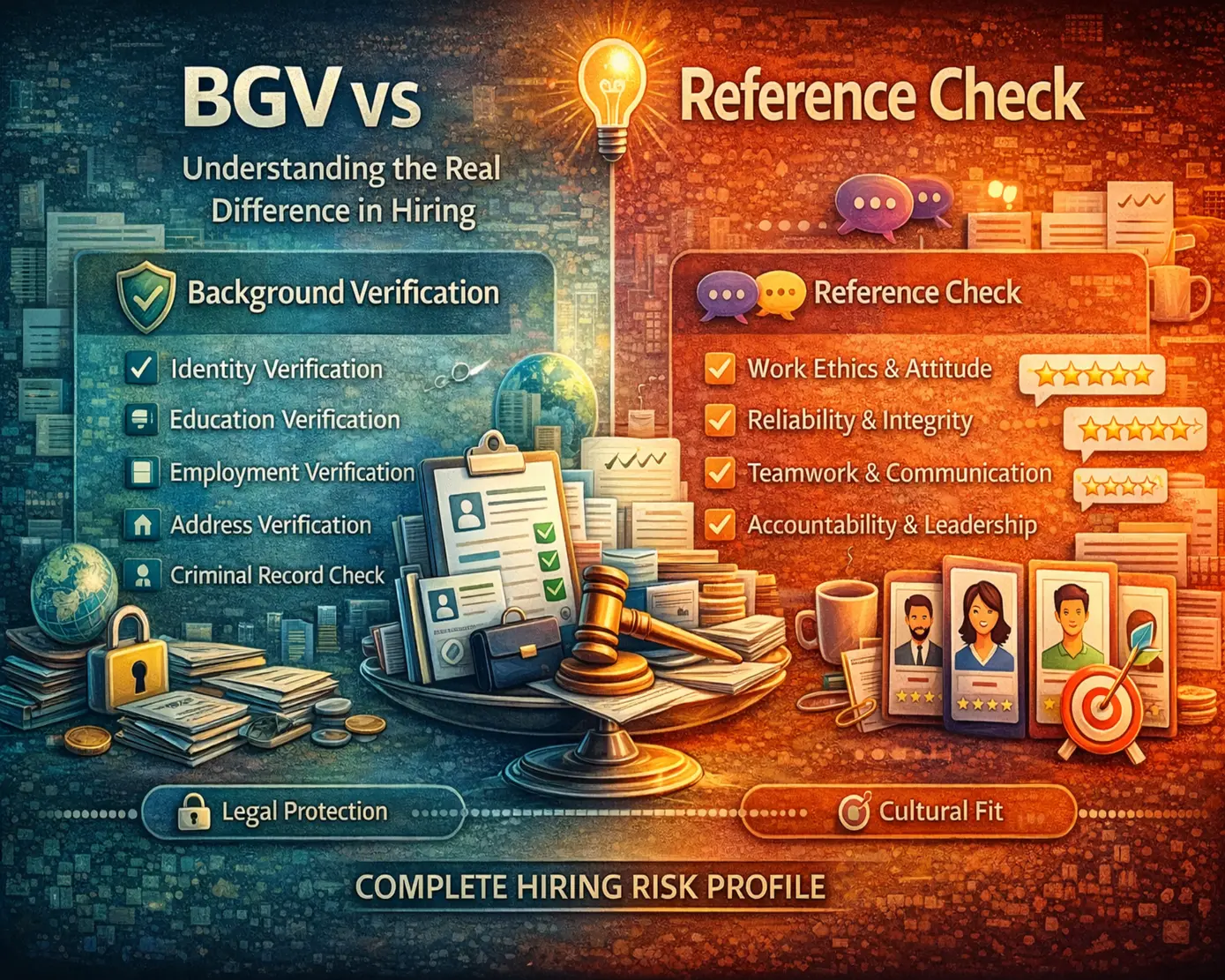
Background Verification is a structured, documented, and compliance-driven process. It focuses on validating factual information about a candidate through official records, institutions, and legal databases.
BGV confirms whether:
-
The identity documents are genuine
-
Educational qualifications are legitimate
-
Employment history is accurate
-
Residential information is authentic
-
Criminal records exist or not
It is objective, evidence-based, and audit-ready. BGV protects organizations from legal exposure, compliance penalties, and operational risks.
What Reference Checks Actually Reveal
Reference checks, on the other hand, are behavioural assessments. They rely on human feedback from previous reporting managers, colleagues, or professional contacts.
Reference conversations reveal:
-
Work ethics and attitude
-
Reliability and integrity
-
Team behavior and communication style
-
Leadership qualities and accountability
Reference checks are subjective but extremely valuable for understanding cultural fit and long-term employee behavior.
Why One Cannot Replace the Other
Many organizations make the mistake of relying only on references to judge a candidate’s credibility. However, references cannot verify official records, criminal history, or legal standing. Similarly, BGV cannot fully capture work behaviour and personality traits.
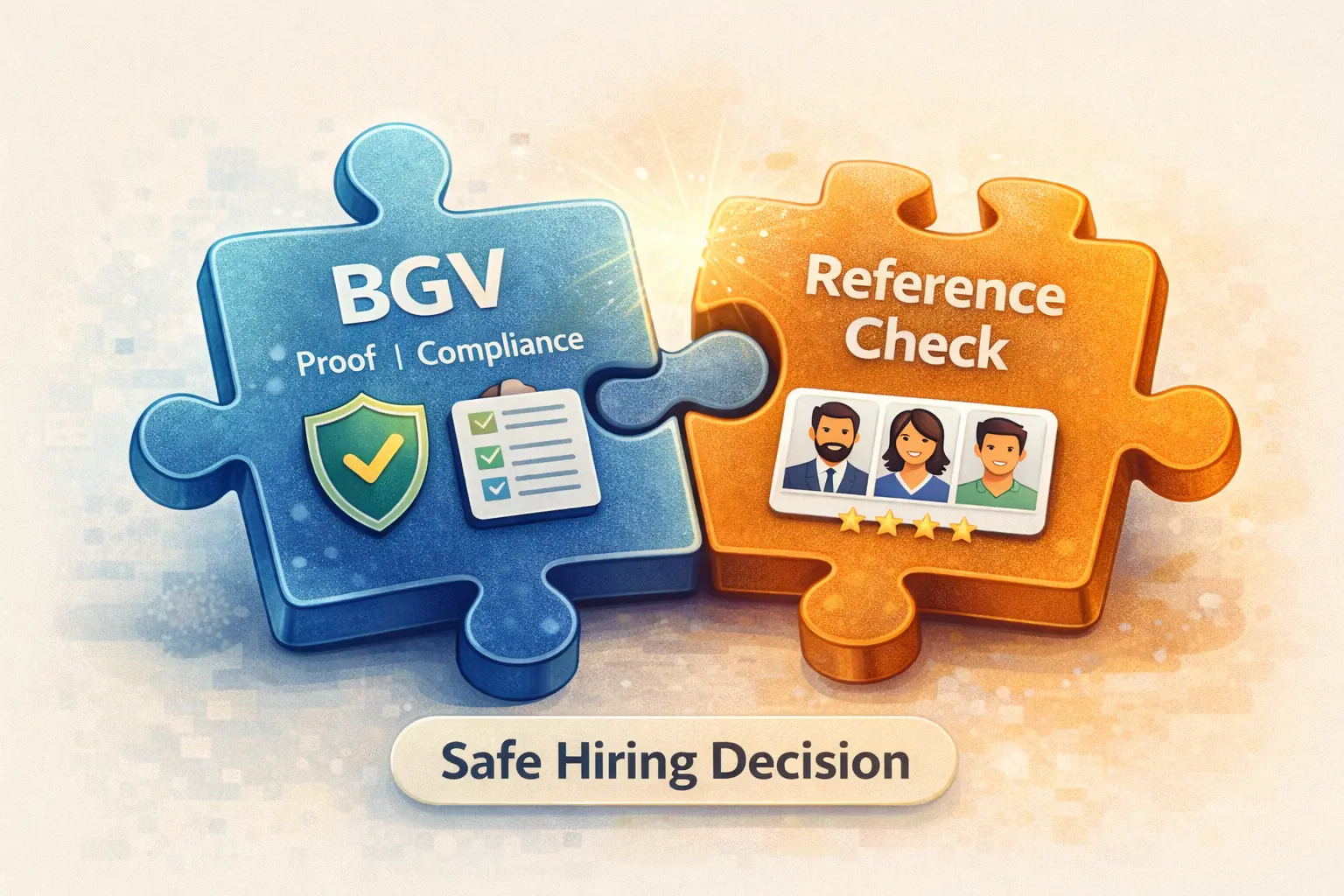
Together, BGV and reference checks create a complete hiring risk profile — one protects the organization legally, the other protects it culturally.
How Modern Companies Use Both
High-performing organizations treat background verification as a compliance foundation and reference checks as a behavioural filter. Sensitive roles often require deeper BGV checks along with multiple reference layers to minimize hiring risk.
Why CaseXpert Integrates Both
CaseXpert provides end-to-end hiring verification frameworks that combine structured background verification with professionally managed reference validation — enabling HR teams to make informed and legally safe hiring decisions.
Final Thought
Background verification protects your organization on paper.
Reference checks protect your organization in practice.
Together, they build a workforce you can truly trust.
Leave a comments