What HR Leaders Should Look for in a Background Verification Partner
Choosing a Partner Is a Risk Decision
Selecting a background verification partner is not a procurement exercise — it is a risk decision. The quality of verification directly affects hiring safety, compliance posture, and leadership confidence. A weak partner can create false assurance, delayed onboarding, or incomplete checks that expose the organization to long-term risk.
HR leaders must evaluate verification partners with the same seriousness as any other critical vendor that supports business continuity and governance.
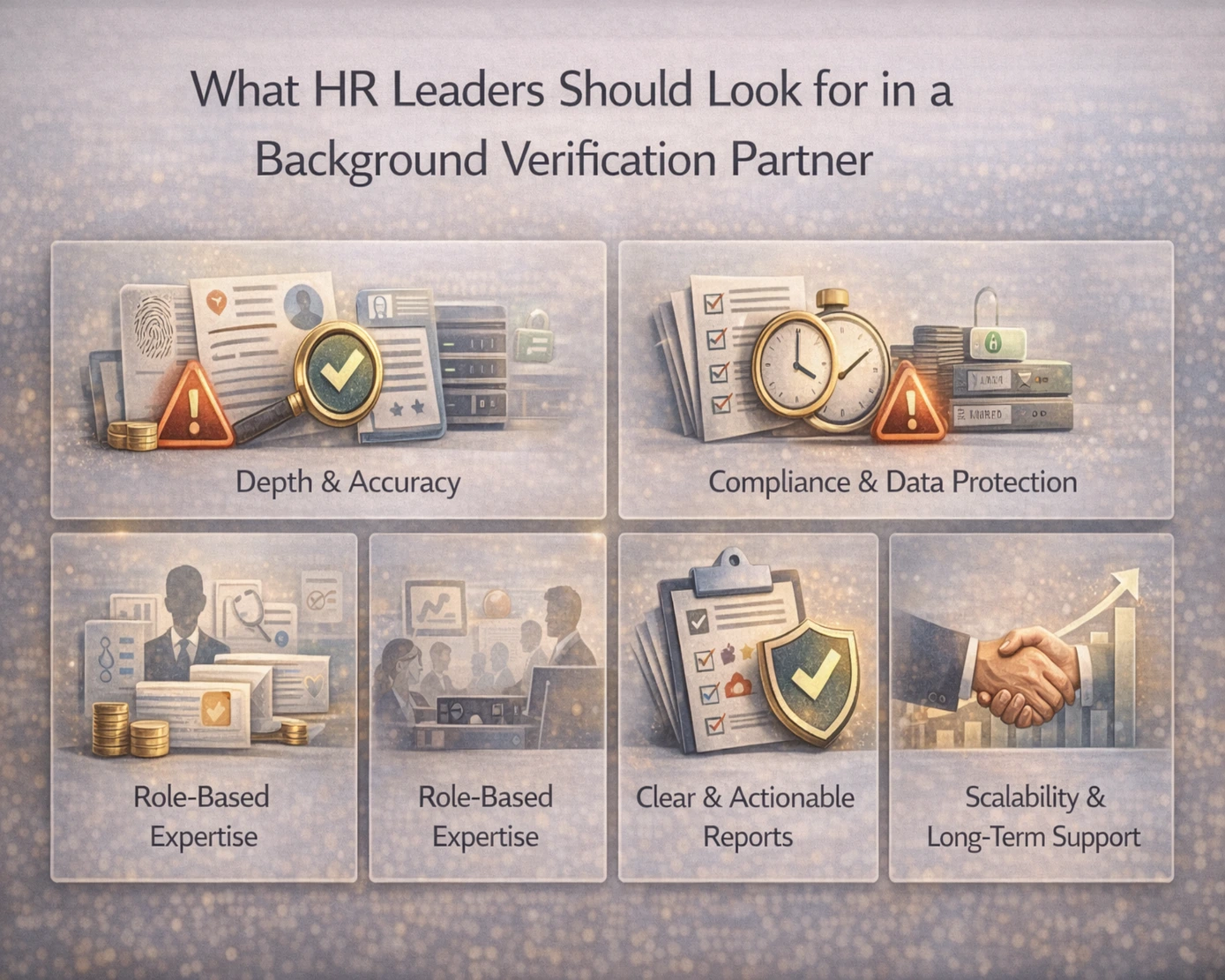
Depth and Accuracy of Verification
A reliable verification partner must go beyond surface-level checks. Identity, education, employment, and criminal verification should be conducted through authoritative and traceable sources, not just document collection.
HR teams should look for partners that demonstrate clear verification methodologies, explain how each check is performed, and provide evidence-backed findings rather than ambiguous status labels.
Compliance and Data Protection Standards
Background verification involves sensitive personal data. A credible partner must follow strict data protection practices aligned with Indian regulations such as the Digital Personal Data Protection (DPDP) Act.
This includes proper consent management, secure data storage, controlled access, and defined data retention policies. HR leaders should ensure that verification reports are audit-ready and legally defensible.
Turnaround Time Without Compromising Quality
Speed matters, but speed without accuracy creates risk. HR leaders should evaluate whether a partner can deliver predictable turnaround times without cutting corners.
Professional verification providers use a combination of digital tools and manual checks to maintain consistency across locations and hiring volumes. Transparent timelines and real-time tracking indicate operational maturity.
Role-Based and Industry Understanding
A strong verification partner understands that different roles and industries carry different risks. HR leaders should look for partners who offer role-based verification frameworks rather than one-size-fits-all packages.
Industry experience — whether in IT, BFSI, healthcare, logistics, or staffing — ensures that verification aligns with real operational and compliance needs.
Reporting Clarity and Decision Support
Verification reports should support decision-making, not confuse it. Clear risk indicators, structured findings, and supporting evidence allow HR and leadership teams to take informed action.
Partners who provide clarity, context, and guidance add far more value than those who simply deliver raw data.
Scalability and Long-Term Partnership
As organizations grow, verification needs evolve. HR leaders should assess whether a partner can scale with hiring volume, geographic expansion, and changing compliance requirements.
A long-term verification partner becomes an extension of the HR and risk function — supporting consistent hiring standards across growth phases.

Final Thought
Choosing the right background verification partner is about trust, capability, and accountability. HR leaders who prioritize accuracy, compliance, and strategic alignment build safer hiring systems that support long-term business stability.
A strong partner does not just verify candidates — they protect the organization
Leave a comments