Employee Screening Best Practices for Growing Companies
Why Screening Matters for Growing Companies
As companies scale, the risks associated with hiring increase exponentially. Each new employee brings potential for growth but also introduces operational, financial, and reputational risk. Employee screening is not just a formality — it is a strategic process that protects the organization, builds trust internally and externally, and ensures that new hires align with company values and expectations.
For growing companies in India, where hiring often spans multiple cities, diverse educational backgrounds, and regulatory requirements, structured screening becomes critical. It ensures that hiring decisions are based on verified information rather than assumptions or incomplete data.
Establishing a Standardized Screening Process
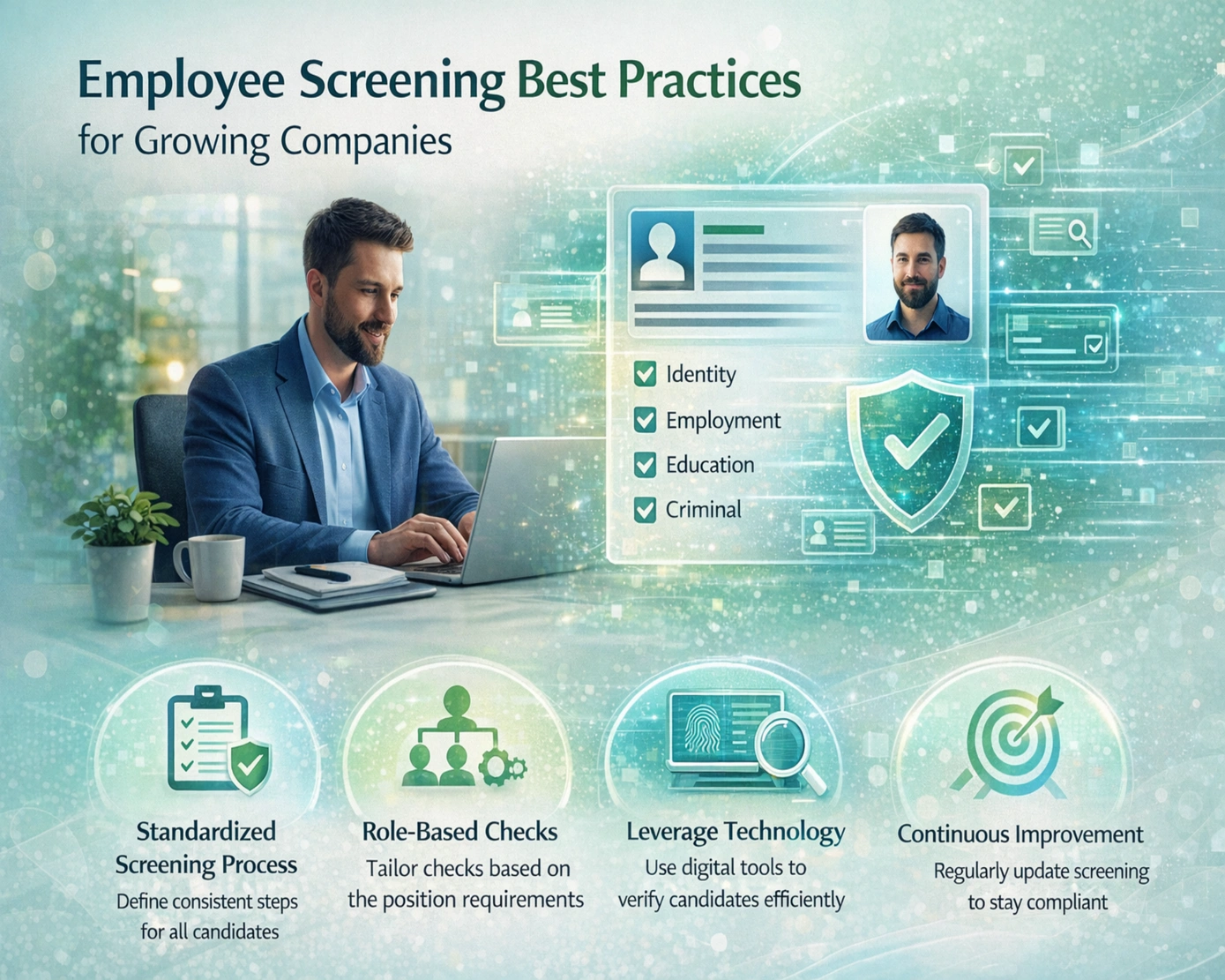
Consistency is key in employee screening. Companies should define a standardized verification process that covers identity, employment history, educational qualifications, and role-specific requirements. Standardization ensures that all candidates are evaluated fairly and thoroughly, minimizing the risk of oversights.
In addition to internal HR policies, partnering with a professional background verification service provides expertise and access to institutional data, enabling accurate and reliable checks. Standardized processes also make it easier to scale screening as the company grows.
Role-Based Screening
Not all positions require the same level of scrutiny. Senior executives, finance managers, IT administrators, and compliance officers demand more comprehensive checks than entry-level roles. Role-based screening allows organizations to allocate resources efficiently while ensuring critical positions are thoroughly vetted.
This approach helps growing companies avoid unnecessary delays for low-risk hires while focusing detailed verification efforts where they matter most.
Leveraging Technology for Efficiency
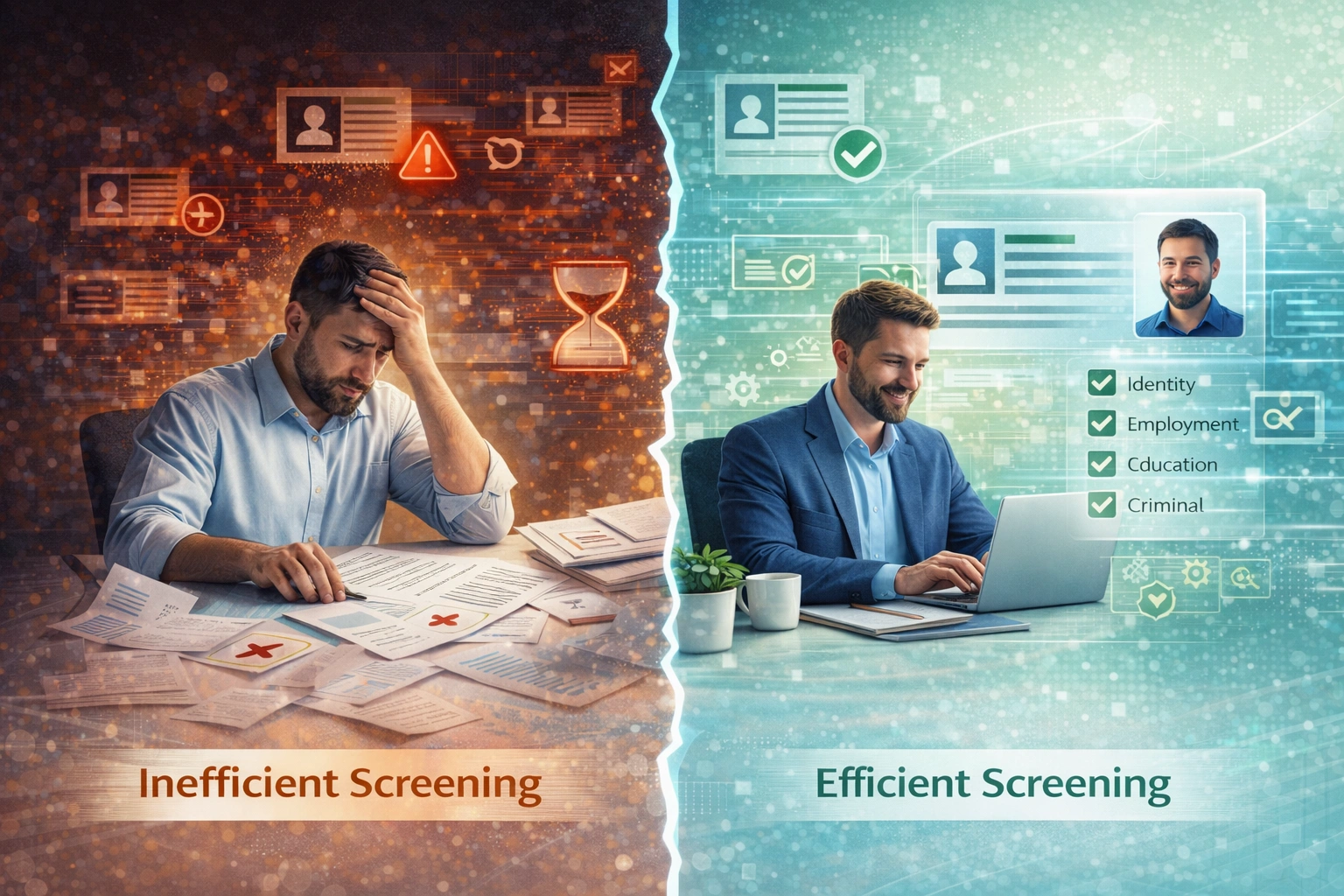
Employee screening can be time-consuming if handled entirely manually. Digital tools, automation, and AI-enabled verification platforms speed up checks, reduce errors, and provide real-time progress tracking. Technology ensures that growing companies can maintain thorough verification without slowing down recruitment timelines, even as hiring volumes increase.
Continuous Improvement and Compliance
Screening should not be a one-time exercise. Companies should regularly review and update their screening processes based on evolving regulations, industry best practices, and lessons learned from past hires. This ensures compliance with Indian laws such as the Digital Personal Data Protection (DPDP) Act and aligns employee screening with organizational risk management strategies.
Final Thought
Employee screening is a strategic investment for growing companies. When implemented effectively, it reduces hiring risk, improves organizational trust, and ensures that every new hire is competent, reliable, and aligned with company values. By combining standardized processes, role-based checks, and technology-enabled verification, growing companies in India can build a strong foundation for sustainable expansion
Leave a comments