Industry-Specific Background Verification Needs in India
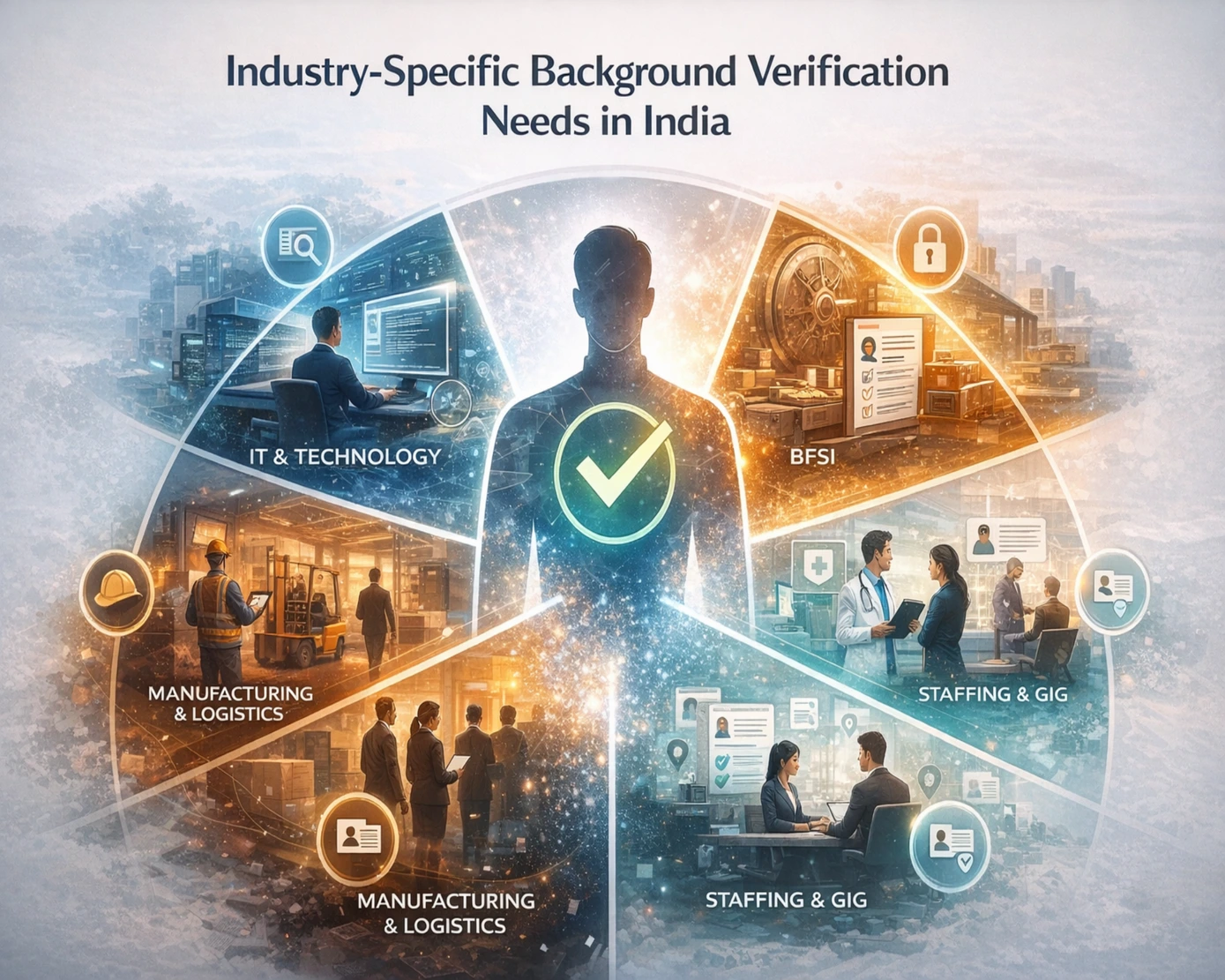
Why Industry Context Matters in Background Verification
Background verification is not a one-size-fits-all process. The level of risk, regulatory exposure, and operational impact of a hire varies significantly from one industry to another. A verification framework that works for a manufacturing unit may be insufficient for a fintech company, just as an enterprise-grade process may be unnecessary for certain entry-level roles.
Indian companies increasingly recognize that effective background verification must align with industry-specific risks, compliance requirements, and the nature of work involved. Tailoring verification to industry context allows organizations to protect critical business areas without slowing down hiring or increasing unnecessary costs.
Background Verification in IT and Technology Companies
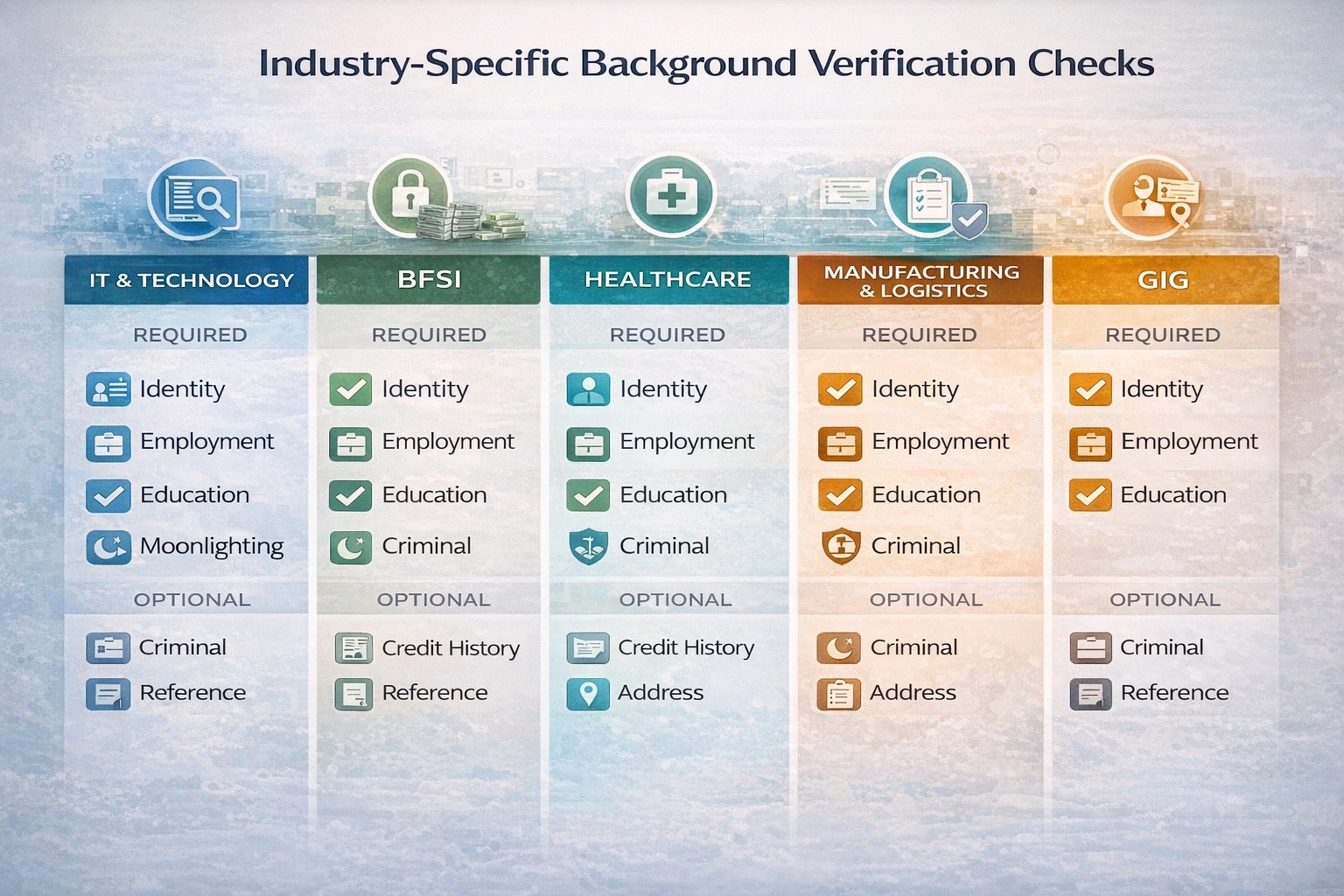
Technology companies handle sensitive data, intellectual property, and client systems on a daily basis. Employees often have remote access to internal platforms, customer databases, and proprietary code. In this environment, background verification focuses heavily on identity validation, employment history, education credentials, and moonlighting checks.
Employment verification is particularly important in IT, where fake experience letters and inflated skill claims are common. Criminal background checks and reference verification add an additional layer of security, ensuring that individuals granted system access are reliable and professionally accountable.
Background Verification in BFSI and Fintech
The BFSI and fintech sectors operate under strict regulatory oversight. Employees in these industries manage financial data, transactions, customer identities, and compliance-sensitive processes. As a result, background verification in this sector is among the most stringent.
In addition to identity, education, and employment verification, criminal record checks and global database screening play a critical role. Credit history checks may also be considered for roles involving financial authority. For BFSI organizations, background verification is not just a hiring safeguard — it is a regulatory expectation.
Background Verification in Healthcare and Life Sciences
Healthcare organizations deal directly with patient safety, medical records, and regulated clinical practices. Hiring unqualified or misrepresented professionals can have serious legal and ethical consequences.
Background verification in healthcare focuses strongly on education verification, license and certification validation, criminal checks, and address verification. For roles involving patient care or controlled substances, additional screening may be required. Thorough verification ensures compliance, protects patient trust, and safeguards institutional credibility.
Background Verification in Manufacturing and Logistics
Manufacturing and logistics roles often involve physical safety, asset handling, and operational continuity. Employees may operate machinery, manage inventory, or interact with supply chains.
In these industries, address verification, criminal checks, and identity validation are critical. Drug and health screening may also be relevant for safety-sensitive roles. Background verification here focuses less on academic credentials and more on reliability, safety, and compliance with workplace standards.
Background Verification in Staffing and Gig-Based Organizations
Staffing companies and gig platforms manage large volumes of candidates across diverse roles and locations. Speed and scale are key challenges, but risk remains high due to frequent onboarding and decentralized workforces.
Verification frameworks in this sector are designed to be modular and technology-driven. Identity, address, and criminal checks form the foundation, with additional checks applied based on client requirements. A standardized yet flexible approach ensures consistency while meeting varied industry expectations.
Why Role and Industry Alignment Improves Hiring Outcomes
When background verification is aligned with industry-specific risks, companies achieve better hiring outcomes. Verification becomes more meaningful, cost-effective, and defensible. HR teams avoid unnecessary delays while ensuring that critical roles receive appropriate scrutiny.
This approach also strengthens compliance posture and builds trust with clients, regulators, and internal stakeholders.
Final Thought
Industry-specific background verification is not about doing more checks — it is about doing the right checks. Indian companies that tailor their verification frameworks to industry and role requirements hire more safely, operate more confidently, and scale with fewer risks.
Leave a comments