Is Background Verification Mandatory in Our India

There is no single law in India that directly says “background verification is compulsory.”However, Indian employers are legally responsible for the actions, safety, and data practices of their employees.This means companies are expected to perform proper due diligence before hiring. If an employee causes data misuse, workplace misconduct, or compliance violations, the employer must be able to prove that they followed a safe and responsible hiring process.
In today’s regulatory and corporate environment, this makes background verification an essential part of compliant hiring — not just a recommended practice.
The Legal Foundation Behind Background Verification
Several Indian laws indirectly mandate the need for background verification:
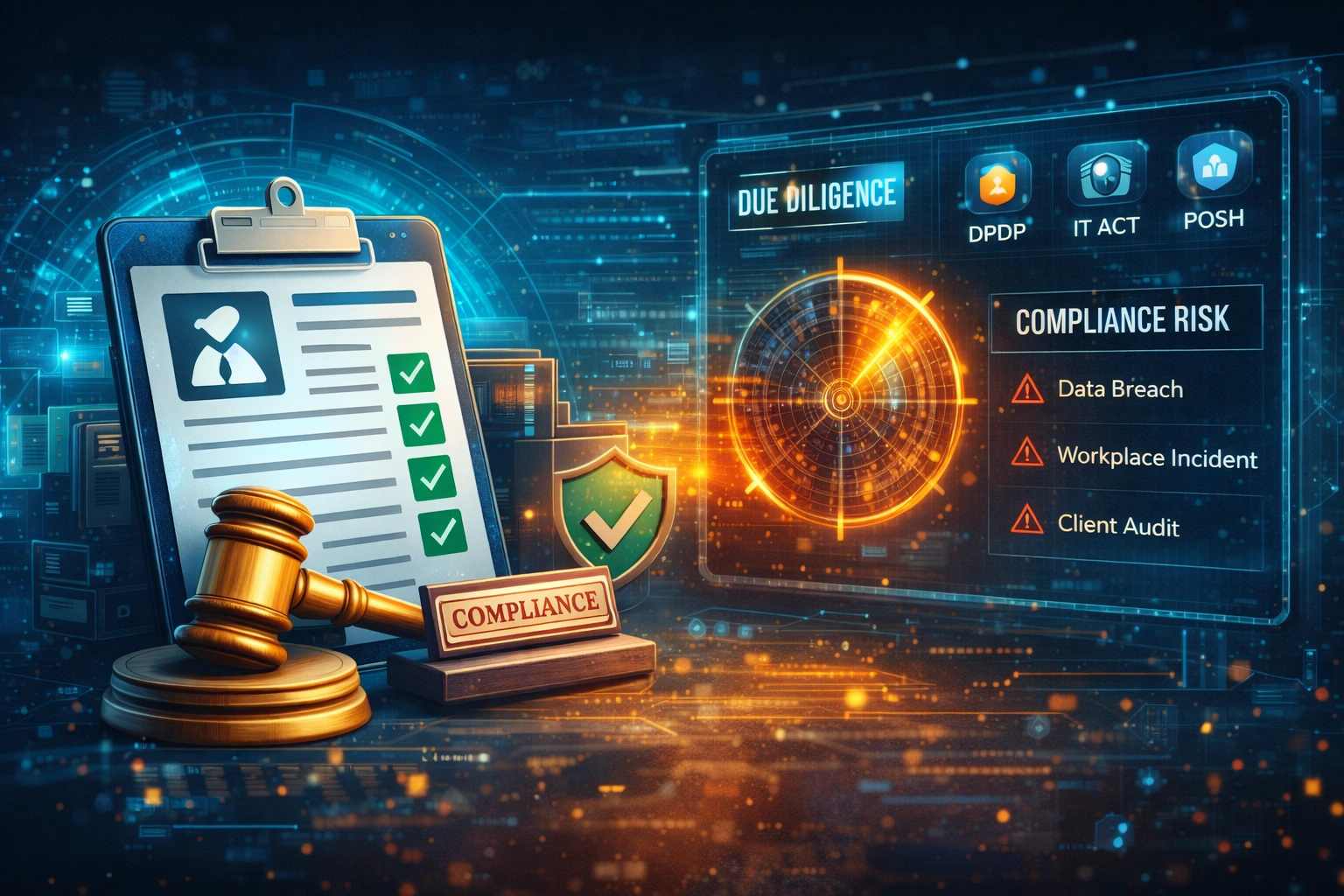
The Information Technology Act, 2000 makes employers responsible for protecting sensitive personal data. Hiring an unverified individual who gains system access and misuses data can result in legal liability.
The Digital Personal Data Protection (DPDP) Act requires organizations to ensure lawful handling of personal data. If an employee mishandles customer data, the company must demonstrate that it exercised due diligence while hiring.
The POSH Act makes employers responsible for workplace safety and conduct. Negligent hiring that leads to workplace harassment or misconduct can expose the organization to serious legal consequences.
In sectors such as BFSI, healthcare, logistics, and manufacturing, regulatory authorities also expect documented employee due diligence.
Why Background Verification Is Considered Mandatory in Practice
Courts and regulatory bodies increasingly hold companies accountable for employee actions. If a company cannot prove that it conducted proper background checks before onboarding, it may be considered negligent.
This is why most compliance audits, client due diligence processes, and corporate governance frameworks require documented background verification records.
What Happens If Companies Skip BGV?
Skipping background verification can lead to:
-
Legal penalties
-
Client trust loss
-
Contract termination
-
Data breaches
-
Workplace safety incidents
-
Reputation damage
These risks often cost significantly more than the investment in proper BGV.
How CaseXpert Helps Companies Stay Compliant
CaseXpert provides compliance-aligned background verification frameworks that meet audit and regulatory expectations across India. With DPDP-compliant data handling, real-time dashboards, and legally structured reports, CaseXpert enables organizations to demonstrate proper hiring due diligence.
Final Thought
Background verification may not be written as a single “mandatory law,” but legally, operationally, and ethically — it is a non-negotiable hiring responsibility. Safe hiring is lawful hiring.
Leave a comments