Top Myths About Background Verification in India
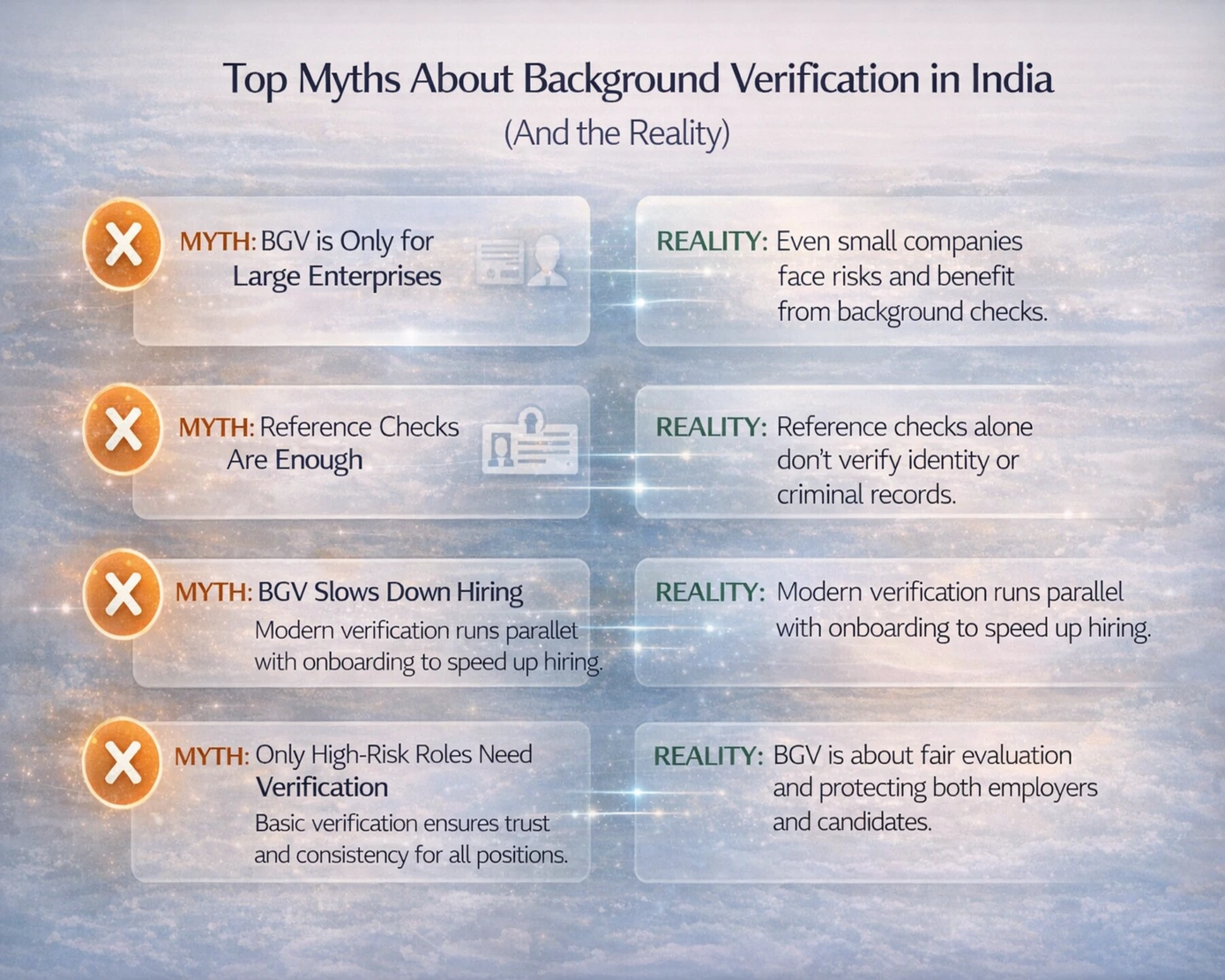
Why Misconceptions Around BGV Still Exist
Despite background verification becoming a standard hiring practice, many misconceptions still influence how companies approach it. These myths often come from outdated hiring models, cost concerns, or the assumption that verification is only needed in extreme cases. For HR leaders, recruiters, and founders, relying on these beliefs can quietly introduce risk into the organization.
Understanding the reality behind these myths helps decision-makers adopt verification as a strategic safeguard rather than a reluctant obligation.
Myth: Background Verification Is Only for Large Enterprises
One of the most common misconceptions is that background verification is necessary only for large corporations with thousands of employees. In reality, smaller companies and startups are often more vulnerable to hiring risks. A single wrong hire in a lean team can disrupt operations, damage client trust, or create compliance exposure.
Background verification is about risk, not company size. Even a five-person startup handling customer data or finances benefits from structured verification.
Myth: Reference Checks Are Enough
Many organizations believe that speaking to previous managers or colleagues provides sufficient assurance. While references offer insight into behavior and performance, they do not validate identity, criminal history, or document authenticity.
Reference checks complement background verification but cannot replace it. Without factual verification, companies may miss critical red flags that references are unable or unwilling to disclose.
Myth: Background Verification Slows Down Hiring
Another widespread belief is that verification delays onboarding and affects hiring speed. This perception usually comes from manual or poorly managed processes. Modern background verification, when handled by professional providers, runs in parallel with onboarding and often completes within predictable timelines.
Technology-enabled verification actually improves hiring efficiency by reducing last-minute surprises and rework caused by unverified information.
Myth: Only High-Risk Roles Need Verification
While some roles require deeper scrutiny, basic verification is essential for every hire. Identity validation, address verification, and employment checks establish a baseline of trust across the organization.
Skipping verification for “low-risk” roles creates inconsistencies and weakens internal governance. Risk often arises not from job titles, but from access — access to systems, data, customers, or assets.
Myth: Background Verification Is a One-Time Exercise
Some companies treat background verification as a one-time step at the point of hiring. In reality, roles evolve. Employees move into positions with greater responsibility, access, or regulatory exposure.
Periodic re-verification for sensitive roles helps organizations maintain long-term compliance and risk control, especially in regulated industries.
Myth: Verification Is About Distrust
Perhaps the most damaging myth is that background verification signals mistrust toward candidates. In practice, verification protects both the employer and the employee. It ensures fair evaluation, prevents impersonation, and establishes clear expectations from day one.
A transparent verification process communicates professionalism, not suspicion.

Final Thought
Myths around background verification often lead companies to underestimate its value. In reality, verification is a practical, evidence-based approach to safe hiring. Indian organizations that move beyond misconceptions and adopt structured BGV practices reduce risk, strengthen governance, and build teams they can trust
Leave a comments