Pre-Onboarding vs Post-Onboarding Background Verification: Pros and Cons

Understanding Pre-Onboarding Verification
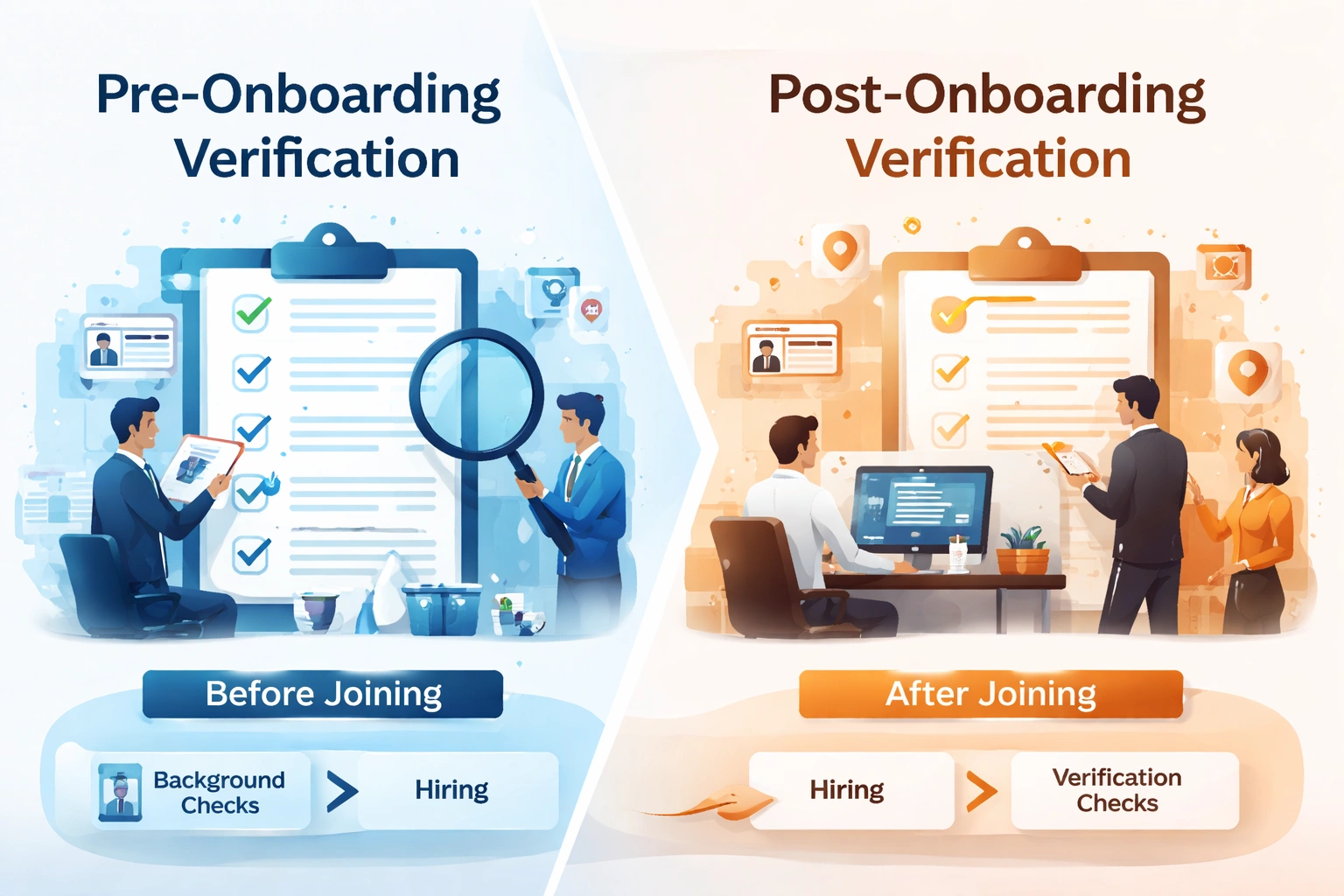
Pre-onboarding verification takes place before the candidate officially joins the organization. This approach ensures that all credentials, identity, employment history, and role-specific checks are completed upfront. For HR leaders and founders, pre-onboarding verification minimizes risk by preventing unsuitable hires from entering the organization.
The primary advantage is risk mitigation: candidates with discrepancies, red flags, or falsified information are identified before they can impact operations or team dynamics. Pre-onboarding verification also strengthens organizational credibility and compliance, especially for regulated industries like BFSI, healthcare, or IT services.
However, pre-onboarding checks can sometimes delay hiring, particularly if candidates are unresponsive or institutions are slow to provide verification. Balancing speed with thoroughness is critical for growing companies that need to onboard talent quickly.
Understanding Post-Onboarding Verification
Post-onboarding verification occurs after the employee has joined the company. This approach allows hiring to proceed without delays, enabling fast onboarding, especially for urgent or high-volume recruitment. Post-onboarding verification can be particularly helpful for startups or small teams where immediate workforce availability is critical.
The downside is risk exposure: the employee may already have access to sensitive information, client data, or financial systems before verification is complete. Any discrepancies discovered post-onboarding may require corrective action, which can be disruptive and impact team morale.
Choosing the Right Approach
The choice between pre-onboarding and post-onboarding verification depends on the role, risk level, and business priorities. Critical positions with access to sensitive data, finances, or regulatory responsibilities should always undergo pre-onboarding checks. For low-risk positions, post-onboarding verification may be acceptable if complemented with continuous monitoring.
Many companies adopt a hybrid approach: basic checks are completed before onboarding, while more detailed verification occurs shortly after joining. This balances speed with risk mitigation and ensures compliance without slowing recruitment.
Strategic Benefits for HR Leaders
By clearly defining verification timelines, HR leaders can manage risk proactively while maintaining an efficient hiring process. Documentation from pre- or post-onboarding verification serves as an audit trail, strengthens compliance, and supports informed decision-making. Organizations that implement a structured verification strategy demonstrate professionalism, accountability, and operational maturity.
Final Thought
Whether pre-onboarding or post-onboarding, background verification is essential for safe, compliant, and strategic hiring. Indian companies that tailor verification timelines to role-specific risks can minimize exposure, protect sensitive data, and ensure that every employee contributes positively to the organization’s success.
Leave a comments