Types of Background Verification Checks in India
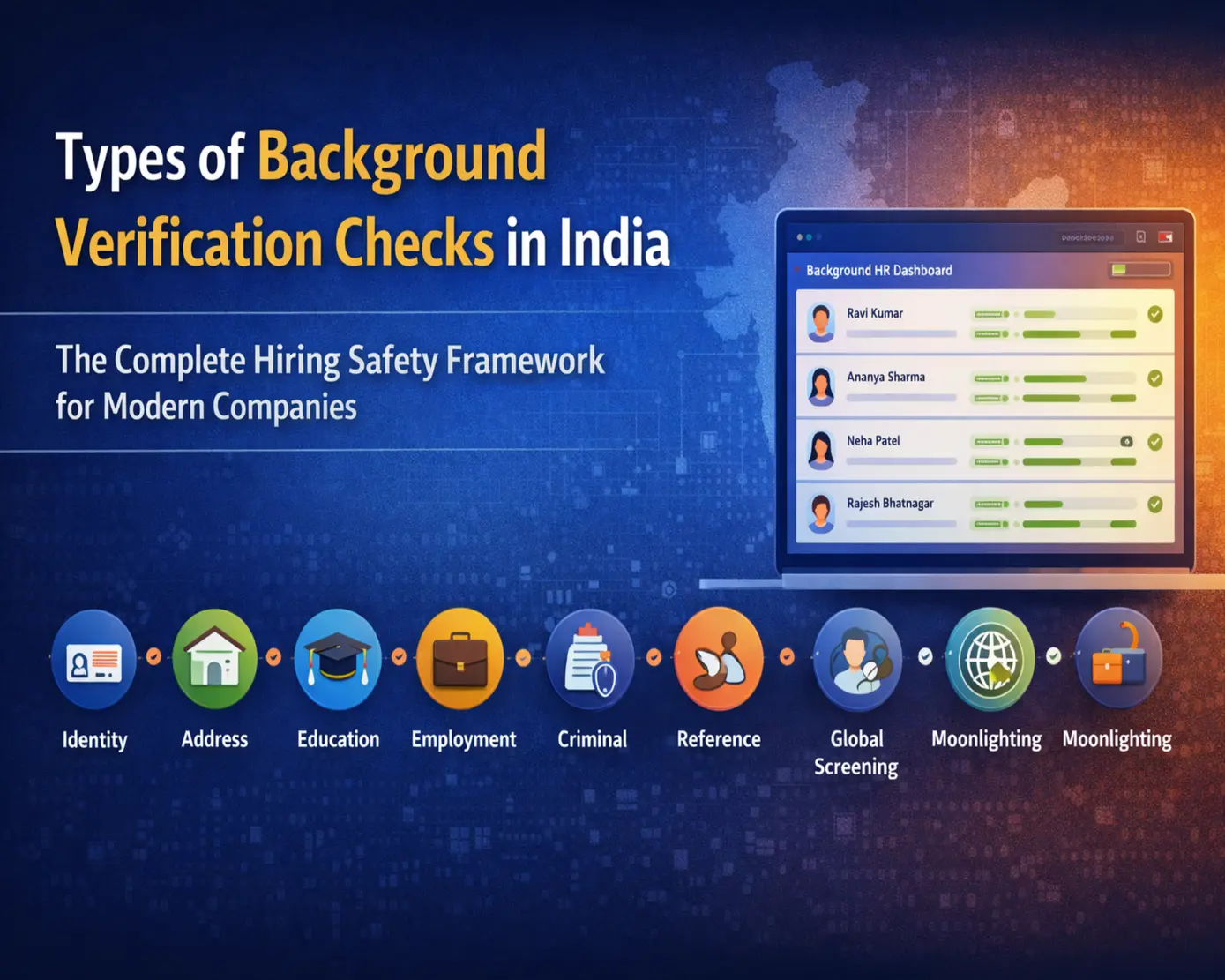
As hiring in India becomes increasingly digital, decentralized, and volume-driven, the risks associated with fraudulent profiles, fake qualifications, and undisclosed legal history have grown significantly. Organizations are no longer evaluating only skill sets — they are evaluating trust, compliance, and long-term workforce stability.
This is where structured background verification checks play a critical role.
Rather than relying on a single verification step, modern companies use a combination of multiple checks to build a complete risk profile of every hire. Each verification layer addresses a specific risk category, and together they form a comprehensive hiring safety framework.
Identity Verification – Establishing Personal Authenticity
The foundation of every background verification process begins with identity verification. This step confirms that the person applying for the job is genuinely who they claim to be. Government-issued documents such as Aadhaar, PAN, and date-of-birth records are validated against authorized databases.
Identity verification protects companies from impersonation fraud, document manipulation, and onboarding of false profiles, which are increasingly common in digital hiring environments.
Address Verification – Ensuring Traceability and Legal Accountability
Address verification confirms the authenticity of a candidate’s residential details. This may be conducted digitally or through physical field verification depending on location and role sensitivity.
Beyond basic contact validation, address verification establishes traceability — a crucial requirement in cases involving workplace incidents, legal disputes, or compliance audits.
Education Verification – Confirming Academic Integrity
Education verification ensures that academic degrees, diplomas, and certifications submitted by the candidate are legitimate and issued by recognized institutions. Universities, colleges, and certification bodies are directly contacted to validate course completion, year of passing, and credential authenticity.
This check is particularly important in technical, healthcare, engineering, and professional service roles where qualifications directly impact job performance and public safety.
Employment Verification – Validating Professional History
Employment verification confirms previous work experience, job roles, tenure, and reasons for separation. Employers are contacted directly to validate the candidate’s employment claims.
This step prevents inflated experience claims, fake experience certificates, and undisclosed parallel employment that could compromise productivity and data security.
Criminal Background Check – Protecting Workplace Safety
Criminal background verification identifies any past or ongoing legal cases associated with a candidate by scanning court and police databases. This check plays a critical role in maintaining workplace safety, regulatory compliance, and public trust.
Industries such as BFSI, logistics, healthcare, manufacturing, and customer-facing services consider criminal checks mandatory.
Reference Verification – Understanding Behavioral Patterns
Reference checks provide insight into a candidate’s work ethics, reliability, and professional conduct. Supervisors or reporting managers from previous organizations are contacted to understand behavioral patterns that may not be visible through documentation alone.
This check helps organizations avoid cultural mismatches and potential internal conflicts.
Global Database Screening – Ensuring International Compliance
For roles involving financial systems, international transactions, or regulatory exposure, candidates are screened against global compliance and sanctions databases. This ensures that the individual is not associated with restricted entities or regulatory blacklists.
Drug and Health Screening – Supporting Workplace Safety
Drug and medical screening ensures that candidates are physically fit and not under the influence of substances that could compromise safety, especially in manufacturing, logistics, construction, and healthcare environments.
Moonlighting Verification – Protecting Data and Productivity
With the rise of remote work, moonlighting has become a major concern for organizations. Moonlighting checks identify overlapping employment, unauthorized parallel work, and potential data leakage risks.
Building Role-Based Verification Frameworks
Modern HR teams customize verification packages based on role sensitivity rather than applying uniform checks across all positions. This approach balances cost efficiency with risk management and compliance needs.
Why Companies Choose CaseXpert
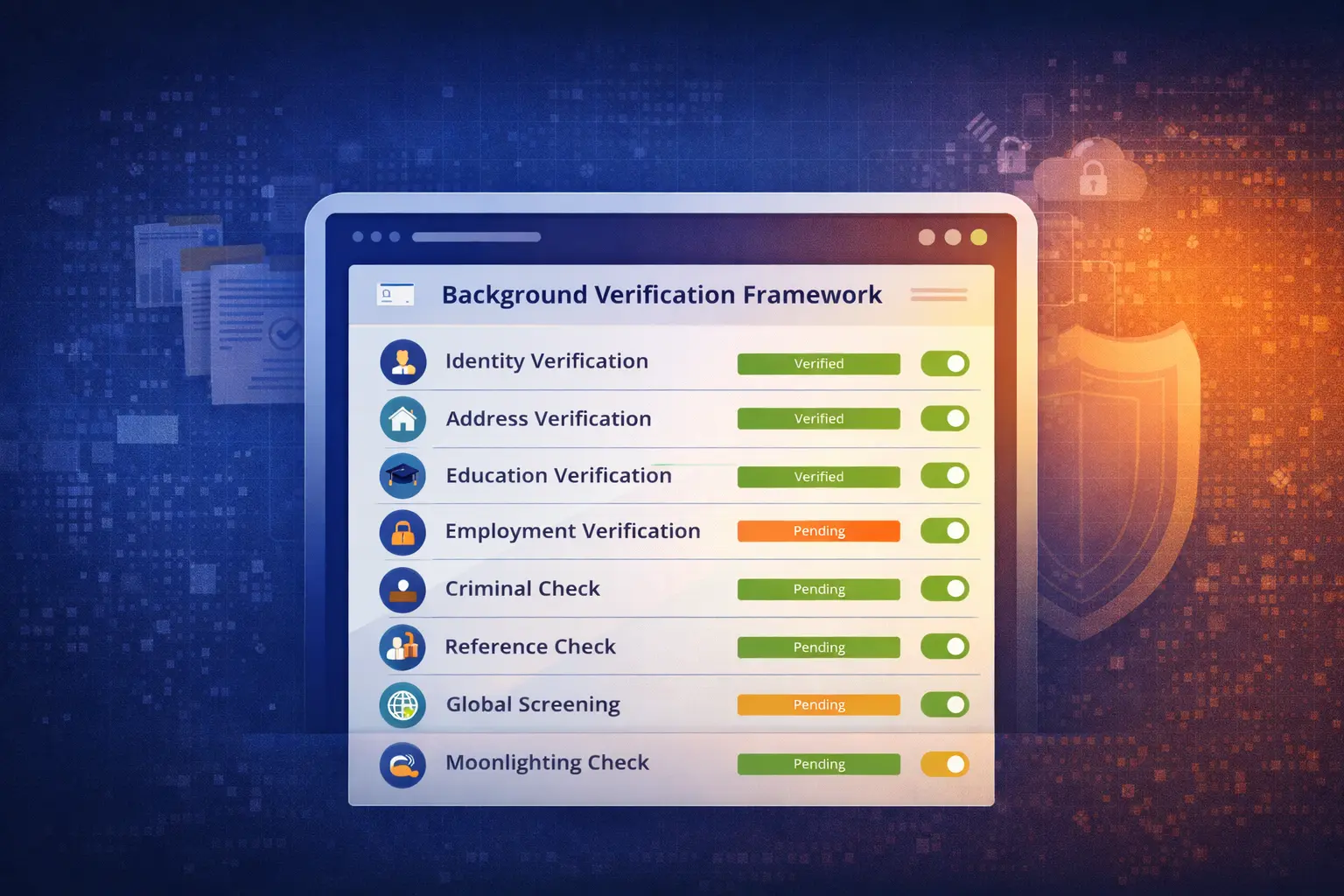
CaseXpert offers technology-driven, compliance-ready background verification solutions with PAN-India coverage. Our platform enables HR teams to design role-based verification frameworks, track cases in real time, and receive audit-ready reports.
Final Thought
Background verification is no longer a single compliance formality — it is a strategic workforce risk management system.
Companies that invest in structured BGV frameworks build safer, stronger, and more trusted organizations.
Leave a comments