What Documents Are Required for Background Verification in India
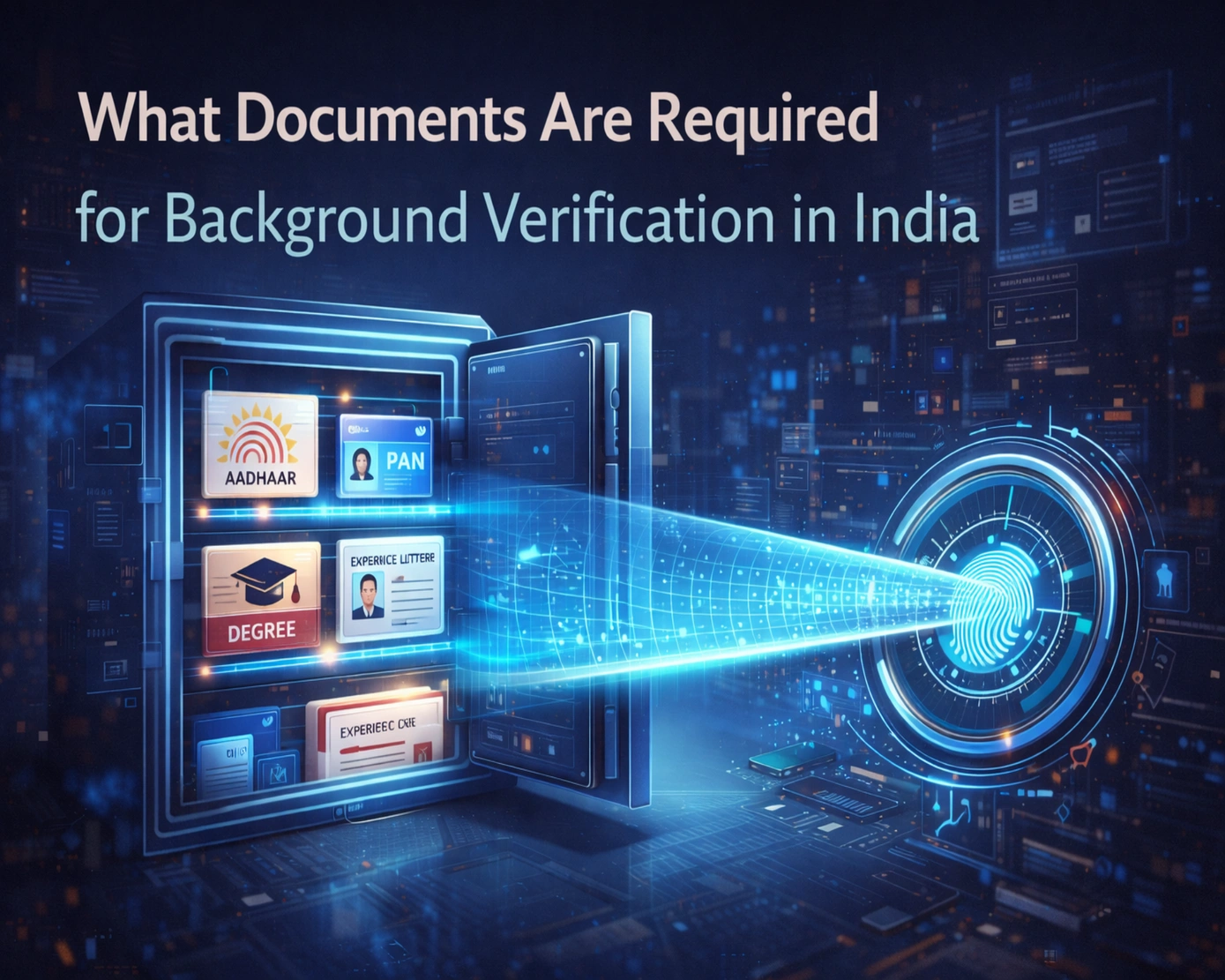
Hiring decisions are only as reliable as the information they are based on. Background verification exists to confirm that a candidate’s credentials, history, and identity are accurate — and that they pose no hidden risk to the organization. For this process, certain key documents are essential. These documents allow verification agencies and HR teams to validate identity, employment, education, and legal compliance efficiently and accurately.
Identity Documents
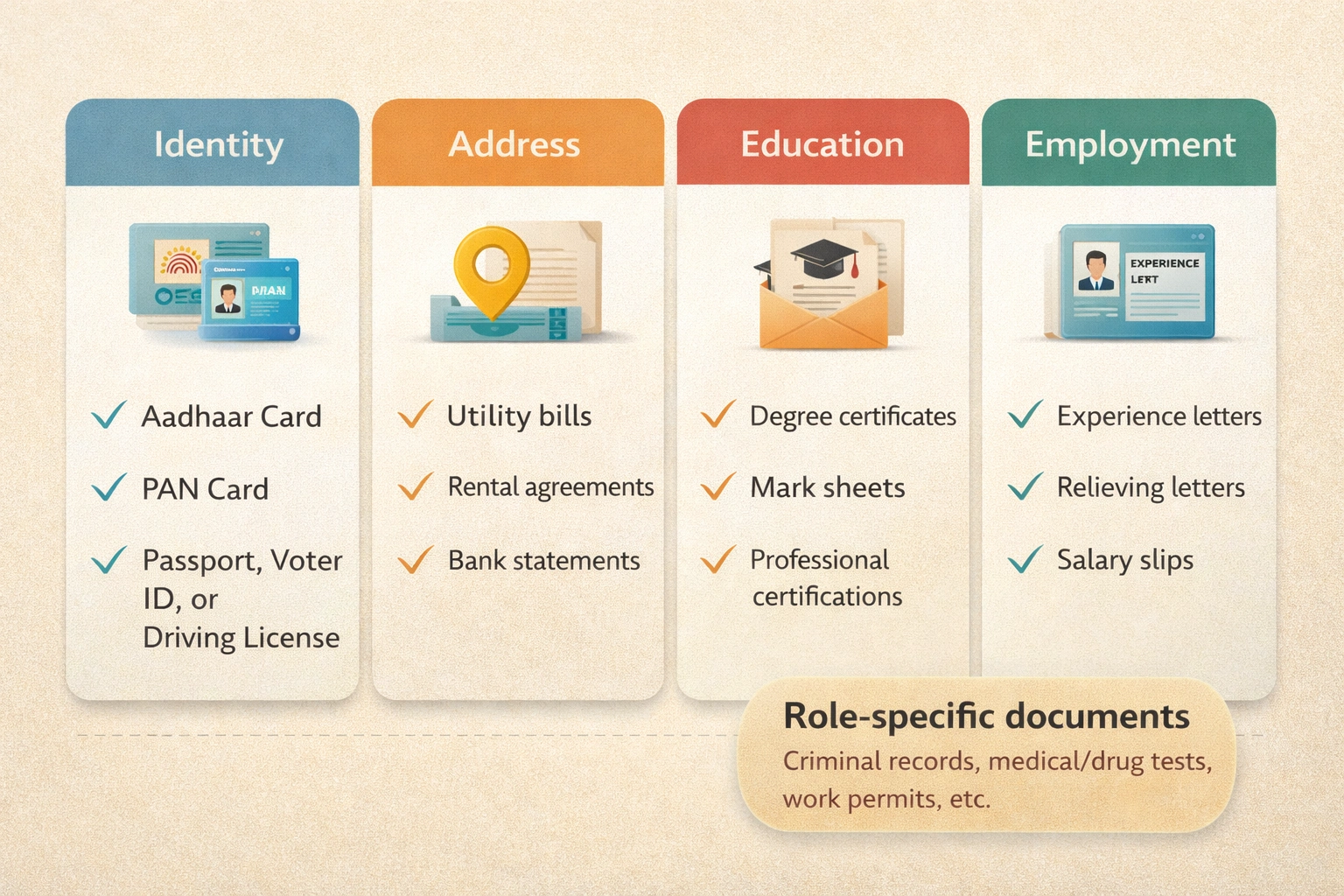
The first step in any verification process is establishing identity. The most commonly required documents include:
-
Aadhaar Card – serves as proof of identity and address.
-
PAN Card – necessary for financial and tax compliance checks.
-
Passport, Voter ID, or Driving License – additional identity validation, often required for roles involving travel or international access.
These documents help confirm that the individual is who they claim to be and reduce the risk of identity fraud.
Address Proof
Verifying a candidate’s residential history is crucial for accountability and legal compliance. Common documents include:
-
Utility bills (electricity, water, or gas)
-
Rental agreements
-
Bank statements
-
Passport or Aadhaar (if used for current address)
Address verification ensures traceability and helps HR teams rule out discrepancies between submitted and verified addresses.
Educational Documents
Education verification confirms that the candidate holds the degrees or certifications they claim. Required documents typically include:
-
Degree certificates or diplomas
-
Mark sheets or transcripts
-
Professional certifications (if relevant to the role)
-
Course completion letters
These documents are cross-checked with issuing institutions to ensure authenticity, which is critical for technical, healthcare, finance, and regulated roles.
Employment Documents
Employment verification confirms work experience, roles, and tenure. Standard documents include:
-
Experience letters from previous employers
-
Relieving letters or exit certificates
-
Offer letters and appointment letters
-
Salary slips for verification of employment tenure
Accurate employment verification prevents inflated experience claims, ghost employments, and undisclosed concurrent employment.
Additional Documents (Role-Specific)
Depending on the nature of the role and industry, additional documents may be required:
-
Criminal record clearance certificates for compliance-sensitive positions
-
Medical or drug test reports for safety-critical roles
-
Reference contact details for professional and behavioral checks
-
Work permits or visa documents for international or cross-border roles
These additional documents ensure the verification process is comprehensive and tailored to the specific risk profile of the role.
Why Proper Document Submission Matters
Incomplete or inaccurate document submission is the most common cause of delayed background verification. Missing proof, mismatched details, or inconsistent information increases verification time and may affect the candidate’s onboarding timeline.
Organizations that work with experienced verification providers like CaseXpert receive guidance on exactly which documents are required, how they should be submitted, and how to resolve common discrepancies quickly.
Final Thought
Background verification is a process built on evidence, and documents are the foundation of that evidence. Ensuring accurate, complete, and verifiable documents protects your organization from hiring risks, legal exposure, and operational issues.
With the right documentation and verification process, HR teams, recruiters, and decision-makers can hire confidently — knowing that every candidate has been properly validated.
Leave a comments