What Happens If a Candidate Fails Background Verification?
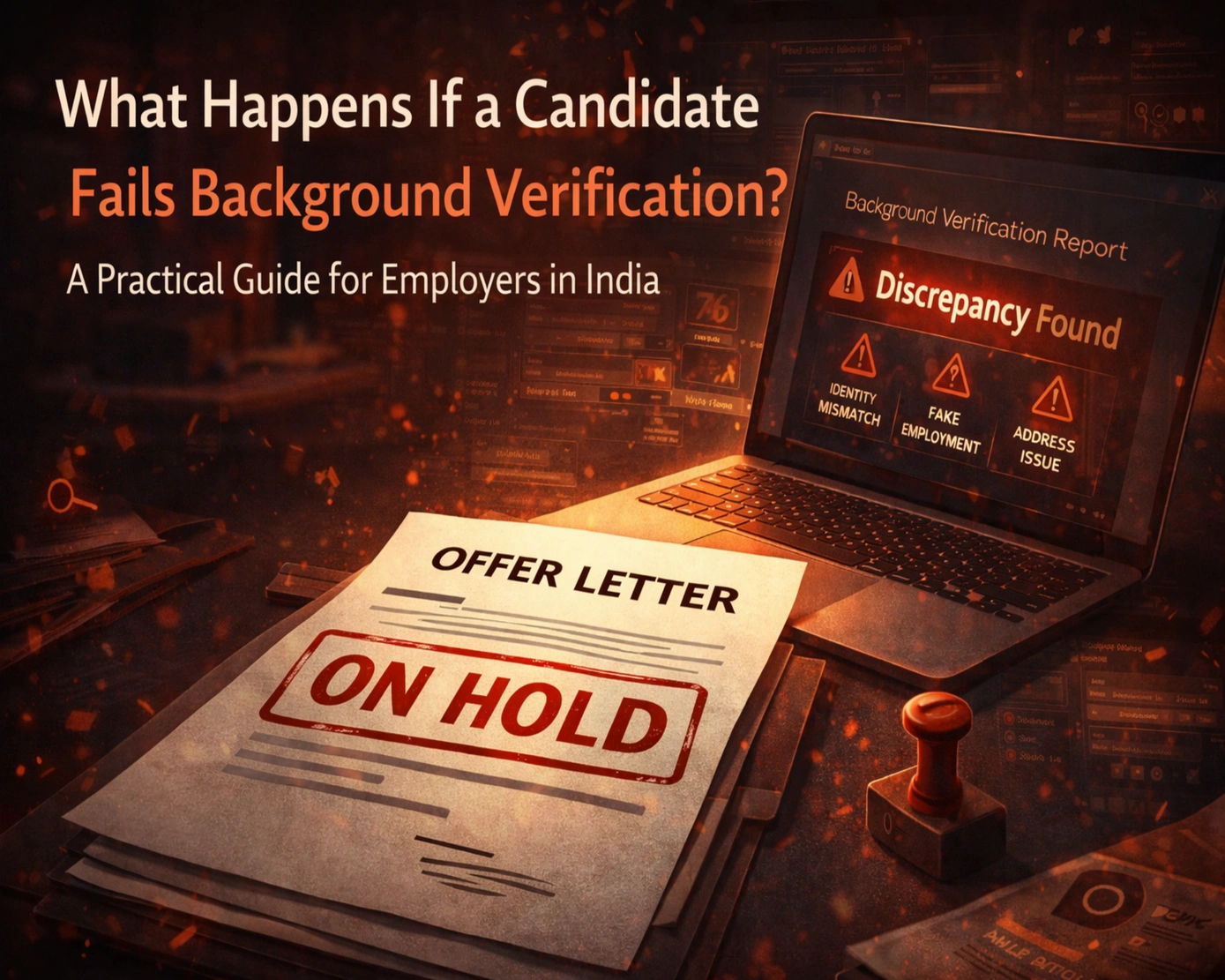
A background verification report does not always return a simple “clear” result.
In many cases, HR teams receive findings that fall into grey areas — missing documents, mismatched employment records, undisclosed criminal history, or incomplete address information.
Understanding how to interpret and act on such findings is critical, because the way an organization handles a failed background verification can directly impact compliance, employer brand, and legal exposure.
What Does “Failing BGV” Actually Mean?
Failing background verification does not always mean that a candidate is unfit for employment. It usually means that material discrepancies were found between the information declared by the candidate and the information verified through official sources.
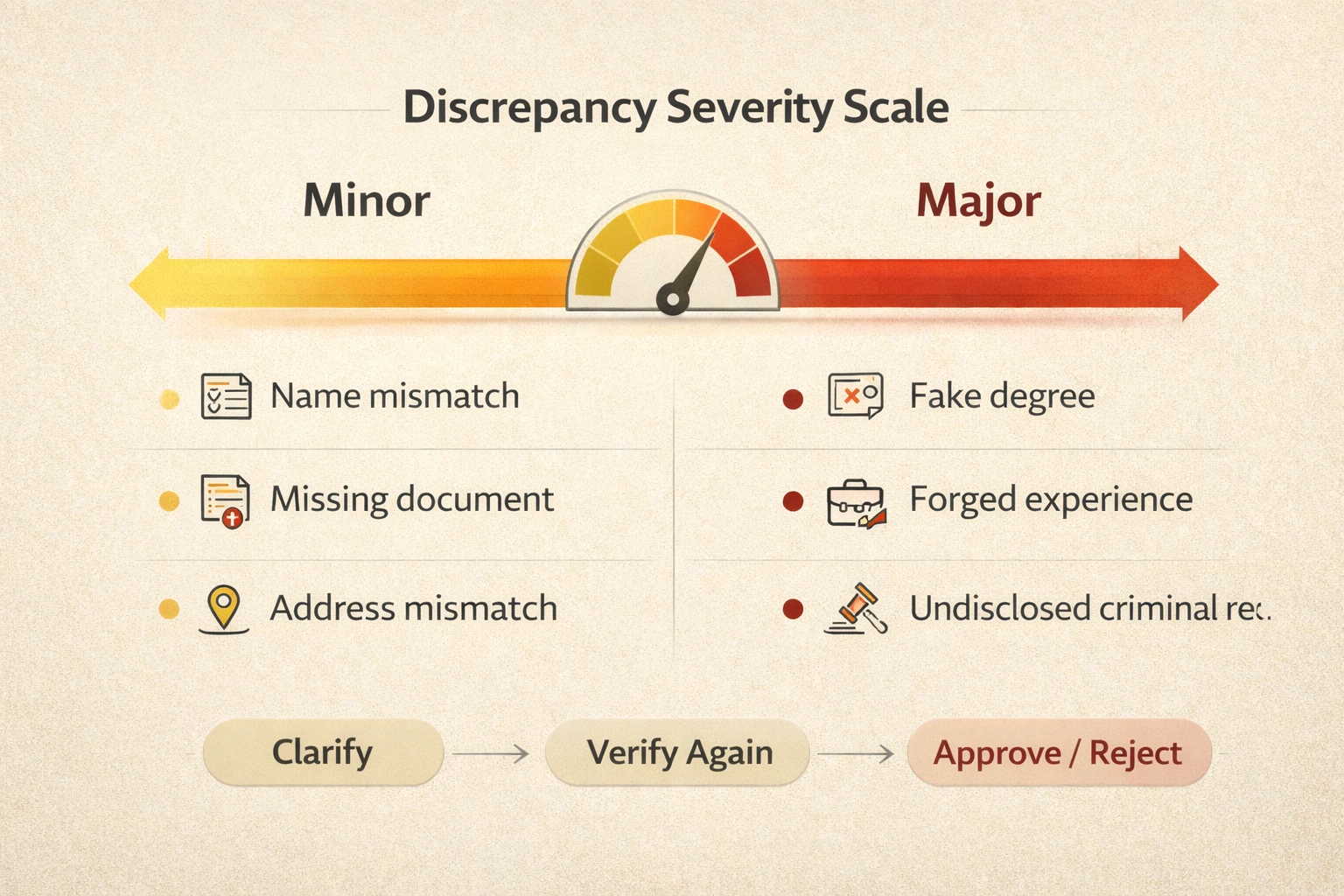
These discrepancies can be classified into:
-
Minor discrepancies – clerical errors, address mismatches, missing documents
-
Major discrepancies – fake qualifications, undisclosed criminal cases, falsified experience, identity inconsistencies
Each category requires a different HR response.
What Employers Should Do When Discrepancies Are Found
The first step is to review the verification report carefully and identify whether the discrepancy impacts job suitability, legal compliance, or workplace safety.
Minor discrepancies can often be resolved by requesting clarifications or additional documentation from the candidate. Many genuine candidates face documentation gaps due to name variations, outdated records, or institutional delays.
Major discrepancies, however, indicate potential fraud, legal risk, or safety exposure. These cases require serious consideration before onboarding or continuation of employment.
Can Employers Reject a Candidate Based on BGV Findings?
Yes. Employers are legally allowed to withdraw offers or terminate provisional employment based on verified background discrepancies — provided that the decision is documented, fair, and compliant with company policy.
However, organizations must follow transparent and documented procedures to avoid wrongful termination claims.
What Happens If BGV Is Conducted After Joining?
Many companies onboard candidates provisionally while verification continues in parallel. If a major discrepancy is found later, the organization can legally revoke employment, subject to contract terms and internal policies.
This is why proper documentation and clearly stated verification clauses in offer letters are critical.
Why Professional Verification Matters
Poorly conducted verification often leads to incomplete or misleading results, increasing the risk of wrongful decisions. Partnering with a professional verification provider ensures accurate findings, legal defensibility, and fair HR decision-making.
How CaseXpert Supports Fair and Compliant Decisions
CaseXpert provides structured risk classifications, audit-ready reports, and compliance-aligned workflows that help HR teams handle discrepancies legally and professionally.
Final Thought
Background verification is not about rejecting candidates — it is about making informed and responsible hiring decisions that protect your people and your business.
Leave a comments