What is Background Verification (BGV) & Why Companies in India Need It?
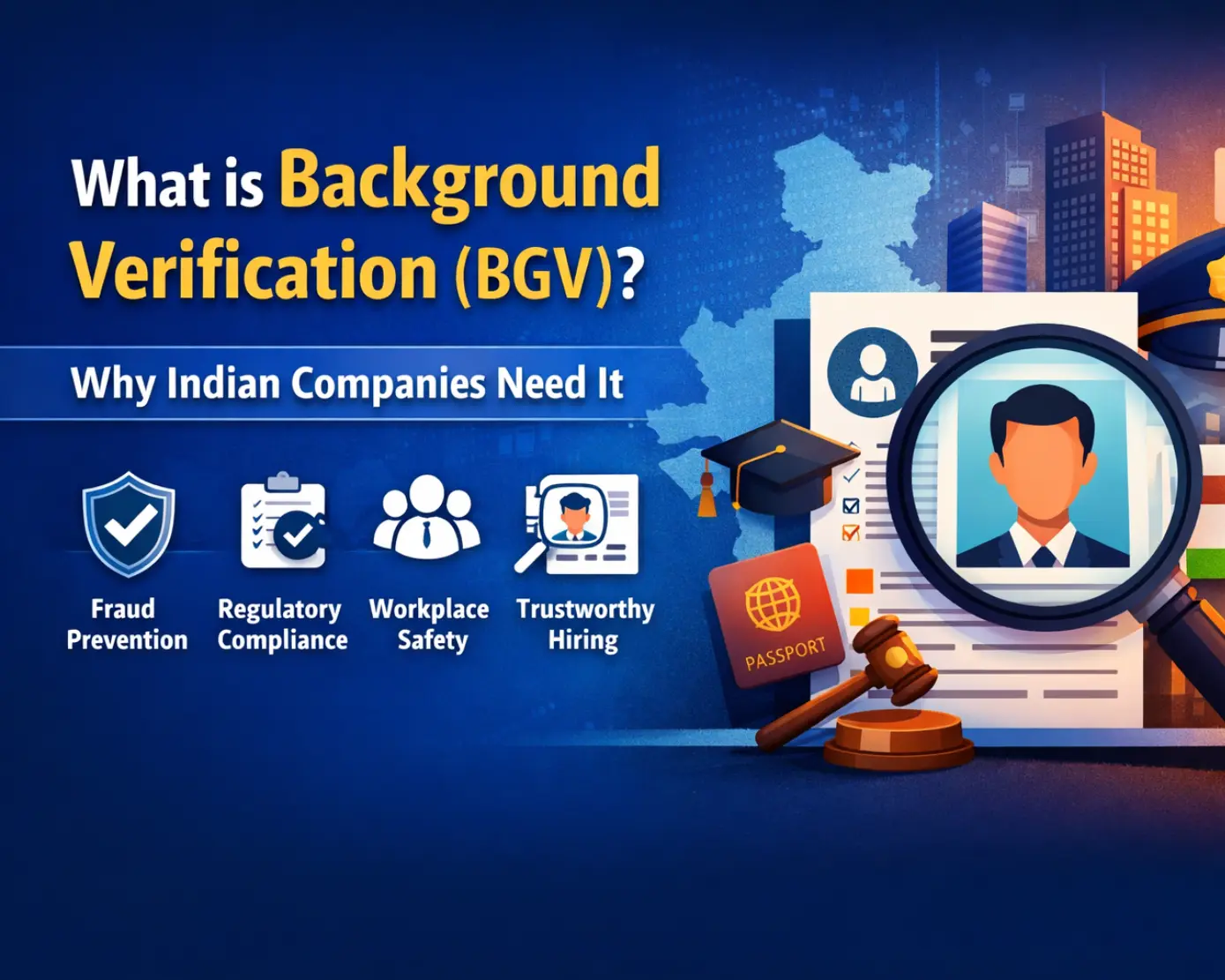
Hiring in India today is no longer just about filling positions quickly. It has become a strategic responsibility tied directly to compliance, data protection, workplace safety, and brand reputation. With companies scaling faster than ever, working with distributed teams, and handling sensitive customer and financial data, the cost of a wrong hire has increased significantly. This shift is exactly what has made Background Verification (BGV) an essential part of modern hiring.
The Evolution of Background Verification in India
In earlier times, Indian companies largely depended on personal references, walk-in interviews, and basic document checks. As long as a candidate appeared confident and carried certificates, hiring decisions were made quickly. However, with the rapid growth of IT services, BPOs, fintech platforms, and global outsourcing, hiring volumes expanded and fraud patterns evolved. Organizations started encountering forged degrees, manipulated experience letters, undisclosed criminal records, and even cases of identity theft.
Regulatory pressure also increased. Companies were held responsible for employee misconduct, data misuse, workplace safety incidents, and compliance failures. These challenges pushed organizations to adopt structured background verification frameworks. Over time, BGV became a standardized HR practice across industries such as IT, BFSI, healthcare, manufacturing, logistics, staffing, and gig platforms.
Today, BGV is no longer a precautionary step — it is a fundamental hiring safeguard.
What Background Verification Actually Means
Background Verification refers to the systematic process of validating the authenticity of a candidate’s personal, professional, and legal history before or after onboarding. It is designed to confirm that the individual being hired is genuine, qualified, legally safe, and suitable for the responsibilities of the role.
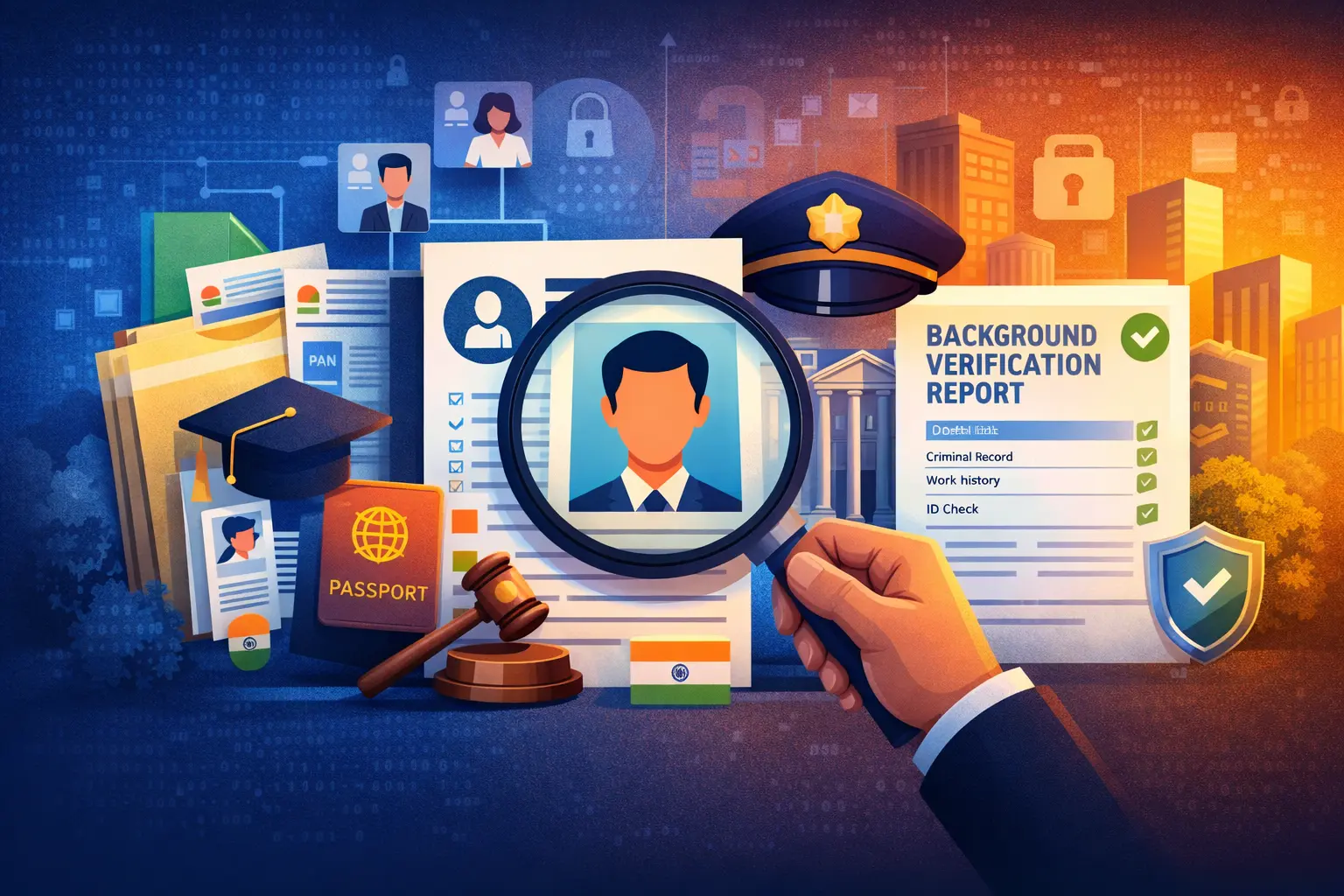
Through BGV, employers validate identity documents, educational qualifications, employment history, residential information, criminal court records, and behavioural references. Depending on the role, additional screenings such as global compliance checks, drug testing, and moonlighting verification may also be conducted.
At its core, background verification answers one critical question for every employer:
Can this person be trusted with our data, people, and business assets?
How the Background Verification Process Works in India
The process typically begins once a candidate accepts the offer letter. The employer collects written consent as required under India’s data protection regulations. Candidates submit relevant documents such as Aadhaar, PAN, educational certificates, experience letters, and address proof.
Verification agencies then validate this information through official government databases, educational institutions, previous employers, and authorized public record sources. Criminal court records are checked to identify any ongoing or past legal cases. Address verification is carried out digitally or physically to confirm residential authenticity.
All verification findings are audited for accuracy and compiled into a final compliance-ready report. The entire process usually takes between five to ten working days depending on the number of checks and geographical coverage.
Why Background Verification is Critical for Indian Companies
Hiring without proper background verification exposes organizations to serious long-term risks. Fraudulent employees can compromise sensitive data, misuse company assets, create legal liabilities, and damage employer brand reputation. In industries dealing with finance, healthcare, logistics, and digital services, a single wrong hire can lead to regulatory penalties, client loss, and operational disruption.
BGV ensures that organizations are not hiring blindly. It provides legal defensibility, internal safety, compliance assurance, and trust in workforce quality.
Who Needs Background Verification the Most
Any organization that handles customer data, financial information, confidential systems, physical assets, or public safety responsibilities must adopt structured background verification. This includes startups, SMEs, enterprises, staffing agencies, gig platforms, healthcare institutions, fintech companies, and IT service providers.
In today’s regulatory and digital environment, no company is too small to ignore BGV.
Why Companies Choose CaseXpert
CaseXpert delivers technology-driven, legally compliant, and PAN-India background verification services tailored for modern Indian businesses. With real-time tracking dashboards, faster turnaround times, and compliance-ready reporting, CaseXpert enables HR teams to hire confidently while staying aligned with regulatory expectations.
Final Thought
Background Verification is not about mistrust — it is about building strong, safe, and compliant organizations.
Safe hiring today protects your brand tomorrow
Leave a comments