Why Background Verification Should Be Part of Every Company’s Risk Management Strategy
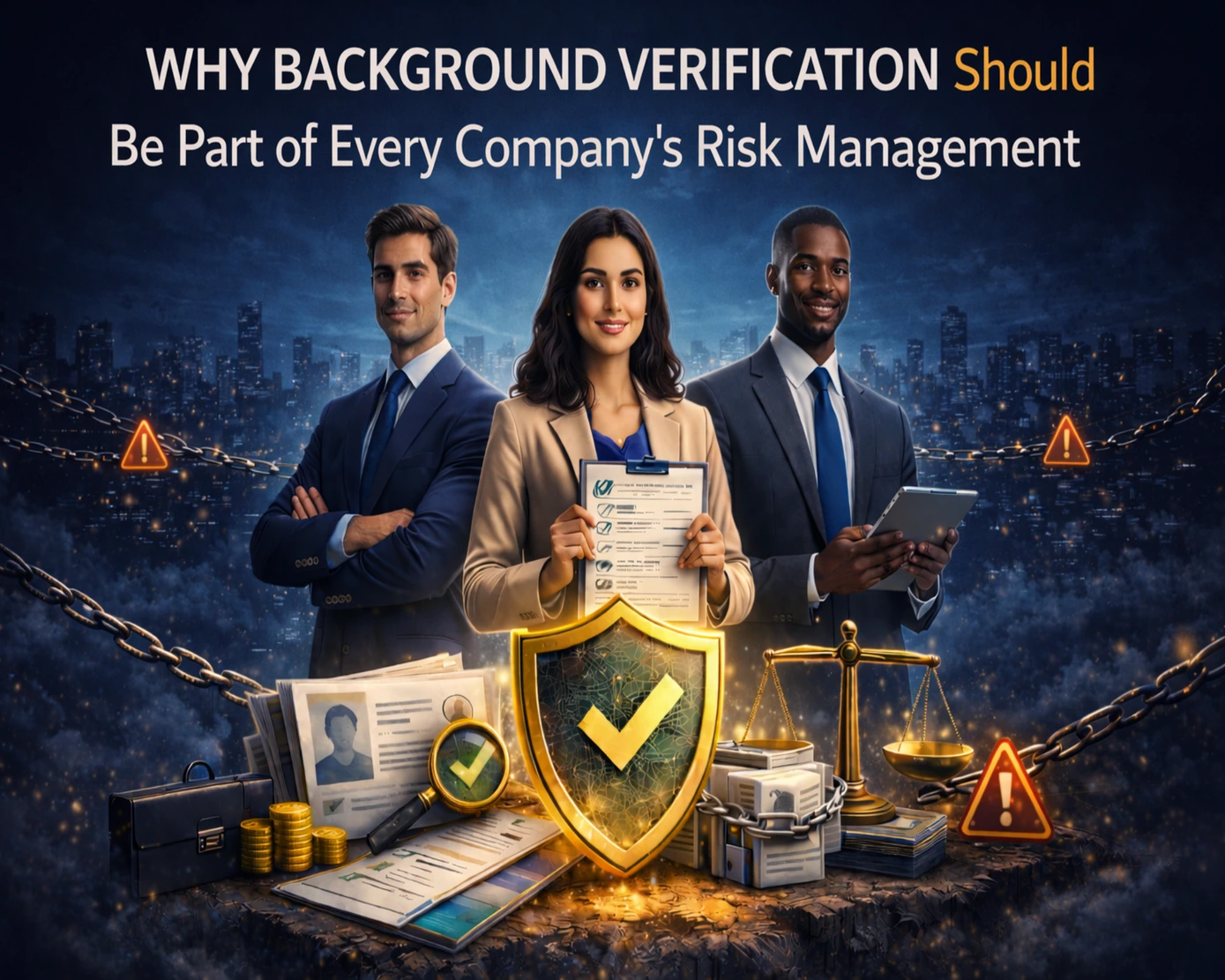
Risk Does Not Start After Hiring
Many organizations treat risk management as something that applies after an employee joins — through policies, audits, controls, and monitoring. In reality, risk often enters the organization at the hiring stage. When a candidate’s identity, experience, or legal history is not properly verified, the organization inherits unknown exposure from day one.
Background verification is the earliest and most effective risk control available to companies. It prevents avoidable threats from entering the system before damage occurs.
Hiring Risk Is Business Risk
Employees influence every critical area of a business — data security, customer trust, financial integrity, regulatory compliance, and workplace safety. A single unverified hire in a sensitive role can create cascading risks that impact multiple departments.
By integrating background verification into risk management frameworks, companies treat hiring with the same seriousness as financial audits, cybersecurity controls, and compliance reviews.
Strengthening Legal and Compliance Defensibility
In India, employer accountability is increasing across data protection, workplace conduct, and regulatory compliance. When incidents occur, organizations are expected to demonstrate that reasonable due diligence was exercised.
Background verification provides documented proof of responsible hiring. These records strengthen legal defensibility, support audits, and reduce exposure during disputes or regulatory reviews. Without verification evidence, companies are left vulnerable when accountability is questioned.
Preventing Operational and Reputational Damage
Operational disruptions caused by unqualified or dishonest employees are costly and difficult to reverse. Beyond immediate business impact, reputational damage can affect client relationships, investor confidence, and employer branding.
Risk management is not only about preventing loss — it is about protecting trust. Background verification supports this by ensuring that people representing the organization meet integrity and credibility standards.
Supporting Leadership Decision-Making
For leadership teams, risk visibility is critical. Background verification provides clarity at the people-risk level, allowing informed decisions about access, responsibility, and authority.
When hiring data is verified and reliable, leaders can delegate with confidence, scale operations safely, and avoid reactive decision-making triggered by preventable hiring failures.
Making Risk Management Proactive, Not Reactive
Organizations that rely solely on post-incident controls operate reactively. Background verification shifts risk management upstream, stopping threats before they materialize.
This proactive approach reduces firefighting, legal exposure, and internal disruption — allowing teams to focus on growth rather than damage control.

Final Thought
Risk management does not begin with policies or systems — it begins with people. Background verification is a foundational risk control that protects organizations from preventable exposure at the earliest stage. Companies that embed verification into their risk management strategy build safer operations, stronger governance, and long-term resilience
Leave a comments