Artificial intelligence has moved from the margins of recruitment to its centre, screening resumes, ranking candidates and drafting outreach at scale. It was only a matter of time before the question turned to background verification: if AI can do so much of hiring, can it simply take over verification too, and run the whole thing without human involvement? In 2026 that question deserves a clear, honest answer.
The short version is that AI has genuinely transformed parts of verification while leaving other parts stubbornly human. Understanding precisely where automation excels and where it fails is what separates organisations that use AI to make verification faster and better from those that use it to make confident mistakes at scale. This guide draws that line carefully.
What AI Already Does Well in Verification #
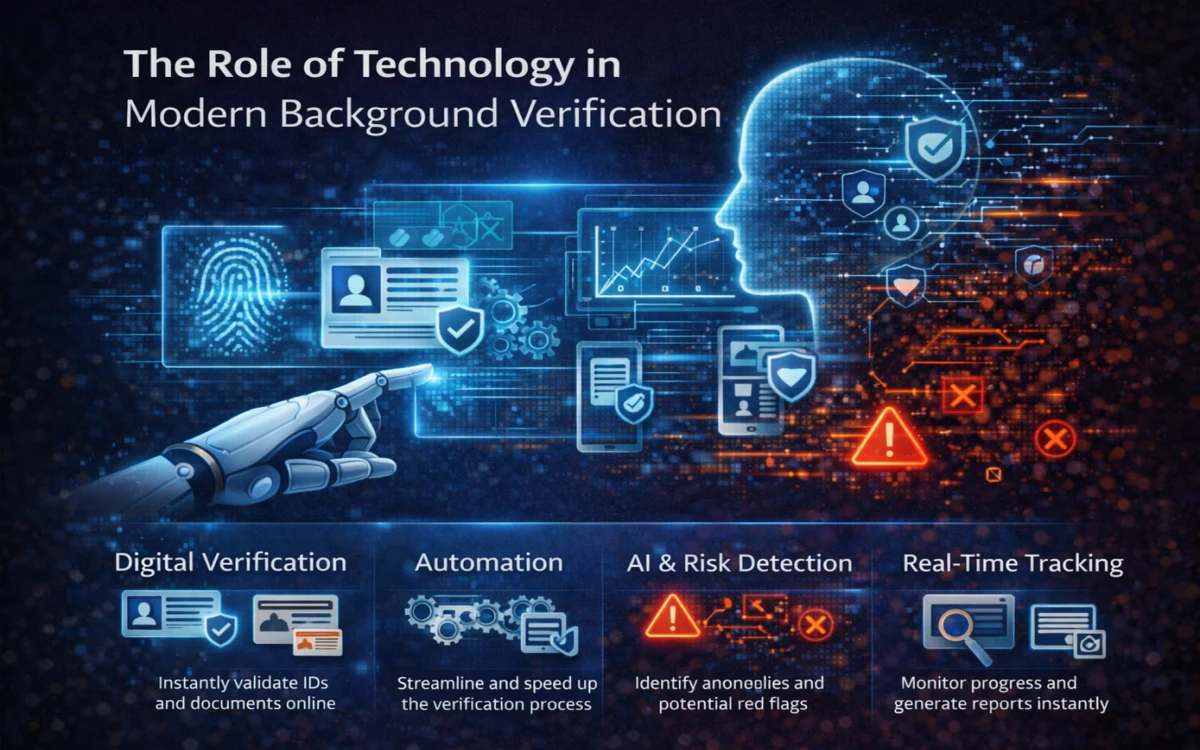
AI's strengths in verification are real and growing. It excels at the high-volume, pattern-heavy parts of the process: extracting data from documents, matching names and dates across sources, flagging inconsistencies, and routing each case to the right next step. These are exactly the tasks where speed and tireless consistency matter and where human verifiers spend time they would rather spend on judgement.
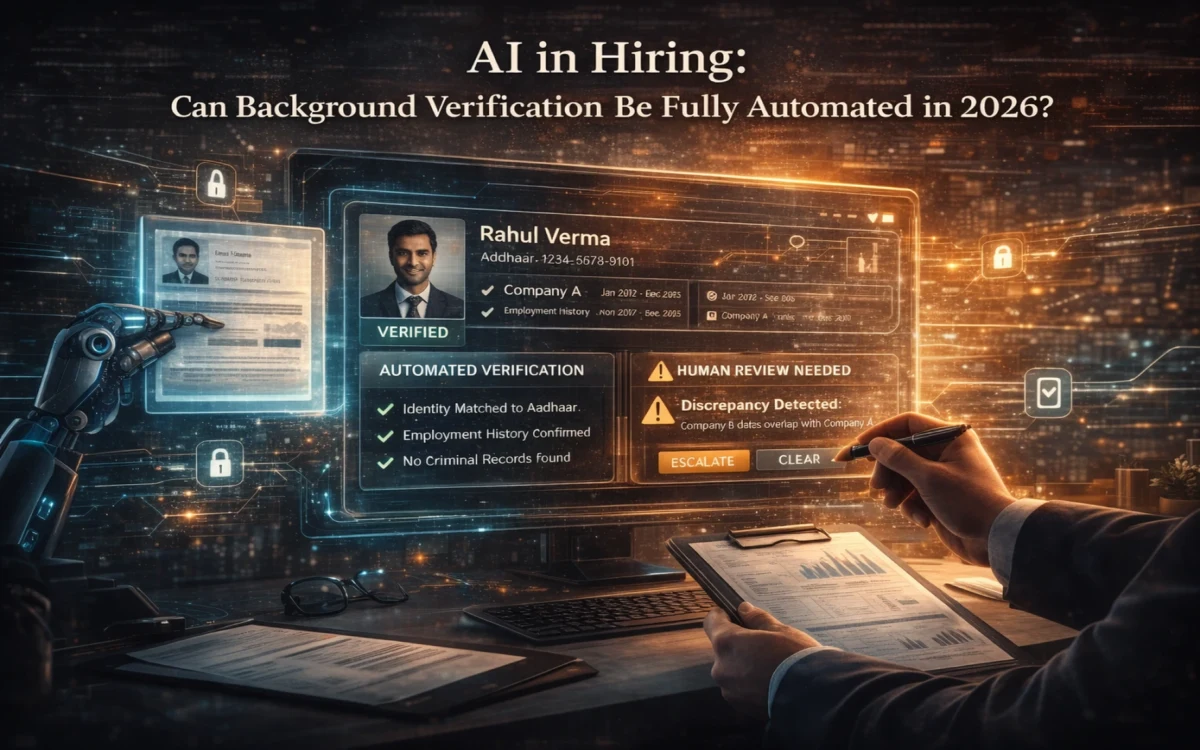
Optical character recognition combined with intelligent validation can read a degree certificate, compare it against an institution's records, and surface a mismatch in seconds. Anomaly detection can spot a salary slip whose formatting deviates from a genuine template, or employment dates that overlap impossibly. Used this way, AI is a force multiplier that clears the routine and highlights the exceptions.
Where Full Automation Breaks Down #
The trouble begins when organisations mistake 'AI can assist with this' for 'AI can decide this'. Verification frequently turns on judgement that depends on context a model does not have. Is a six-week employment gap a red flag or a parental leave? Is a name mismatch fraud or a marriage-related legal name change? Is a discrepancy material or trivial? These calls require understanding, not just pattern-matching.
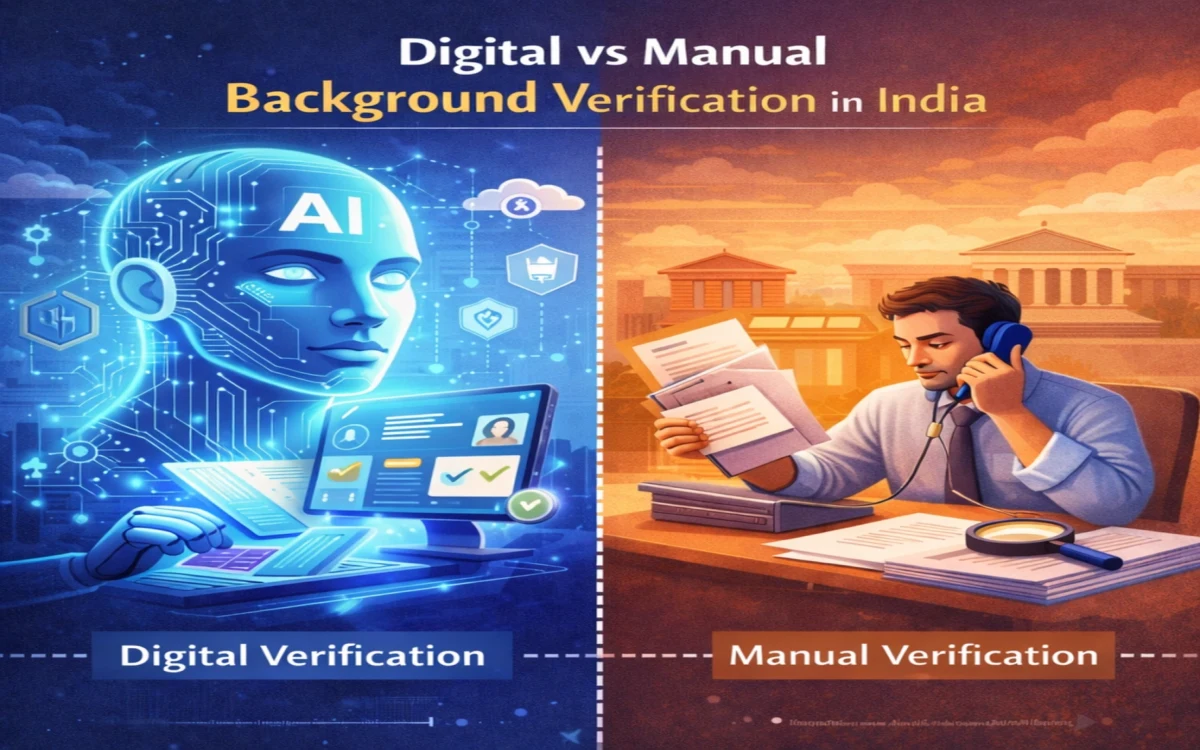
Many verification sources also remain stubbornly analogue. A small college without a digital records portal, a former employer whose HR desk only confirms employment by phone, a court whose records sit in physical files ??? none of these yield to automation. The slowest, most exception-heavy cases, which are precisely the ones that matter most, are the ones AI cannot finish alone.
The Risk of Automated Errors at Scale #
A human verifier who makes a mistake makes one mistake. An automated system that encodes a flawed assumption makes the same mistake thousands of times before anyone notices. This is the defining risk of over-automating verification: errors stop being isolated and become systematic, quietly rejecting good candidates or clearing bad ones according to a rule no one re-examined.
The danger of fully automated verification is not that it makes mistakes ??? humans do too ??? but that it makes the same mistake at scale, invisibly, until a pattern of harm emerges.
Bias, Fairness and the Limits of Models #
AI systems learn from data, and data carries the biases of the world that produced it. A verification or screening model trained on historical decisions can absorb and amplify patterns that disadvantage particular groups ??? penalising certain institutions, regions, or name patterns in ways that are unfair and potentially unlawful. Because the model's reasoning is opaque, this bias can persist unseen.
Fairness therefore cannot be assumed simply because a machine made the decision; if anything, automation demands more scrutiny, not less. Responsible use means testing systems for disparate impact, keeping humans accountable for adverse decisions, and ensuring candidates can challenge an outcome and reach a person, not a black box.
The Human-in-the-Loop Model That Actually Works #
The model that delivers the benefits of AI without the systemic risks keeps a human in the loop at the points that matter. AI handles intake, extraction, matching and anomaly detection at speed; trained verifiers handle judgement, exceptions, ambiguous discrepancies and the final adverse decision. Neither does the other's job, and the combination outperforms either alone.
This is not a compromise; it is the design. The automation removes drudgery and surfaces what needs attention, freeing skilled verifiers to apply experience where experience is decisive. The result is faster turnaround on routine cases and better judgement on hard ones ??? exactly the inverse of what full automation produces.
Data Protection Implications of AI-Driven Checks #
Feeding candidate data into AI systems raises its own obligations. The same principles that govern any processing of personal data ??? consent, purpose limitation, security, retention ??? apply with equal force when the processing is automated. An AI verification pipeline that ingests sensitive documents must protect them as rigorously as any human-run process, arguably more so given the volume.
Automated decision-making attracts particular attention under modern data protection thinking, especially where it significantly affects an individual. Transparency about the use of automated tools, a route to human review, and the ability to contest an outcome are not just good practice; they are increasingly the expected standard for any organisation deploying AI in decisions about people.
What 2026 Realistically Looks Like #
The realistic picture for 2026 is neither full automation nor business as usual. It is a hybrid in which AI handles a steadily larger share of the mechanical work while human judgement remains firmly in charge of decisions about people. Organisations that pretend the human can be removed entirely will discover its absence at the worst possible moment ??? in the exception, the dispute, or the wrongful rejection.
The competitive advantage goes to organisations that deploy AI deliberately: automating what should be automated, preserving human judgement where it is irreplaceable, and remaining accountable for outcomes throughout. That is not a limitation on AI's value; it is the condition for realising it responsibly.
Building Verification That Uses AI Wisely #
A wisely designed programme treats AI as an instrument, not an oracle. It uses automation to compress turnaround and catch anomalies, it routes every consequential judgement to a qualified human, and it builds in fairness testing, transparency and a clear appeals route from the start. Speed and accuracy both improve, and accountability is never surrendered.
The question 'can verification be fully automated?' turns out to be the wrong one. The right question is 'how do we combine machine speed with human judgement to verify faster, fairer and more accurately than either could alone?' Organisations that ask it that way are the ones getting genuine value from AI in hiring.
Key Takeaways #
Here are the essential points to carry forward from this guide:
- AI excels at high-volume extraction, matching and anomaly detection in verification.
- Judgement-heavy and analogue-source checks still require skilled human verifiers.
- Full automation risks repeating the same error at scale, invisibly, across thousands of cases.
- AI models can absorb bias, so fairness testing and human accountability are essential.
- A human-in-the-loop model delivers AI's speed without surrendering judgement or fairness.
Conclusion #
Background verification in 2026 cannot be fully automated, and the organisations chasing that goal are optimising for the wrong outcome. The real prize is a hybrid model where AI clears the routine at speed and human verifiers own the judgement, the exceptions and the consequential decisions about people.
Used this way, AI makes verification faster, more consistent and better at catching anomalies ??? without surrendering fairness, accountability or accuracy. The future of verification is not human or machine; it is human judgement amplified by machine speed, with a person always answerable for the decision.
The right question is not whether AI can replace the verifier, but how it can make the verifier faster, fairer and sharper.
AI speed, human judgement. CaseXpert pairs AI-driven extraction and anomaly detection with experienced human verifiers who own every consequential decision ??? giving you quicker turnaround on routine checks and sound judgement on the hard ones. Talk to our verification specialists or send an enquiry to get started.