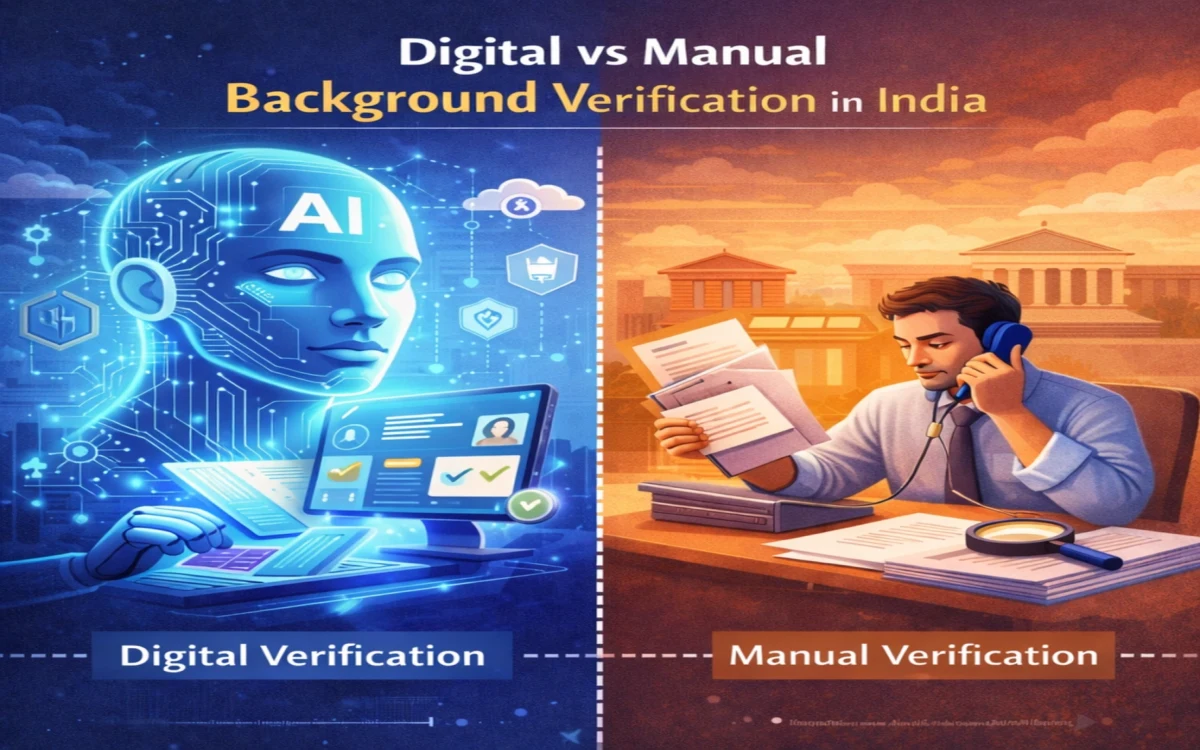
Background verification has been transformed by technology. What was once a manual, paper-and-phone process measured in weeks is now a largely digital workflow measured in days, with real-time tracking, automated checks and audit-ready records. Understanding the role technology plays ??? and its limits ??? helps companies appreciate why modern verification is faster, more accurate and more compliant than ever.
This article examines how technology powers modern background verification in India: the specific capabilities it adds, the efficiency and accuracy gains it delivers, and the crucial reasons human expertise still matters. The honest picture is one of partnership between automation and judgement, not replacement of one by the other.
Automation and Speed #
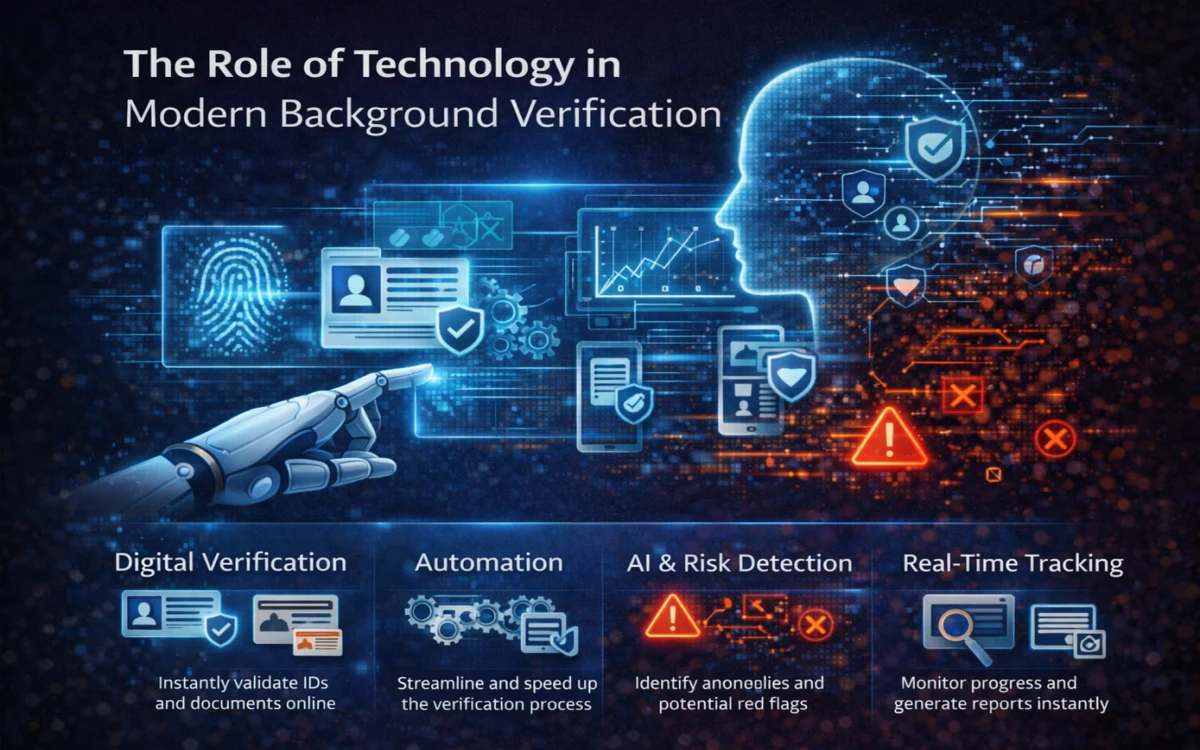
The most visible contribution of technology is speed. Automated workflows run multiple checks in parallel, digital identity validation confirms credentials in moments, and database-backed checks return results that once required days of phone calls. For companies hiring at volume, this is the difference between verification keeping pace and becoming a bottleneck.
Automation also removes the idle waiting that plagued manual processes. Instead of sequential checks where each waits for the last, technology orchestrates them simultaneously, compressing total turnaround dramatically.
Real-Time Tracking and Transparency #
Technology gives HR teams something manual verification never could: visibility. Real-time dashboards show exactly which checks are complete, pending or flagged, so teams can manage onboarding proactively and intervene early on anything that stalls. The black box becomes a glass box.
Visibility changes everything. When HR can see a verification's status in real time, delays become manageable exceptions rather than anxious mysteries.
Data Integration and Database Checks #
Secure integration with authoritative databases allows instant validation of identity and other digitised records. Where reliable data exists, technology confirms it directly and accurately, removing the errors and delays of manual lookups. This is where digital verification is at its strongest.
- Instant identity validation against authoritative sources
- Automated database-backed checks where records are digitised
- Secure, structured data handling throughout
- Consistent application of the same checks to every candidate
Accuracy, Consistency and Compliance #
Beyond speed, technology improves accuracy and consistency. Automated workflows apply the same standard to every candidate, reducing the human omissions that creep into manual processes. Every action is logged, consent is captured systematically, and records are retained in audit-ready form ??? a significant advantage under India's data-protection regime.
This audit trail is increasingly valuable. The ability to demonstrate, with a complete digital record, exactly what was checked and when is what makes verification decisions defensible to clients, auditors and regulators.
The Limits of Automation #
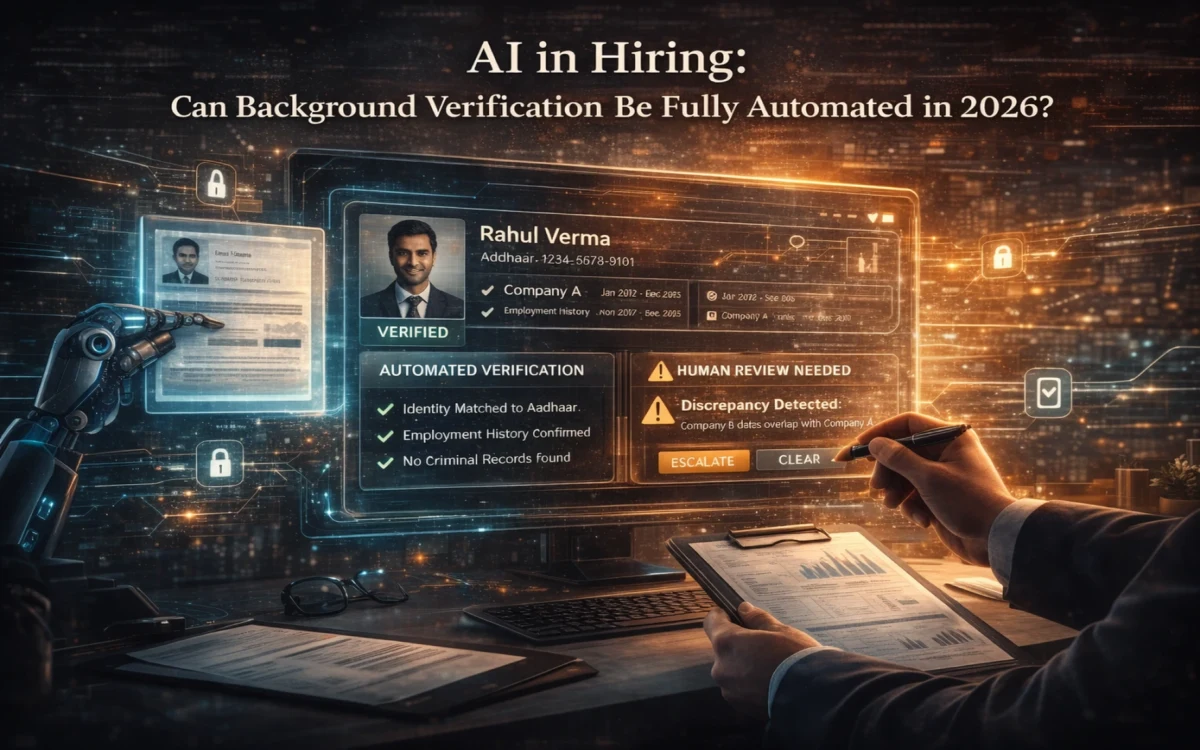
Technology cannot do everything. Many education and employment records in India are not digitised, and some require human follow-up to confirm. Discrepancies need interpretation, unusual cases need judgement, and fair treatment of candidates needs a human in the loop. A purely automated process would be fast but incomplete ??? and sometimes unfair.
This is why the smartest providers treat automation as a powerful layer within a human-supervised process, not as a replacement for skilled verifiers.
The Future: AI and Smarter Verification #
Emerging technologies promise further gains ??? smarter detection of document tampering, better anomaly detection across data sources, and more efficient orchestration of complex cases. But the direction of travel is augmentation, not autonomy: technology will keep handling more of the volume and surfacing more of the signals, while humans continue to make the judgement calls that fairness and accuracy demand.
- Automation clears routine, high-volume checks at speed
- Real-time tracking gives HR full visibility
- Digital records make decisions auditable and compliant
- Human experts handle non-digitised checks and judgement calls
What Technology Means for the Candidate Experience #
Technology does not only benefit the employer ??? it transforms the candidate experience too. Digital intake lets candidates submit documents quickly from anywhere, automated status updates keep them informed rather than anxious, and faster turnaround means less time spent in limbo between offer and start. A process that once felt opaque and slow becomes transparent and respectful of the candidate's time.
This matters for employer brand. In a competitive market, a smooth, fast, well-communicated verification process signals professionalism and respect, while a slow, confusing one can sour a candidate's first impression of the company. Technology, applied well, makes verification a positive touchpoint rather than a source of friction ??? turning a necessary safeguard into part of a good onboarding experience.
Key Takeaways #
Here are the essential points to carry forward from this guide:
- Automation runs checks in parallel and compresses turnaround.
- Real-time tracking replaces anxious waiting with visibility.
- Database integration enables instant, accurate validation where data exists.
- Technology improves consistency, accuracy and auditability.
- Non-digitised records and judgement calls still require human experts.
- The future is augmentation ??? technology plus human judgement.
Conclusion #
Technology has made background verification in India faster, more transparent, more consistent and more compliant ??? a genuine transformation from the manual processes of the past. Automation clears routine checks at speed, real-time tracking replaces anxious waiting with visibility, and digital records make every decision auditable.
Yet technology's greatest strength is realised in partnership with human expertise. Automation handles volume and surfaces signals; people handle the non-digitised checks, the ambiguous findings and the fair treatment of candidates. Neither alone is enough.
The companies getting the most from modern verification are those that embrace this partnership ??? using technology to do more, faster, while keeping skilled judgement at the centre of every consequential decision.
None of this means technology runs unsupervised. The most reliable systems keep a human in the loop precisely at the points where candidate experience and fairness are at stake ??? interpreting an ambiguous result, giving someone a chance to clarify a flagged item, and ensuring that automation never hardens into an unfair, unexplained rejection. Technology accelerates the process; judgement keeps it humane.
Technology makes verification faster and smarter, but judgement makes it fair and accurate. The best results come from the two working together.
Powered by technology, guided by experts. CaseXpert pairs automation and real-time tracking with expert verifiers for fast, accurate, compliant checks across India. Talk to our verification specialists or send an enquiry to get started.