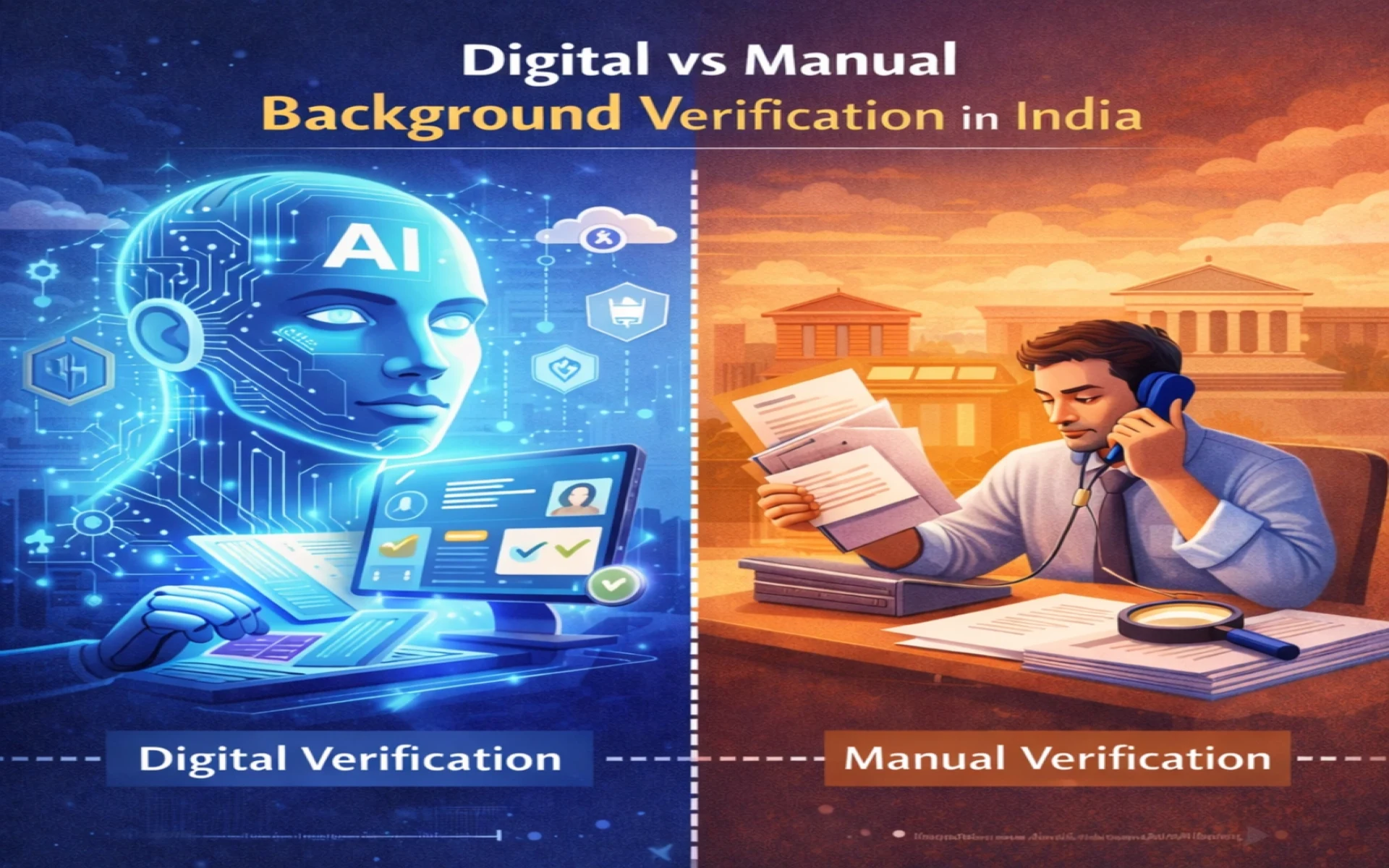
Background verification in India is undergoing a gradual shift from traditional, manual processes toward technology-enabled verification. Phone calls, paper forms, physical visits, and manual follow-ups are increasingly being supplemented by databases, APIs, digital document collection, and automated workflows.
Understanding the difference between digital and manual verification—and where each approach remains useful—can help companies choose a verification process that fits their hiring volume, roles, risk requirements, and available data sources.
This article compares digital and manual background verification across speed, accuracy, cost, coverage, and process management. Rather than treating one approach as universally superior, the practical approach for many organisations is to combine technology with human verification wherever additional investigation or judgement is required.
How Manual Verification Works
Manual verification relies heavily on human effort. Depending on the check, verification teams may contact former employers, communicate with educational institutions, conduct address verification, review documents, or carry out physical verification.
Manual verification remains relevant where records are not available digitally, a source requires direct communication, or a particular case needs additional investigation.
Its key strength is flexibility. Experienced verifiers can follow up on unusual cases, communicate with institutions or employers, investigate discrepancies, and interpret information that may not fit a standard automated workflow.
The main challenges are time, operational effort, and scalability. As the number of candidates increases, organisations need more people and coordination to maintain the same level of verification activity.
How Digital Verification Works
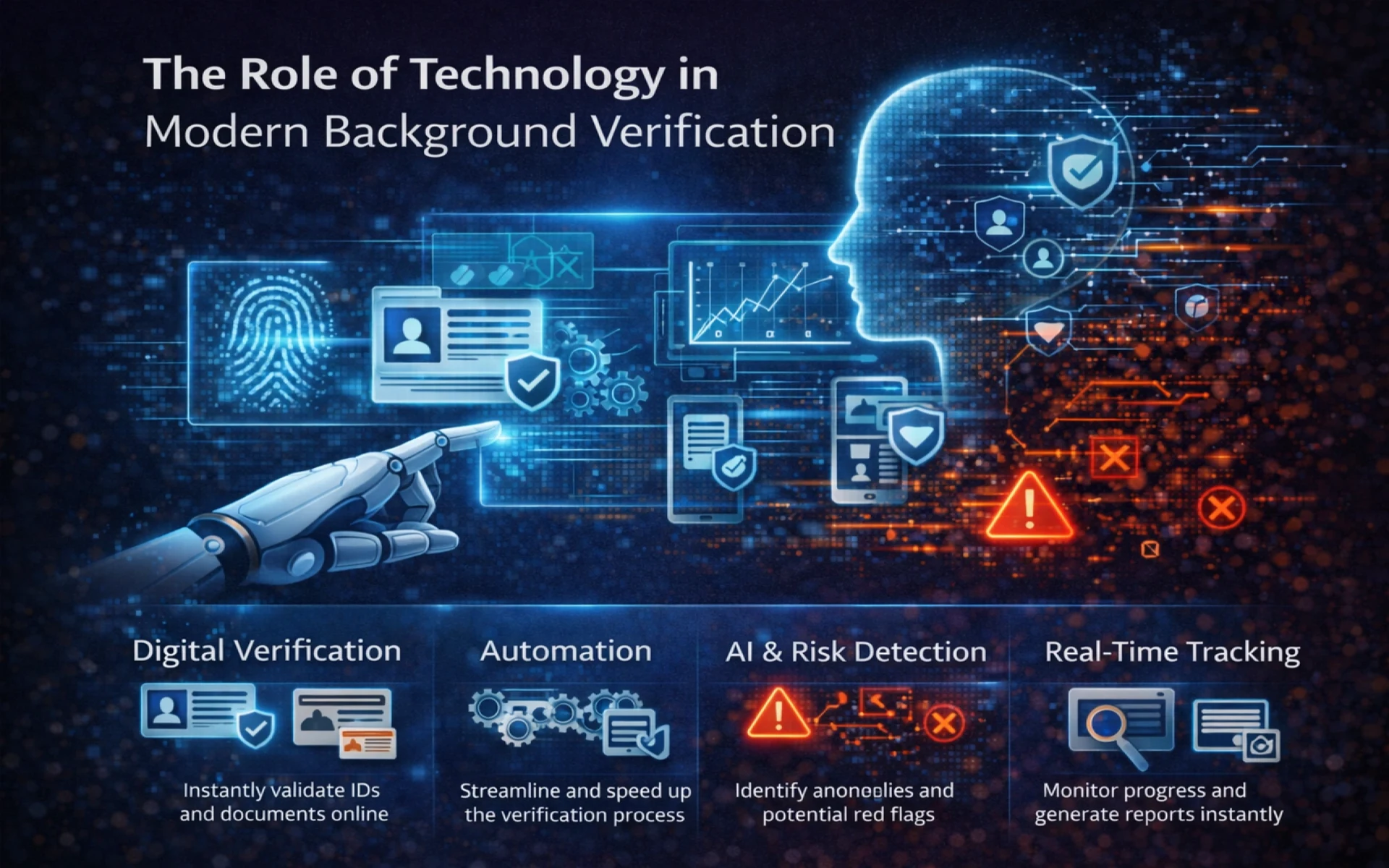
Digital verification uses technology to streamline checks where reliable digital data or verification infrastructure is available. Depending on the provider and source, this may involve APIs, databases, digital document collection, automated workflows, and online status tracking.
Common advantages include:
- Faster processing for checks supported by reliable digital sources
- Automated status tracking across verification components
- Standardised workflows that reduce manual follow-ups
- Centralised records and reporting
- Better visibility into pending and completed checks
Digital verification is particularly useful for routine and high-volume processes. However, its effectiveness depends on the availability, accuracy, and accessibility of the underlying data source.
Speed and Scale
Digital verification can significantly improve speed and scalability for checks that can be completed through reliable digital sources. Automated systems can process multiple cases simultaneously and reduce repetitive administrative work.
Manual verification generally requires more time because it depends on people contacting institutions, employers, field agents, or other sources and waiting for responses.
For organisations with large hiring volumes, digital workflows can therefore reduce administrative bottlenecks and make it easier to manage verification at scale.
However, not every verification can be completed digitally. When a check requires direct confirmation or physical verification, manual involvement may still be necessary.
Accuracy and Coverage
Accuracy depends primarily on the quality and reliability of the source being used, rather than simply whether a check is digital or manual.
Digital verification can be highly effective when authoritative and up-to-date digital records are available. At the same time, it cannot independently verify information that is not available through the relevant digital source.
Manual verification can help address these gaps by allowing verification teams to contact institutions, employers, or other appropriate sources directly.
For this reason, organisations should consider both source reliability and verification methodology when assessing accuracy and coverage. In many cases, technology can handle routine checks while human verification is used for non-digitised records, exceptions, or discrepancies.
Cost and Process Management
Digital verification can reduce the administrative effort associated with routine checks by automating repetitive tasks, reducing manual follow-ups, and centralising case management.
Manual verification generally requires more human resources, particularly when large numbers of candidates or multiple verification components are involved.
However, cost should not be evaluated in isolation. A verification process should also be assessed based on coverage, turnaround time, source quality, reporting, data handling, and the amount of human intervention required.
From a process-management perspective, digital systems can provide useful advantages such as centralised records, automated workflows, status tracking, and access controls. These features can make verification easier to monitor and document, provided the system is appropriately designed and managed.
The Hybrid Model
For many organisations, the practical approach is not digital versus manual but digital plus manual.
A hybrid verification model can use automation for checks that are well suited to digital processing while routing non-digitised, complex, or exception cases to trained verification professionals.
A typical workflow may look like this:
- Automate routine checks where reliable digital sources are available.
- Use manual verification for sources that require direct confirmation.
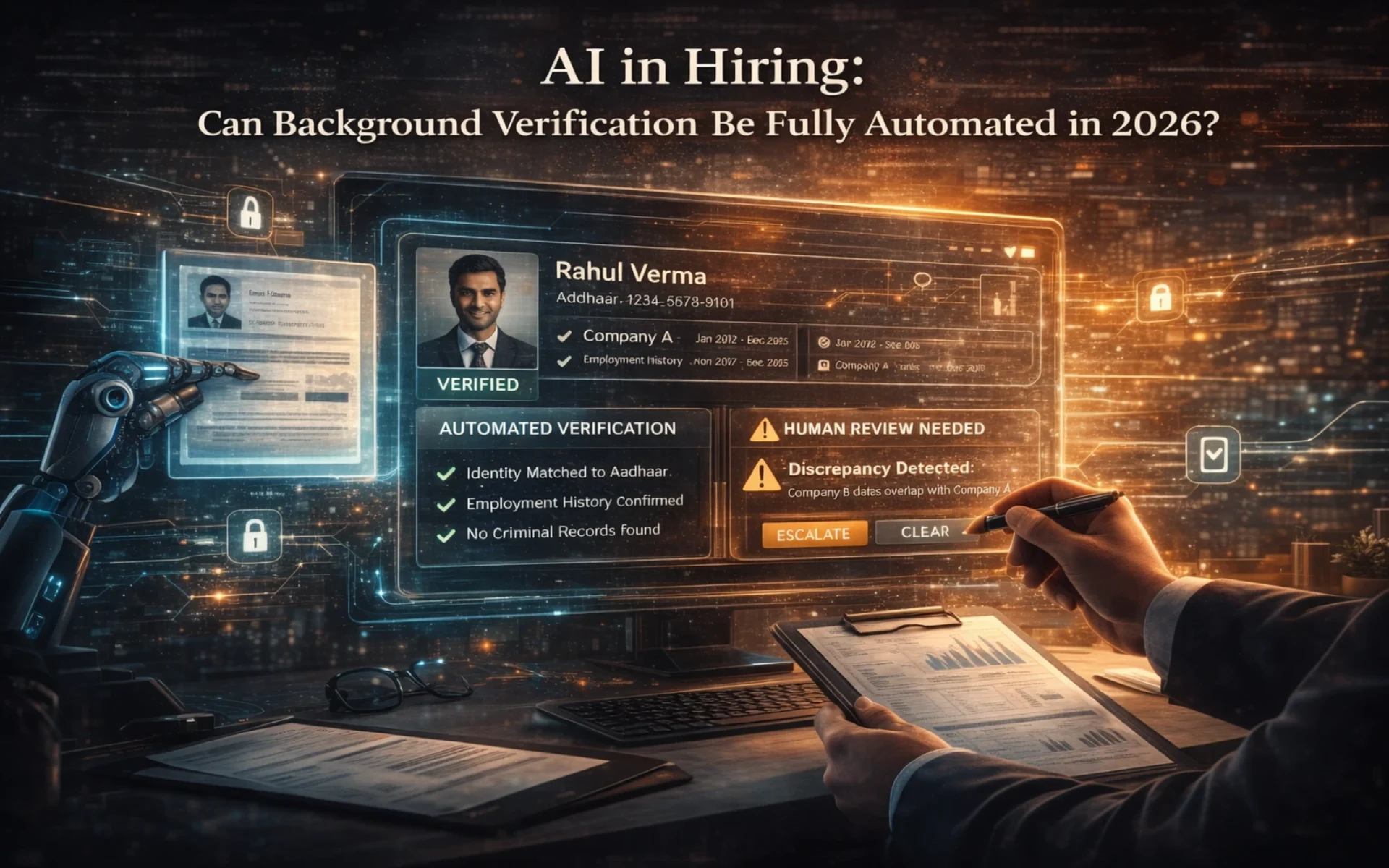
- Apply human review when discrepancies or unusual findings arise.
- Maintain centralised records of verification activity and outcomes.
This approach can help organisations balance efficiency with coverage while retaining human oversight where it adds value.
Choosing the Right Mix for Your Needs
The right verification approach depends on factors such as hiring volume, role sensitivity, geographic coverage, available data sources, turnaround requirements, and the types of checks required.
High-volume hiring may benefit significantly from digital workflows for routine verification. Roles involving sensitive information, regulated responsibilities, or complex employment histories may require additional manual review depending on the scope of the checks.
A capable BGV provider can help organisations determine which parts of the process can be automated and where human verification is still appropriate.
The goal is not to automate everything. It is to use technology where it improves efficiency while retaining human expertise where investigation, context, or judgement is required.
Key Takeaways
Here are the essential points to carry forward from this guide:
- Manual verification provides flexibility and human investigation but can require significant time and resources.
- Digital verification can improve speed, workflow management, and scalability where reliable digital sources are available.
- Accuracy depends on the quality of the underlying source and verification process.
- Some records and verification requirements still require direct or manual confirmation.
- Digital systems can improve visibility, documentation, and process consistency.
- A combination of digital workflows and human verification can provide a practical balance between efficiency and coverage.
Conclusion
The shift from manual to digital background verification is changing how organisations manage BGV in India. Technology can make routine checks faster, improve visibility, and reduce repetitive administrative work, but it does not eliminate the need for human verification.
Many checks still depend on direct communication, non-digitised records, physical verification, or careful review of discrepancies. The most effective approach is therefore often to combine digital capabilities with experienced human oversight.
Companies that use this combination can streamline routine verification while retaining the depth and judgement needed for more complex cases.
As India's verification infrastructure continues to evolve, the role of technology will likely expand. The organisations that benefit most will be those that use automation strategically—letting technology handle repetitive volume while skilled professionals focus on the cases that require context and judgement.
The future of background verification is not simply digital or manual—it is the right combination of technology and human expertise for each verification need.
Best of both worlds. CaseXpert blends digital automation with expert verifiers to deliver quick, accurate, compliant checks across India. Talk to our verification specialists or send an enquiry to get started.