Every hiring decision is an investment in the future of an organization. Beyond filling a vacant position, companies are placing trust in an individual who may influence customers, colleagues, business operations, confidential information, and strategic outcomes.
Yet, many organizations continue to measure hiring success by how quickly a position is filled rather than by the long-term value the employee creates. When a hiring decision turns out to be the wrong one, the consequences often extend far beyond the cost of recruitment.
A poor hiring decision can affect team performance, customer relationships, regulatory compliance, workplace culture, and business reputation. In many cases, these hidden costs remain unnoticed until they begin affecting productivity, profitability, or organizational trust.
Understanding the true impact of a bad hire allows business leaders to shift their focus from simply hiring faster to hiring with greater confidence and accountability.
A Bad Hire Costs More Than Recruitment Expenses
When organizations think about the cost of hiring the wrong employee, they often consider recruitment agency fees, advertising expenses, onboarding costs, or the salary paid during the probation period.
These are only the visible costs.
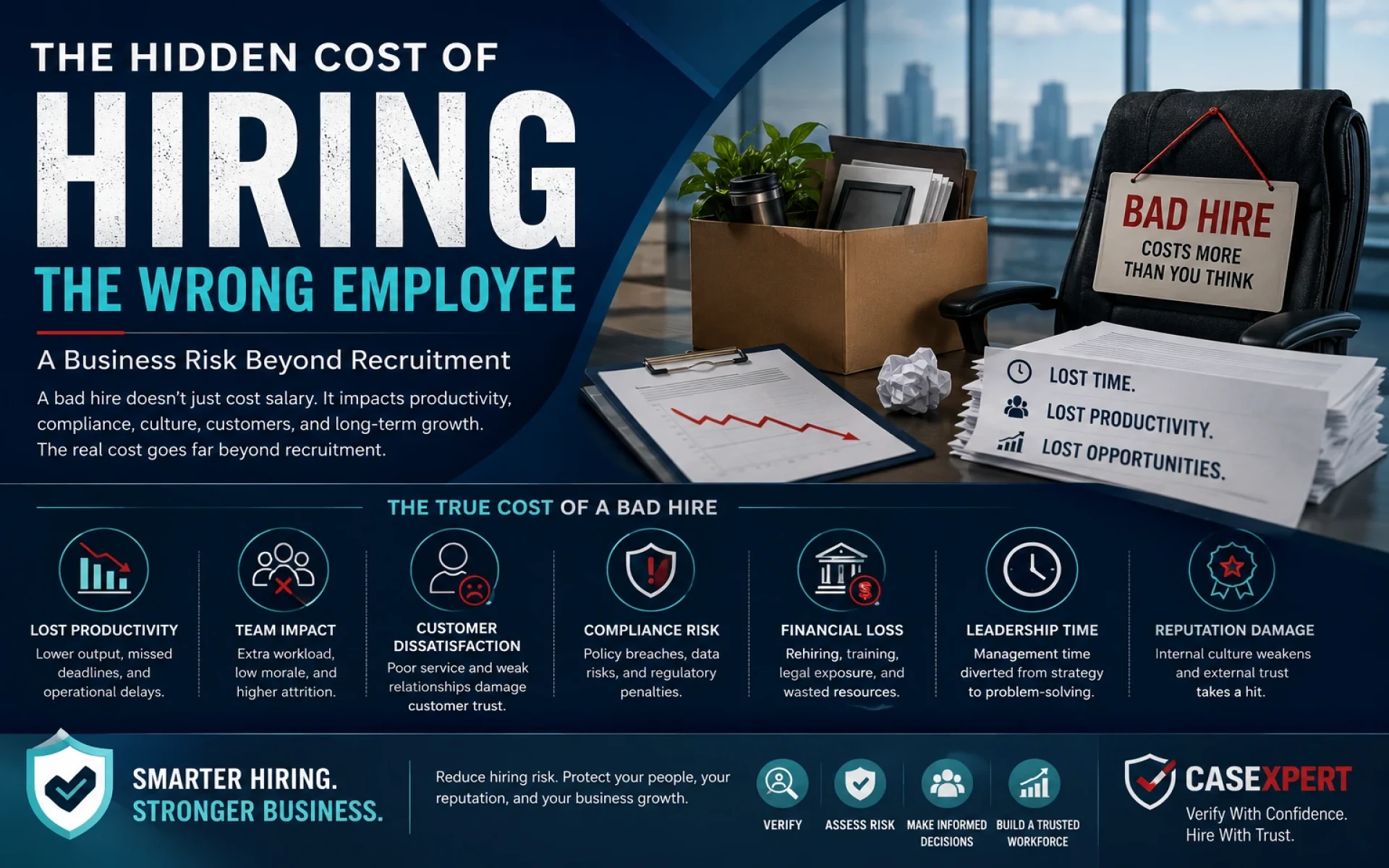
The larger financial impact usually comes from lost productivity, delayed projects, repeated hiring efforts, management time, customer dissatisfaction, and operational disruptions.
Replacing an employee requires repeating much of the recruitment process while existing teams continue managing increased workloads. The longer the wrong hire remains in the organization, the greater the cumulative impact on business performance.
Productivity Declines Across the Team
An underperforming employee rarely affects only their own output.
Managers spend additional time supervising work, colleagues often compensate for missed responsibilities, and projects may experience delays due to inconsistent performance or repeated errors.
This redistribution of work gradually reduces overall team efficiency. High-performing employees may become frustrated when expectations are applied inconsistently, eventually affecting morale and retention.
The cost of a bad hire therefore extends beyond individual performance—it influences the effectiveness of the entire team.
Customer Trust Can Be Difficult to Rebuild
Employees frequently serve as the face of an organization.
Whether interacting with customers, partners, or vendors, their professionalism and decision-making shape external perceptions of the business.
A poorly suited employee may create communication issues, deliver inconsistent service, mishandle client relationships, or make decisions that negatively affect customer confidence.
While operational mistakes can often be corrected, rebuilding trust after a damaged customer relationship typically requires significant time and effort.
Compliance Risks Often Begin with People
Many industries operate within strict regulatory environments where employees are responsible for handling sensitive information, financial transactions, healthcare records, or confidential business data.
A hiring decision that overlooks role-specific risks may expose the organization to:
- Regulatory non-compliance
- Data privacy violations
- Financial misconduct
- Policy breaches
- Internal fraud
- Unauthorized system access
In highly regulated sectors, the financial penalties associated with compliance failures may far exceed the original recruitment costs.
Workplace Culture Is More Fragile Than Many Leaders Realize
Culture develops through everyday interactions rather than written policies.
Employees who consistently demonstrate poor ethics, negative behaviour, or a lack of accountability can gradually influence team dynamics and organizational morale.
High-performing employees often expect fairness, collaboration, and professionalism. When these expectations are compromised, engagement declines and voluntary turnover may increase.
Protecting workplace culture therefore begins with making thoughtful hiring decisions.
Leadership Time Is One of the Most Expensive Resources
Executives and managers spend considerable time recruiting, onboarding, coaching, resolving performance concerns, and managing employee transitions.
When a hiring decision proves unsuccessful, leadership attention shifts away from strategic priorities toward operational problem-solving.
Although this cost rarely appears in financial reports, it represents one of the most significant hidden expenses associated with poor hiring decisions.
Time invested in correcting preventable hiring mistakes is time unavailable for innovation, customer growth, or business development.
Why Traditional Recruitment Methods Are No Longer Enough
Modern recruitment has become increasingly competitive. Organizations move quickly to secure talent, often relying on resumes, interviews, technical assessments, and professional references.
While these methods remain valuable, they provide only part of the overall picture.
Resumes present achievements. Interviews evaluate communication and technical capabilities. Assessments measure current knowledge.
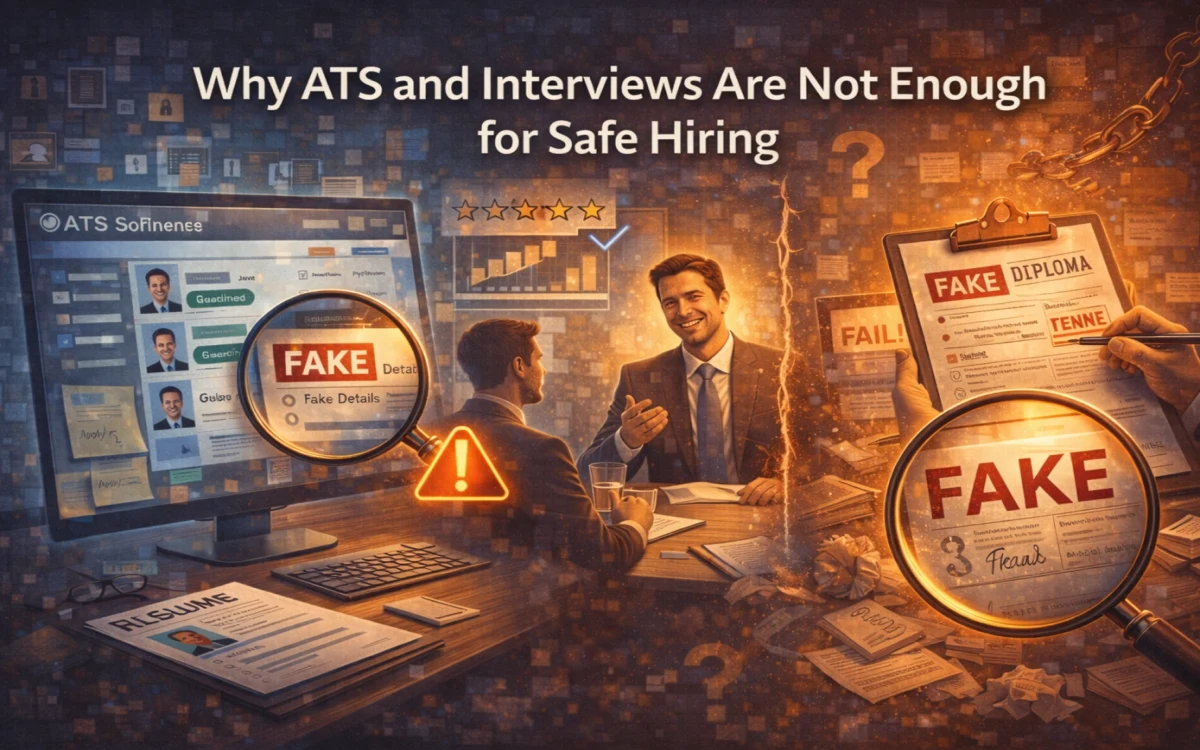
None of these methods independently confirm whether critical information has been accurately represented or whether role-specific risks have been appropriately evaluated.
This is why many organizations combine recruitment practices with structured verification and risk assessment processes before making final hiring decisions.
Hiring Should Be Viewed as Risk Management
Progressive organizations increasingly recognize that recruitment is not only an HR function—it is a business risk management activity.
Every hiring decision influences operational continuity, customer satisfaction, regulatory compliance, financial performance, and organizational reputation.
Rather than asking:
"Can this person perform the role?"
Business leaders are also asking:
"What risks accompany this hiring decision, and have we evaluated them appropriately?"
This broader perspective supports more informed, balanced, and resilient workforce planning.
Building a More Confident Hiring Process
Reducing hiring risk requires a structured approach that balances efficiency with diligence.
Organizations can strengthen recruitment decisions by:
- Defining role-specific risk levels
- Verifying critical candidate information
- Assessing cultural alignment alongside technical capability
- Implementing consistent hiring standards
- Conducting appropriate background verification
- Reviewing hiring outcomes to improve future decision-making
The objective is not to create unnecessary delays but to make decisions supported by verified information and thoughtful evaluation.
CaseXpert Perspective
The cost of a bad hire is often discussed in financial terms, but its most significant impact is the erosion of organizational trust. Every hiring decision influences relationships between employees, customers, regulators, and stakeholders. Organizations that integrate verification, governance, and risk awareness into their recruitment strategy are not simply reducing hiring mistakes—they are building a stronger foundation for sustainable growth.
Conclusion
Successful organizations understand that hiring is about more than filling vacancies. It is about selecting individuals who contribute positively to business objectives while protecting the organization's integrity, reputation, and long-term success.
By approaching recruitment as both a talent acquisition and risk management process, organizations can make more informed decisions that strengthen performance today while safeguarding the business for tomorrow.
The hidden cost of hiring the wrong employee is rarely confined to recruitment budgets. It appears in lost opportunities, weakened trust, operational disruptions, and avoidable business risks.
Verify your most trusted people too. CaseXpert helps companies apply consistent, risk-based verification across every level so the people with the most access to harm you are confirmed as trustworthy, not just assumed to be. Talk to our verification specialists or send an enquiry to get started.