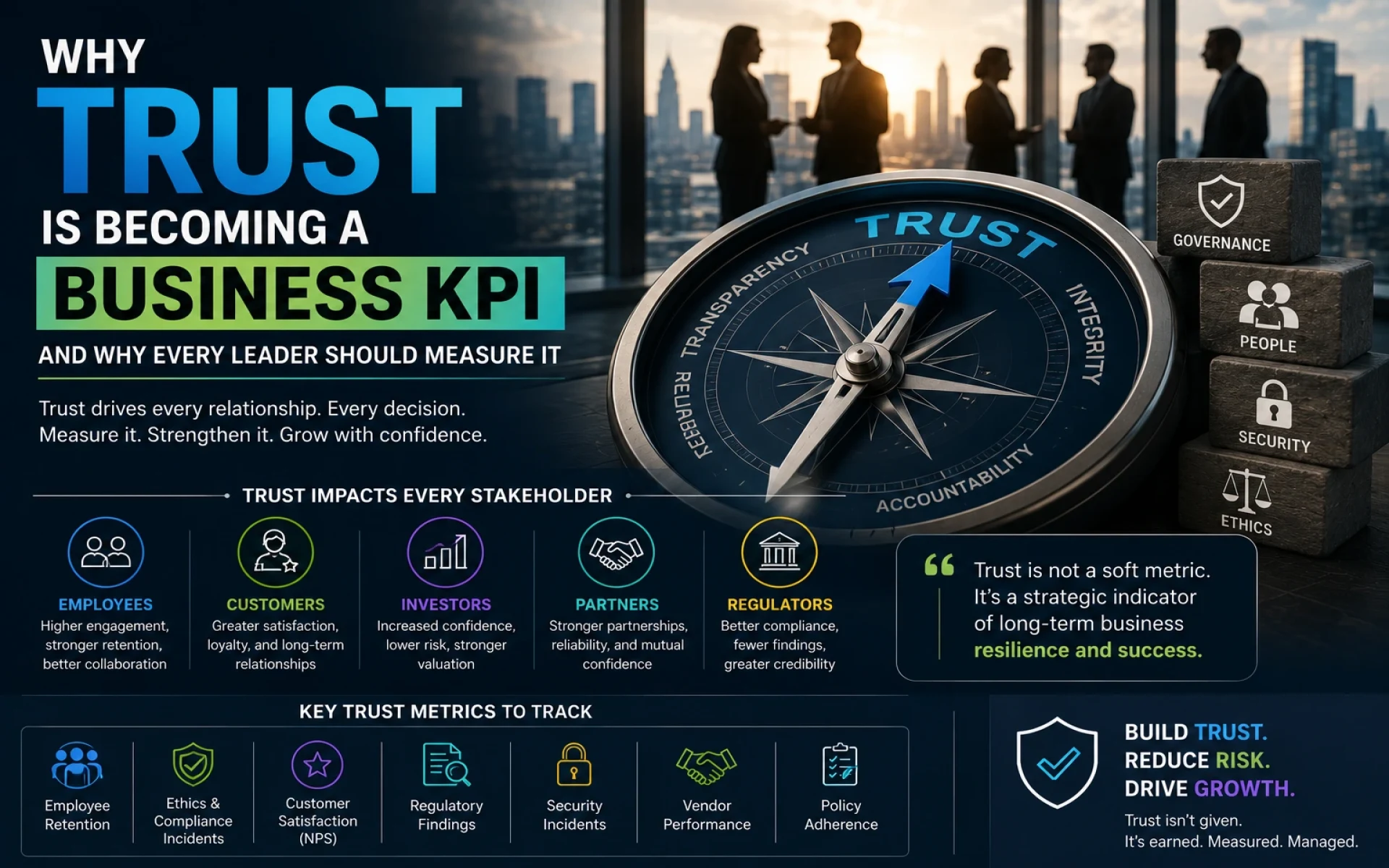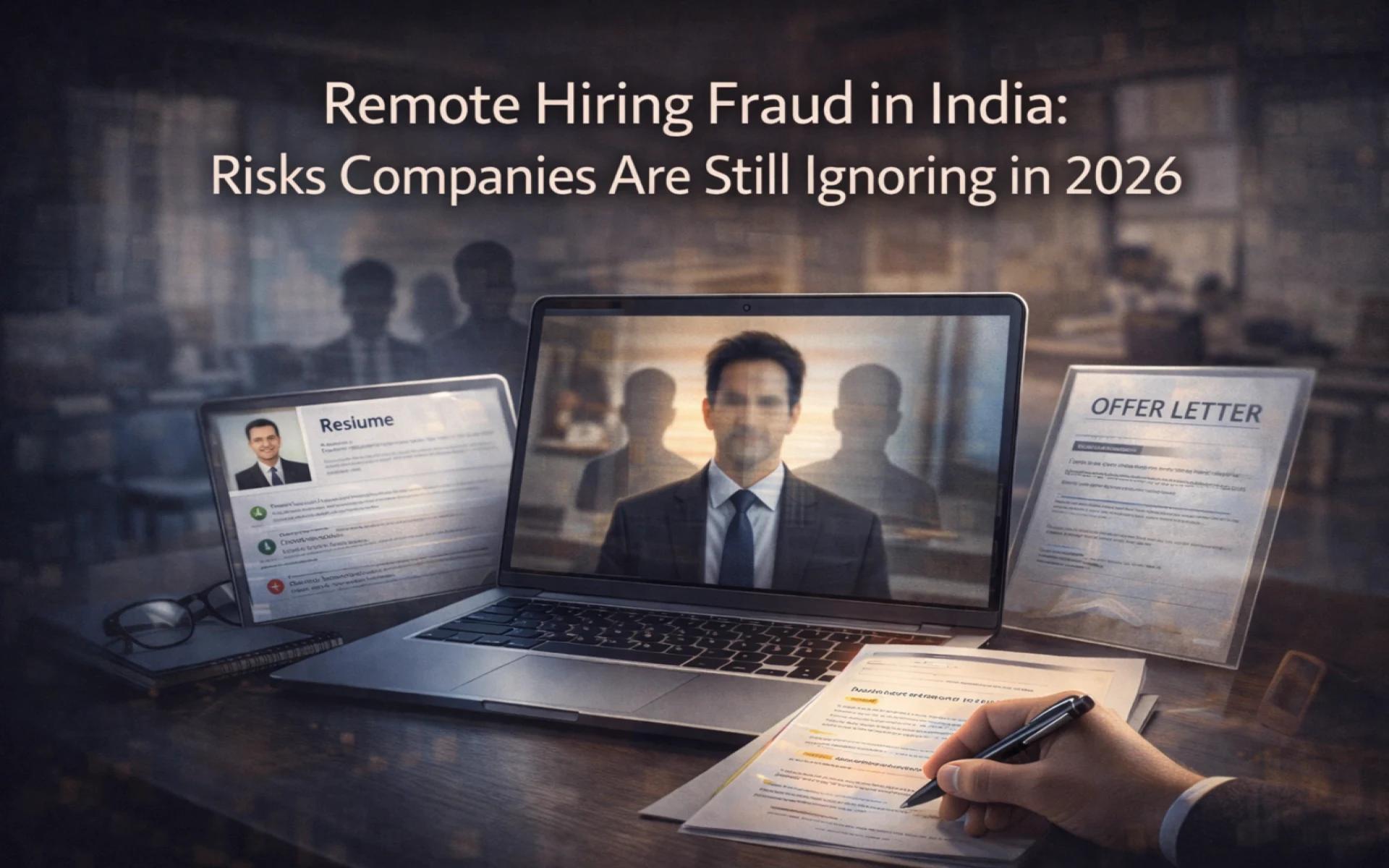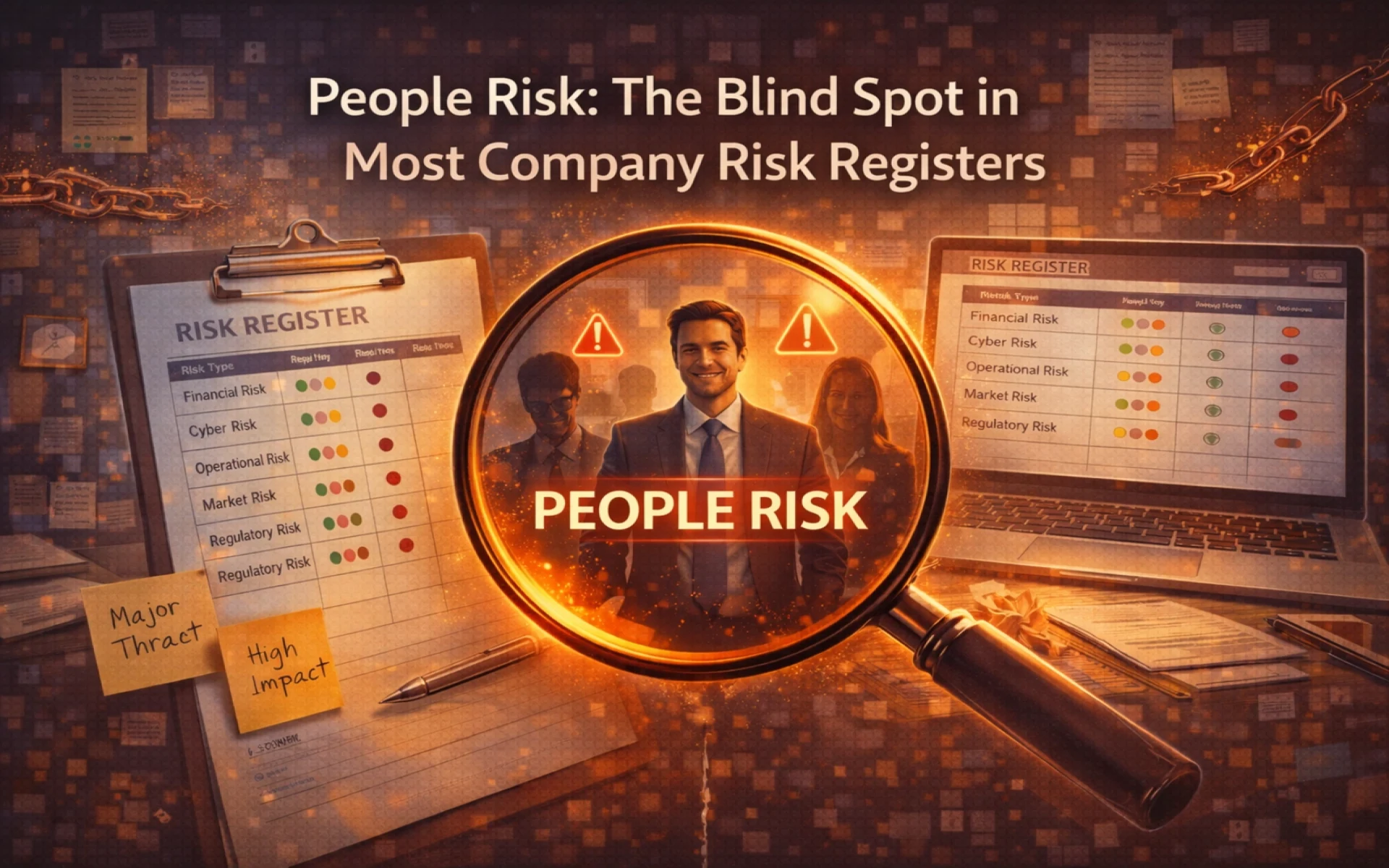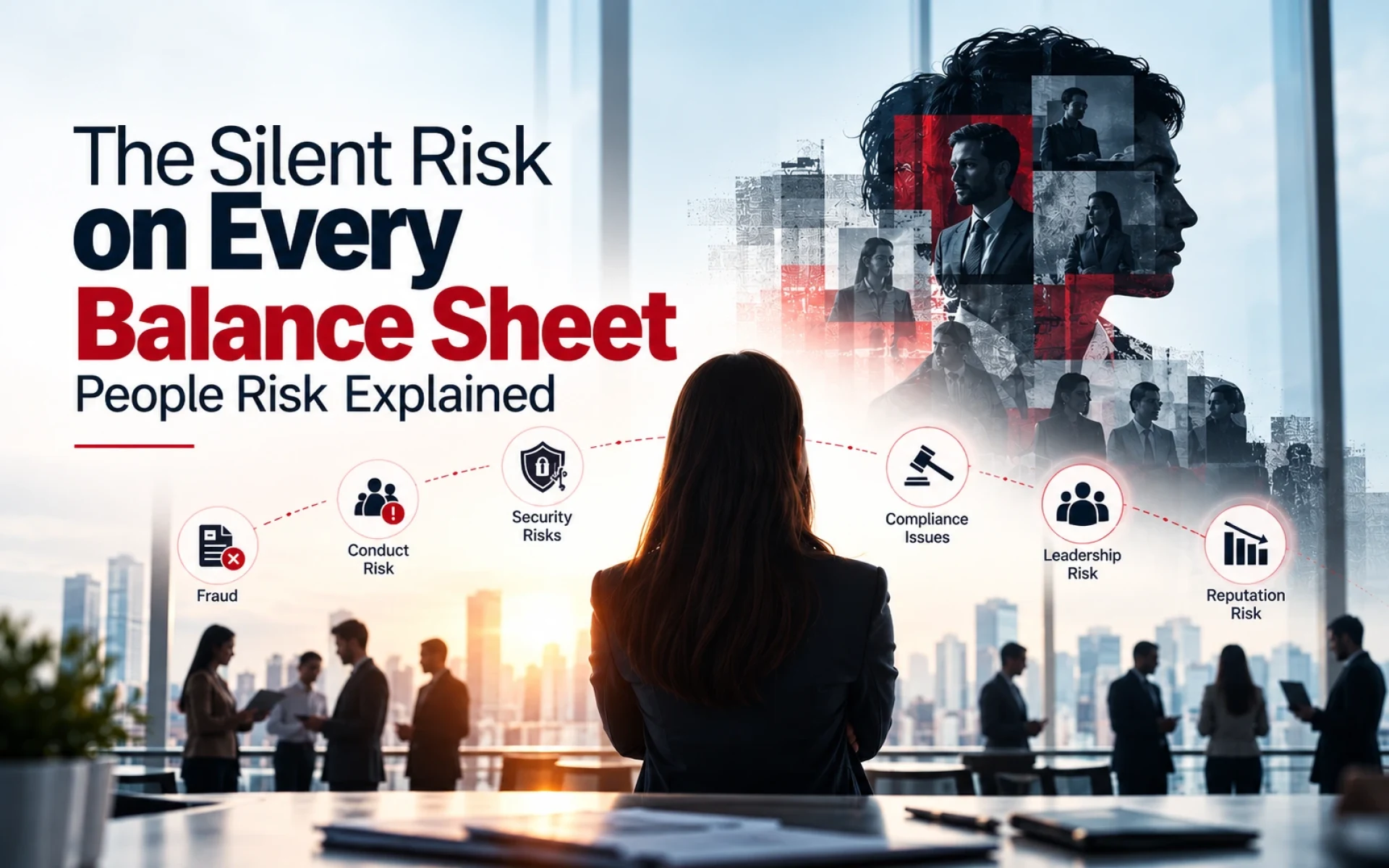
Every organization invests significant resources in managing financial risk, cybersecurity risk, operational risk, and regulatory compliance. Boards receive detailed reports, executives monitor dashboards, and businesses develop strategies to reduce uncertainty across every critical function.
Yet one category of risk quietly influences all the others.
People.
Every business decision is ultimately executed by individuals. Employees approve payments, access confidential information, negotiate contracts, manage customer relationships, develop software, oversee compliance, and represent the organization in the marketplace.
When people perform well, organizations grow stronger.
When they make poor decisions—or when organizations fail to identify workforce-related risks early—the consequences can extend far beyond one department.
This is why people risk has become one of the fastest-growing areas of focus in modern governance and enterprise risk management.
What Is People Risk?
People risk refers to the possibility that human actions, decisions, behaviours, or capabilities could negatively affect an organization's objectives, operations, financial performance, compliance, or reputation.
Unlike operational or technology risks, people risk is dynamic. It evolves as organizations hire new employees, expand into new markets, adopt remote work, promote leaders, and respond to changing regulations.
Importantly, people risk is not about assuming employees are untrustworthy. It is about recognizing that every organization depends on people—and every dependency introduces a degree of uncertainty.
Why People Risk Has Become a Boardroom Conversation
Several years ago, workforce-related issues were largely viewed as HR responsibilities.
Today, that perspective has changed.
Business leaders increasingly recognize that people-related decisions influence enterprise-wide outcomes.
A hiring mistake can delay a major project.
Weak leadership can damage culture.
Poor access controls can contribute to cybersecurity incidents.
Insufficient compliance awareness can result in regulatory penalties.
The workforce has become one of the organization's largest strategic assets—and one of its most significant sources of business risk.
People Risk Exists Throughout the Employee Lifecycle
Many organizations associate people risk only with recruitment.
In reality, it begins before hiring and continues until an employee exits the organization.
Potential risk points include:
Recruitment
Incorrect information, fraudulent documents, or poor role fit.
Onboarding
Inappropriate system access or incomplete compliance processes.
Employment
Policy violations, insider threats, misconduct, conflicts of interest, or declining engagement.
Leadership
Poor decision-making, weak governance, or ethical failures.
Offboarding
Unmanaged access, knowledge loss, or data security concerns.
Viewing people risk across the entire employee lifecycle enables organizations to identify vulnerabilities before they become business problems.
Common Sources of People Risk
Although every organization faces unique challenges, several workforce-related risks appear consistently across industries.
These include:
-
Resume fraud
-
Fake employment history
-
Undisclosed conflicts of interest
-
Insider threats
-
Weak leadership accountability
-
Compliance failures
-
Inadequate workforce verification
-
Poor succession planning
-
Skills mismatches
-
Employee misconduct
-
Unauthorized data access
-
Third-party workforce risks
None of these risks exist in isolation.
They often interact with technology, governance, and operational processes, increasing their overall impact.
The Cost of Ignoring People Risk
People risk rarely appears as a separate line item in financial reports.
Instead, it influences outcomes that organizations measure elsewhere.
For example:
-
Higher employee turnover
-
Customer dissatisfaction
-
Project delays
-
Increased recruitment costs
-
Compliance penalties
-
Legal disputes
-
Data breaches
-
Reputational damage
-
Reduced investor confidence
Because these consequences emerge gradually, organizations sometimes underestimate the role workforce-related decisions play in creating them.
Why Traditional Risk Management Is No Longer Enough
Historically, organizations focused heavily on financial controls and operational processes.
While these remain essential, they address only part of today's risk environment.
Business resilience increasingly depends on understanding how people interact with technology, governance frameworks, customers, suppliers, and regulatory obligations.
Organizations that continue treating workforce issues solely as HR concerns may overlook broader enterprise risks that require cross-functional collaboration.
Managing People Risk Requires More Than Policies
Policies establish expectations.
Training increases awareness.
Technology improves visibility.
However, none of these measures independently eliminate people risk.
Effective management requires organizations to combine:
-
Responsible hiring
-
Background verification
-
Leadership accountability
-
Continuous learning
-
Ethical workplace culture
-
Access governance
-
Performance management
-
Compliance monitoring
-
Periodic workforce reviews
Together, these practices create a stronger foundation for organizational trust and resilience.
The Future of People Risk Management
As businesses become increasingly digital, globally connected, and highly regulated, people risk will continue evolving.
Artificial intelligence, remote work, contractor ecosystems, digital identities, and stricter privacy regulations are reshaping how organizations think about workforce governance.
The companies that succeed will not necessarily be those with the largest compliance teams or the most sophisticated technology.
They will be the organizations that understand people risk as a strategic business discipline rather than simply an HR responsibility.
CaseXpert Perspective
People are often described as an organization's greatest asset. While that remains true, every valuable asset requires thoughtful governance.
Managing people risk is not about reducing trust in employees. It is about creating systems that help trustworthy people succeed while identifying potential risks before they affect the organization.
Businesses that integrate verification, governance, compliance, and ethical leadership into their workforce strategy are better positioned to build resilient organizations capable of sustaining long-term growth.
Final Thought
Organizations cannot eliminate uncertainty, but they can make better-informed decisions about where that uncertainty exists.
People risk deserves the same level of strategic attention as financial, operational, and cybersecurity risks because every business outcome ultimately depends on human decisions.
The organizations that recognize this reality today will be better equipped to strengthen governance, protect stakeholder confidence, and build businesses that are prepared for tomorrow's challenges.
growth tomorrow.
People are at the center of every business decision. Managing people risk means protecting the operations, trust, and reputation built around them.
Turn People Risk Into Better Business Decisions. CaseXpert helps organizations strengthen verification, workforce integrity, and risk management, and ongoing employee trust. Talk to our verification specialists or send an enquiry to get started.