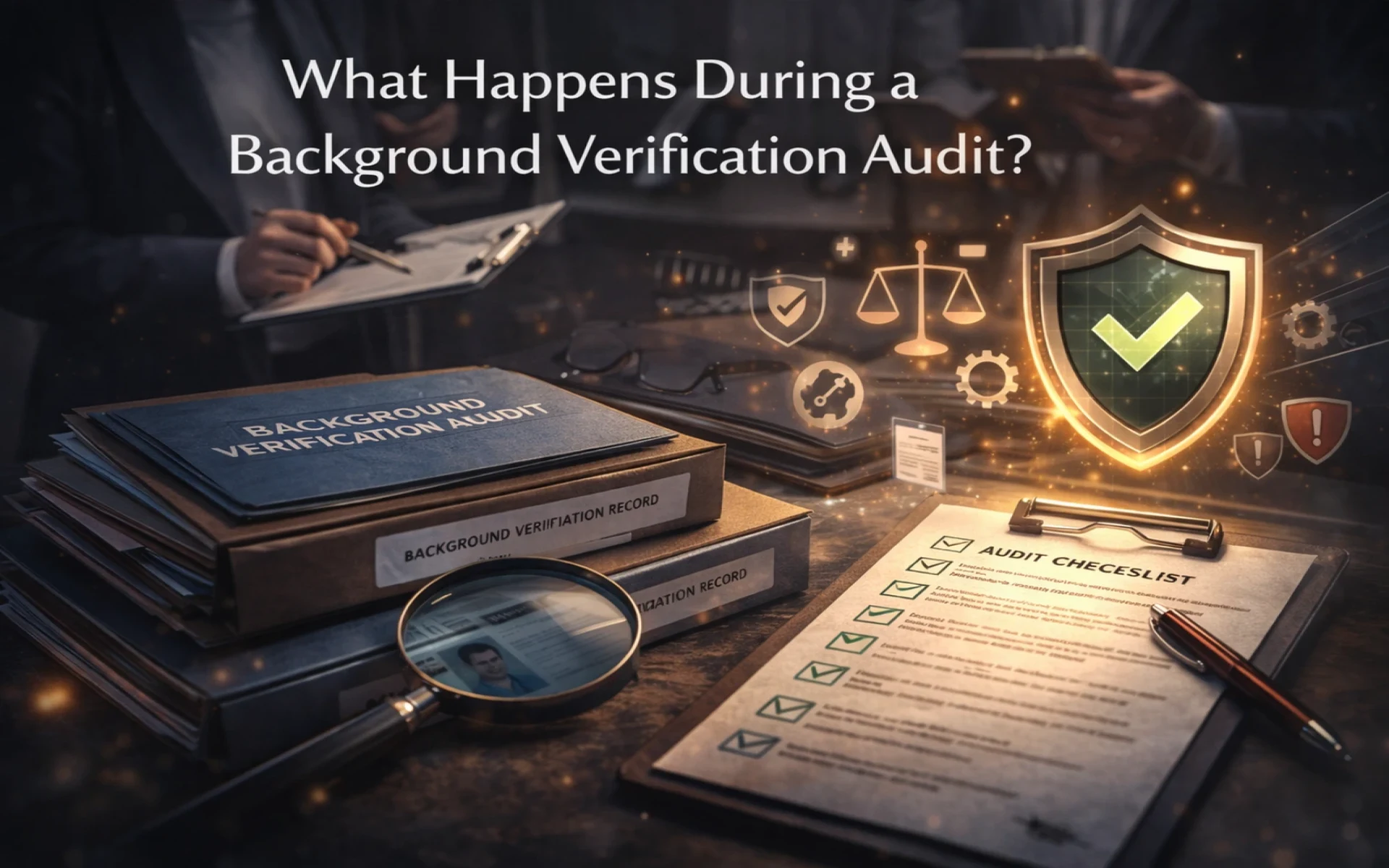
When a company learns that its background verification process will be audited—whether by an internal team, an external auditor, or a client conducting due diligence—the process can feel daunting, especially when expectations are unclear. A background verification audit examines whether an organisation’s screening practices are properly designed, consistently applied, adequately documented, and aligned with applicable compliance requirements.
Understanding what auditors review and how to prepare can make the process far more manageable. For organisations with well-documented and consistently applied verification practices, an audit is often an opportunity to demonstrate diligence rather than a disruption to operations.
What Does a Background Verification Audit Examine?
A background verification audit typically assesses how an organisation designs, conducts, documents, and manages its employee screening process. Auditors may review the verification policy, the types of checks performed, how those checks are applied across different roles, consent procedures, data handling practices, and the documentation supporting verification outcomes.
The central question is straightforward: Can the organisation demonstrate that its employees were verified through a defined, consistent, and appropriately documented process?
A clear audit trail allows the organisation to demonstrate that verification was not simply performed, but performed in accordance with its established procedures.
Reviewing the Background Verification Policy
One of the first areas auditors are likely to examine is the organisation’s background verification policy. This policy should clearly define which checks are conducted, which roles require them, when verification takes place, how candidate consent is obtained, and how discrepancies are handled.
A well-defined, risk-based policy demonstrates that verification is part of an established process rather than an ad hoc activity.
The policy should also reflect the organisation’s actual practices. A comprehensive document is of limited value if the procedures followed by HR teams or verification partners differ significantly from what the policy states.
Checking Consistency Across Employees and Roles
Auditors may review a sample of employee verification records to determine whether the organisation follows its stated process consistently.
They may examine whether the appropriate checks were completed for different roles and whether variations in screening requirements were supported by legitimate, documented reasons. For example, a role involving access to financial systems or sensitive information may require a different level of verification from a lower-risk position.
Consistency does not necessarily mean every employee must undergo identical checks. Rather, the organisation should be able to demonstrate that its verification requirements are defined, relevant to role risk, and applied consistently according to those standards.
Examining Consent and Data Protection Practices
Background verification involves handling personal information, making consent and data protection an important part of any audit.
Auditors may review whether candidates were appropriately informed about the checks being conducted, whether the necessary consent was obtained, and whether personal information was collected, accessed, stored, retained, and disposed of appropriately.
Key areas may include:
- Evidence of appropriate candidate consent
- Collection of information relevant to the verification purpose
- Secure handling and storage of personal data
- Defined data retention and disposal practices
- Appropriate access controls for verification information
Strong data governance helps organisations demonstrate that verification is conducted responsibly while reducing unnecessary exposure of sensitive candidate information.
Reviewing Verification Records and Outcomes
Documentation is one of the most important components of an audit. Auditors may examine individual verification cases to understand what checks were performed, what information was obtained, whether discrepancies were identified, and how those discrepancies were handled.
A complete verification record should provide a clear trail from the initiation of the check through to the final outcome.
Where discrepancies arise, documentation should also explain how they were reviewed and resolved. This is particularly important because a discrepancy does not necessarily mean that a candidate has provided false information. Differences may result from administrative errors, outdated records, name variations, or other legitimate circumstances.
Clear and factual documentation allows organisations to demonstrate that findings were handled consistently and appropriately.
How Should Companies Prepare for a Verification Audit?
The strongest preparation begins long before an audit is announced. Organisations should maintain a documented verification policy, establish clear procedures, ensure appropriate consent, and retain accurate records for completed checks.
Before an audit, HR and compliance teams can also conduct an internal review to identify gaps in documentation or inconsistent application.
A practical preparation checklist includes:
- Review and update the background verification policy.
- Confirm that verification procedures match the documented policy.
- Check a sample of recent verification records for completeness.
- Review consent and data-handling documentation.
- Confirm that discrepancies are documented and appropriately resolved.
- Ensure verification records can be retrieved when required.
- Review the responsibilities of internal teams and external verification partners.
Working with a verification partner that provides structured, accessible records can also make audit preparation considerably easier.
Turning Verification Audits Into Better Governance
A background verification audit does more than test whether individual checks were completed. It can reveal whether the organisation has a mature and repeatable approach to employee screening.
Audit findings can help HR and compliance teams identify process gaps, improve documentation, strengthen data governance, and make verification requirements more consistent across roles and locations.
For this reason, organisations can treat audits as an opportunity to strengthen their verification framework rather than simply preparing to satisfy an external review.
Key Takeaways
- A background verification audit examines whether screening practices are properly designed, documented, and consistently applied.
- Auditors may review verification policies, employee records, consent procedures, data handling, and verification outcomes.
- Verification requirements should be appropriate to the role and applied according to defined standards.
- Complete documentation creates an audit trail that demonstrates how each verification case was handled.
- Candidate consent and responsible data management are important components of a compliant verification process.
- Regular internal reviews can help identify gaps before an external audit takes place.
- Strong verification processes make audits easier by keeping evidence organised and accessible.
Conclusion
A background verification audit is essentially a review of how effectively an organisation manages its employee screening process. Auditors may examine policies, verification records, consent procedures, data protection practices, discrepancy handling, and the consistency of screening across roles.
The best way to prepare is not last-minute documentation, but a verification process that is well designed and consistently maintained from the beginning. Clear policies, appropriate checks, responsible data handling, and complete records provide the foundation for a more efficient and transparent audit.
When verification is treated as an ongoing governance process rather than a one-time hiring task, audits become more than a compliance exercise. They provide an opportunity to demonstrate diligence, identify areas for improvement, and strengthen confidence in the organisation’s overall approach to people risk.
A well-documented verification process does more than prepare you for an audit—it demonstrates that your organisation takes trust, compliance, and responsible hiring seriously.
Audit-ready by design. CaseXpert maintains documented, consistent, audit-ready verification so reviews become reassurance, not crisis. Talk to our verification specialists or send an enquiry to get started.