Employee attrition and hiring rework can be costly and disruptive for organisations. When an employee leaves shortly after joining or a hire does not meet the requirements of the role, companies may have to repeat recruitment, onboarding and training while teams absorb lost productivity and additional workload.
Attrition has many causes, including compensation, management, career growth, workplace culture and role fit. Background verification cannot prevent all of them. However, it can help reduce a specific category of hiring failures by ensuring that important information about a candidate's identity, qualifications and employment history is independently verified before a hiring decision is finalised.
This article explains how background verification can support better hiring decisions, reduce avoidable hiring rework and contribute to workforce stability.
The Hidden Cost of Hiring Rework
When a hire does not work out, the cost extends well beyond the employee's departure.
The organisation may need to spend again on sourcing and interviewing candidates, while managers and HR teams repeat onboarding and training activities. Teams may also experience reduced productivity while the position is vacant or while a replacement gets up to speed.
Hiring rework can therefore include:
- Recruitment and sourcing costs
- Interview and assessment time
- Onboarding and training expenses
- Lost productivity
- Additional management time
- Team disruption
- Knowledge and continuity gaps
The more frequently hiring failures occur, the greater the cumulative impact.
Reducing avoidable failed hires can therefore improve both recruitment efficiency and workforce stability.
How Verification Helps Identify Hiring Risks
A candidate's resume and interview provide important information, but they do not independently confirm every claim.
Background verification adds another layer by checking relevant information against appropriate sources. Depending on the role and screening requirements, this may include identity, education, employment history, address or other relevant checks.
This can help identify discrepancies such as:
- Qualifications that cannot be verified
- Employment dates that do not match available records
- Unexplained gaps or inconsistencies in employment history
- Identity or document discrepancies
- Other relevant information that differs from the candidate's stated details
Identifying these issues before onboarding gives the organisation an opportunity to clarify the information and make a more informed decision.
Better Information Can Support Better Hiring Decisions
Background verification does not determine whether a candidate will succeed. Performance, culture, management, motivation and many other factors influence employee outcomes.
What verification can do is improve the quality of the information available to decision-makers.
When qualifications and employment history are independently verified, hiring teams can make decisions based on a more complete picture of the candidate's background.
This is particularly important for roles where specific qualifications, experience or professional credentials are essential to successful performance.
The objective is not simply to reject candidates when discrepancies appear. Findings should be reviewed carefully, and candidates should have an appropriate opportunity to explain genuine errors or differences before decisions are made.
Better Role Fit Can Support Retention
Employee retention is influenced by many factors, but accurate hiring information can contribute to better role alignment.
Consider a position that requires a specific technical qualification or several years of relevant experience. If those credentials are inaccurately represented, the candidate may struggle with responsibilities that the organisation reasonably expected them to handle.
Verifying relevant qualifications and experience helps reduce the possibility of making a hiring decision based on inaccurate information.
This does not guarantee retention, but it can help establish a stronger foundation for the employment relationship.
Reducing Avoidable Mid-Tenure Disruptions
Some hiring problems only become visible after an employee has been with the organisation for months.
If a material discrepancy in qualifications or employment history is discovered after significant time and resources have already been invested, the organisation may need to restart the hiring process while also managing the operational impact.
Appropriate verification before joining can help identify certain discrepancies earlier, when they are generally easier to address.
This can help organisations:
- Reduce avoidable hiring failures
- Protect onboarding and training investments
- Minimise disruption from unexpected replacement hiring
- Maintain greater continuity within teams
The earlier a relevant issue is identified, the more options an organisation typically has for addressing it.
Protecting Team Stability
Frequent employee turnover can affect more than recruitment budgets. When positions remain vacant or employees leave unexpectedly, existing team members may need to absorb additional responsibilities.
Over time, repeated disruption can affect workload, collaboration and continuity.
Background verification is only one factor in maintaining workforce stability, but reducing avoidable hiring mismatches can contribute to more consistent team structures.
A more reliable hiring process also allows managers to spend less time repeatedly replacing unsuitable hires and more time developing the teams they already have.
Understanding the Financial Impact
The financial value of verification is often easier to understand when viewed against the potential cost of a failed hire.
For example, the total cost of replacing an employee may include recruitment expenses, interview time, onboarding, training, lost productivity and management effort. In certain cases, there may also be operational or reputational consequences.
Not every verification will prevent a failed hire, and not every employee who leaves would have been retained through verification. However, identifying a material discrepancy before hiring can potentially prevent some avoidable recruitment and replacement costs.
Companies can measure this more effectively by tracking metrics such as:
- Early-stage employee turnover
- Verification discrepancy rates
- Rehire and replacement costs
- Average time spent replacing employees
- Recruitment and onboarding costs
- Verification turnaround time
- Hiring outcomes by role or business function
Using these metrics can help HR teams understand where verification is contributing to hiring quality and where improvements may be needed.
Using Verification as Part of a Broader Retention Strategy
Background verification should not be treated as a standalone solution to employee attrition.
Long-term retention also depends on compensation, career development, leadership, workplace culture, workload, recognition and the overall employee experience.
Verification works best as one part of a broader hiring-quality framework.
To maximise its value, organisations should:
- Verify relevant information consistently
Apply appropriate checks based on the role and hiring requirements. - Focus on role-specific requirements
Confirm the qualifications, experience and credentials that are genuinely important for the position. - Review discrepancies carefully
Distinguish between significant findings, genuine errors and information that simply requires clarification. - Use verification alongside structured hiring practices
Combine screening with effective interviews, assessments, reference checks and role-specific evaluation. - Track hiring and retention outcomes
Monitor whether changes in screening are associated with improvements in hiring quality and early-stage retention.
Key Takeaways
Here are the essential points to remember:
- Hiring rework can create significant recruitment, productivity and management costs.
- Background verification helps independently validate important candidate information.
- Identifying discrepancies before onboarding can reduce certain avoidable hiring risks.
- Accurate information supports better assessment of qualifications and role fit.
- Verification can help reduce disruption associated with some failed hires and replacements.
- Employee attrition has many causes, so verification should not be treated as a standalone retention solution.
- Measuring hiring and retention outcomes can help organisations understand the practical value of their verification programme.
Conclusion
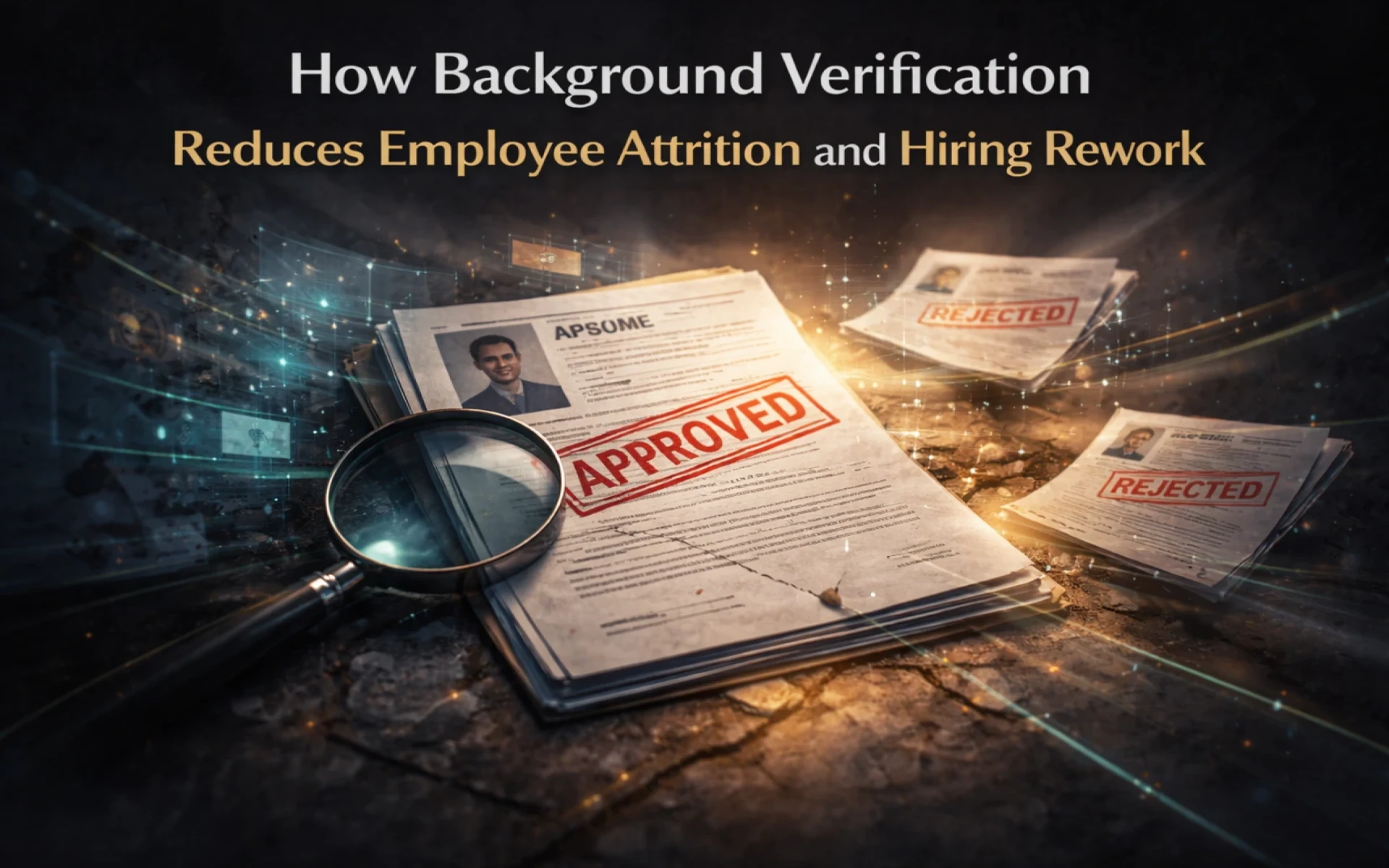
Background verification can contribute to better hiring outcomes by giving organisations greater confidence in the information provided by candidates. By independently verifying relevant qualifications, employment history and other role-specific details, companies can identify certain discrepancies before they become costly post-hire problems.
This does not mean verification can eliminate employee attrition. People leave organisations for many reasons, and successful retention depends on much more than screening.
Its value lies in addressing one specific part of the equation: making hiring decisions with accurate and appropriately verified information.
When combined with structured recruitment, effective onboarding and strong employee practices, background verification can help reduce avoidable hiring rework, protect recruitment investments and support greater workforce stability.
Better hiring starts with better information. Background verification helps organisations validate the facts before investing in the hire.
Hire right, retain longer. CaseXpert raises hiring quality with thorough verification that reduces failed hires, attrition and costly rework. Talk to our verification specialists or send an enquiry to get started.