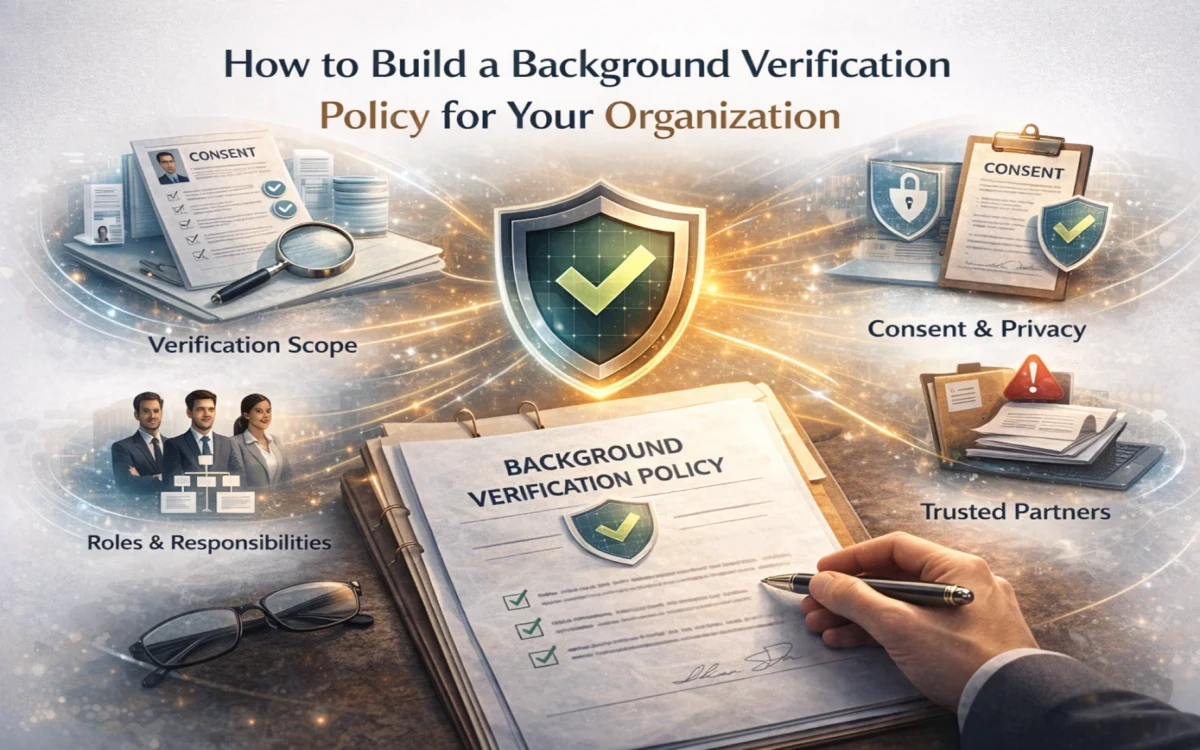
A background verification policy is the document that turns ad-hoc screening into a consistent, defensible organisational practice. Without one, verification happens differently for every hire, depending on who is recruiting and how much time they have ??? an inconsistency that creates both risk and unfairness. A clear policy fixes the rules in advance so every candidate is treated the same way and every decision can be explained later.
This guide walks through how to build a background verification policy for your organisation, from defining its scope and the checks it covers to handling adverse findings, protecting candidate data, and keeping the policy current. The aim is a practical framework that any company in India can adapt, rather than a legal template that gathers dust.
Why a Written Policy Matters #
A written policy matters because it removes discretion from the moment of pressure. When a hiring manager is racing to fill a role, the temptation to skip or shortcut verification is strongest ??? and that is precisely when a clear, pre-agreed rule protects the organisation from its own haste. The policy decides in calm what would otherwise be improvised in a rush.
It also creates accountability and defensibility. If a candidate, client or regulator later questions how a hiring decision was reached, a documented policy applied consistently is the organisation's strongest answer. It demonstrates that the company acted by a fair, considered standard rather than on the whim of an individual.
Defining Scope and Roles #
The first substantive decision is scope: who gets verified and to what depth. Most mature policies tier verification by role, applying baseline checks to everyone and deeper checks to roles with greater access to money, data, systems or vulnerable people. Tiering by genuine risk rather than by job title ensures effort is concentrated where it matters.
- Baseline tier: identity, education and employment for all hires
- Elevated tier: additional criminal and financial checks for sensitive roles
- Specialised tier: regulatory or credential checks for licensed positions
Defining these tiers explicitly means every new role can be slotted into the right level of scrutiny without re-litigating the question each time.
Choosing the Checks to Include #
A good policy names the specific checks it covers so there is no ambiguity. Common components include identity verification, address confirmation, education and employment history, criminal record checks, and ??? for relevant roles ??? credit or regulatory checks. The policy should state which checks apply to which tier and why.
List the checks by name and tier in the policy itself. Vague language like 'appropriate checks' invites the very inconsistency a policy exists to prevent.
Consent and Data Protection #
Verification handles sensitive personal data, so the policy must build consent and data protection into the process. Candidates should give informed, documented consent before any check begins, and the policy should commit to collecting only what is necessary, using it only for verification, and storing it securely for a defined period.
With India's data-protection framework tightening, embedding these principles now protects the organisation from future compliance gaps and signals respect for candidates whose information is being handled.
Handling Adverse Findings #
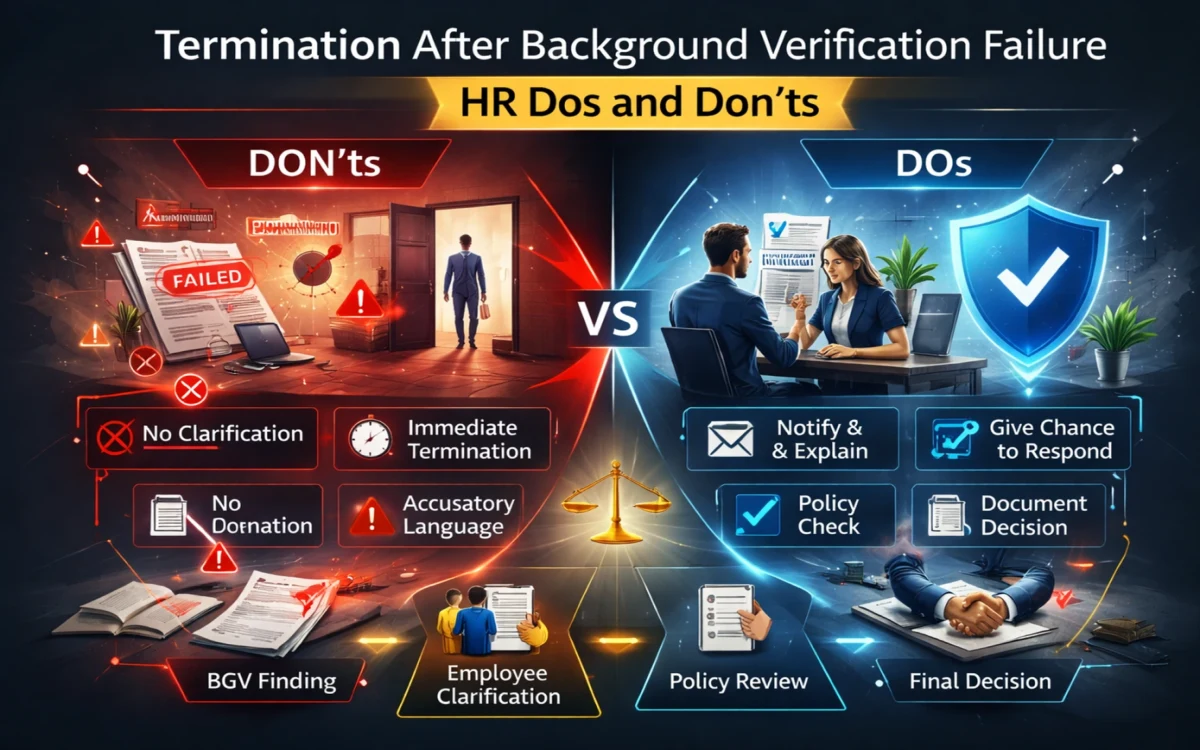
The hardest part of any policy is what happens when a check returns a problem. A fair policy distinguishes between minor discrepancies, which may have innocent explanations, and serious adverse findings such as fabricated credentials. It gives candidates a chance to respond before any decision is finalised.
- Confirm the finding is accurate and not a database error
- Give the candidate an opportunity to explain or provide context
- Assess relevance to the specific role being filled
- Document the final decision and its reasoning
This structured approach protects both the organisation and the candidate from arbitrary or mistaken outcomes.
Assigning Ownership #
A policy without an owner drifts. The document should name who is responsible for running verification, who decides on adverse findings, and who keeps the policy itself up to date. Clear ownership ensures the policy is applied consistently rather than interpreted differently by each person who touches it.
Many organisations assign operational responsibility to HR while reserving final adverse-action decisions for a senior reviewer, balancing efficiency with appropriate oversight.
Keeping the Policy Current #
Risks, regulations and roles all change, so a verification policy must be reviewed periodically rather than written once and forgotten. An annual review checks that the tiers still match the organisation's risk profile, that the checks remain compliant with current law, and that the process reflects how the company actually hires today.
Treating the policy as a living document keeps it aligned with reality and prevents the slow drift that turns a once-sound framework into an outdated formality.
Working With a Verification Partner #
A policy is only as good as its execution, and a professional verification partner makes consistent execution far easier. The partner applies the policy's standards uniformly, maintains the audit trail the policy promises, and brings the expertise to run each check properly ??? turning the document's intentions into reliable practice.
With the right partner, the organisation defines what good verification looks like and the partner ensures it happens every time, for every hire, without the company having to build and maintain that capability in-house.
Key Takeaways #
Here are the essential points to carry forward from this guide:
- A written, tiered policy removes discretion from moments of hiring pressure
- Define scope, checks, consent and adverse-action handling explicitly
- Assign clear ownership so the policy is applied consistently
- Review the policy annually to keep it aligned with risk and regulation
- A verification partner turns policy intentions into reliable execution
Conclusion #
Building a background verification policy is one of the highest-leverage governance steps a growing organisation can take. It converts screening from an inconsistent, person-dependent activity into a fair, documented, defensible practice that protects the company and treats candidates equitably.
The effort of writing the policy is modest compared with the protection it provides. Once in place and consistently applied ??? ideally with a capable verification partner ??? it becomes the quiet backbone of trustworthy hiring across the entire organisation.
A verification policy is calm decisions written down before the pressure arrives.
Build Your Policy. CaseXpert helps organisations build and operate background verification policies that are fair, compliant and consistently applied. Talk to our verification specialists or send an enquiry to get started.