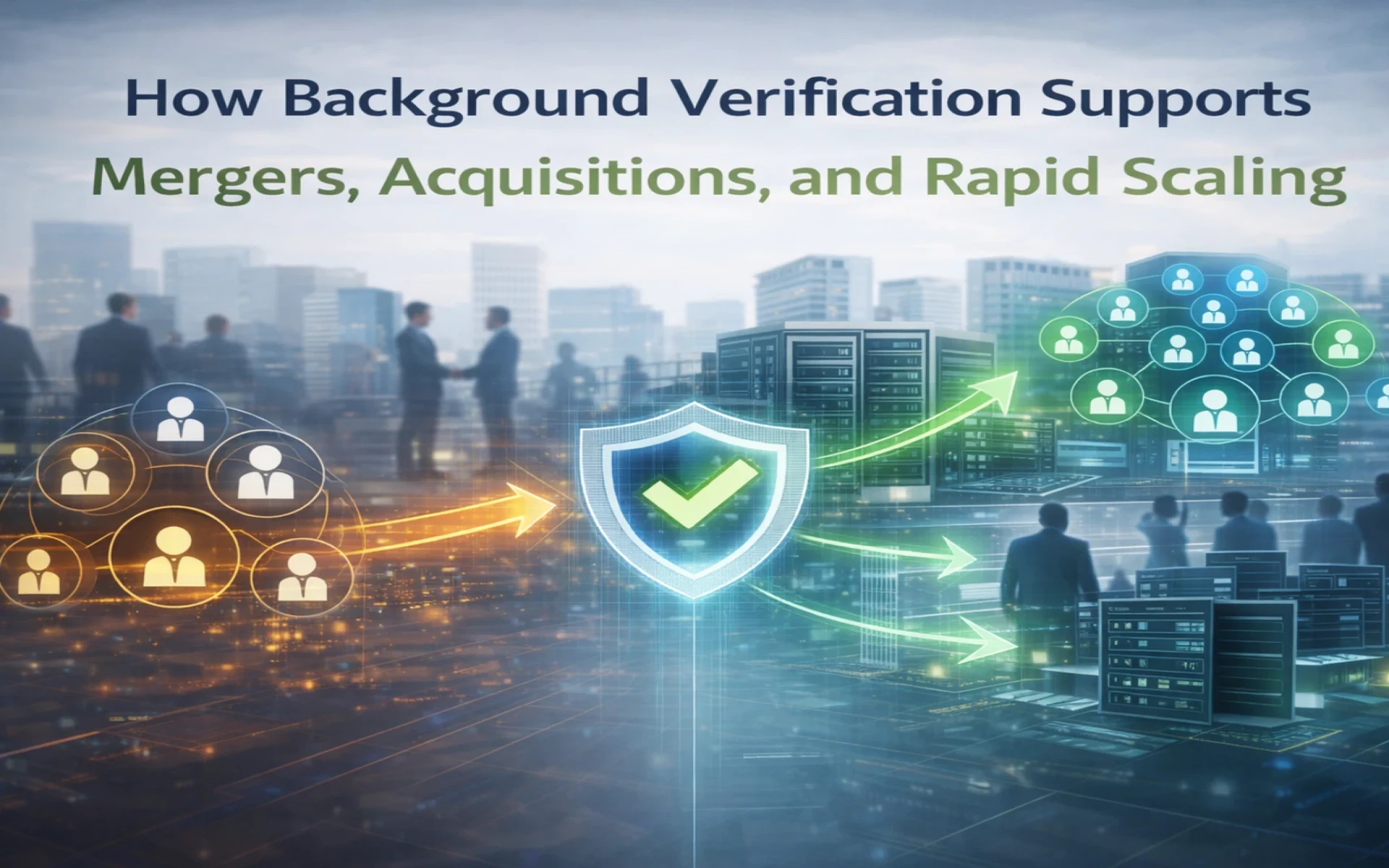
Mergers, acquisitions and periods of rapid growth have one thing in common: organisations suddenly bring large numbers of people into their workforce, often under significant time pressure. During these transitions, maintaining consistent hiring and verification standards can become difficult. Yet these are precisely the situations where workforce integrity matters most.
Background verification helps organisations understand and manage the people-related risks that accompany transactions and rapid expansion. In an acquisition, it can support workforce due diligence by providing visibility into existing screening practices and helping identify gaps. During rapid scaling, it helps ensure that increased hiring volume does not come at the expense of verification quality.
This article explores how background verification supports mergers, acquisitions and rapid scaling, including its role in workforce due diligence, inherited employee verification, high-volume hiring and post-transaction integration.
Understanding People Risk During M&A and Rapid Growth
Mergers, acquisitions and rapid expansion can significantly change an organisation's workforce in a short period. An acquisition may bring hundreds or thousands of employees from another organisation, while rapid growth can require large-scale recruitment within weeks or months.
These situations can create questions around whether employees were previously verified, whether the acquired organisation followed appropriate screening standards, and whether the current organisation's verification requirements are being applied consistently.
Recognising these risks early allows organisations to build verification into their transition and growth plans rather than attempting to address gaps after they have become operational problems.
Background Verification in M&A Due Diligence
M&A due diligence typically examines areas such as financial performance, contracts, operations, technology and regulatory exposure. Workforce practices can also form part of this broader assessment, particularly where employees occupy sensitive, regulated or high-access positions.
Understanding the target company's existing background verification practices can help an acquirer identify potential gaps in workforce screening. This may include reviewing which checks were conducted, how consistently they were applied, whether appropriate records were maintained and whether sensitive roles received additional scrutiny.
For key personnel, additional verification may also help confirm credentials, employment history and other information relevant to the transaction.
The objective is not simply to verify every employee in the same way, but to understand the workforce risk that is being carried into the combined organisation.
Addressing Gaps in an Acquired Workforce
After an acquisition, organisations may discover that the acquired workforce was screened according to different standards or that documentation is incomplete. In some cases, certain employees may not have undergone verification at all.
Rather than treating this as an immediate organisation-wide exercise, companies can adopt a risk-based approach. Sensitive positions, employees with privileged access and roles involving financial, customer or confidential information can be prioritised for verification or re-verification.
This approach helps bring the combined workforce toward a consistent standard while focusing resources where they are most relevant.
Maintaining Verification Quality During Rapid Scaling
Rapid hiring can place significant pressure on HR and recruitment teams. When dozens or hundreds of employees need to be onboarded quickly, manual processes can become difficult to manage and verification can become a bottleneck.
The challenge is to increase verification capacity without reducing the quality or consistency of checks.
A scalable verification programme can help organisations maintain standards through:
- Standardised verification workflows
- Automated status tracking and follow-ups
- Parallel processing of multiple checks
- Clear escalation procedures for discrepancies
- Centralised documentation and reporting
- Consistent verification requirements across roles
Technology and structured workflows allow verification teams to handle greater volumes without relying entirely on additional manual effort.
Balancing Speed With Verification Quality
Growth often creates pressure to get people onboard quickly. However, speed and verification do not necessarily need to be competing priorities.
A well-designed process can begin verification early, run appropriate checks in parallel and provide visibility into outstanding cases. This allows recruitment teams to understand where each candidate stands without losing control of the overall process.
Where organisations permit joining before all checks are complete, they should establish clear policies around conditional onboarding, access restrictions and follow-up verification. This helps prevent temporary exceptions from becoming permanent gaps in the screening process.
Supporting Workforce Integration After an Acquisition
M&A integration is not only about systems and processes. Organisations must also bring together employees who may have experienced very different policies and workplace practices.
Consistent verification standards can support this transition by establishing a common framework for workforce screening across the combined organisation.
The goal should be to apply appropriate standards consistently while recognising that historical verification practices may have differed between the organisations. Clear communication and documented processes can help make the transition more structured and transparent.
Documentation for Boards, Investors and Stakeholders
Major transactions and rapid growth often attract increased attention from leadership, investors, clients and other stakeholders. These groups may want assurance that the organisation is managing operational and workforce risks appropriately.
A documented verification programme provides evidence that workforce screening is being managed systematically.
Useful documentation can include:
- Verification policies and standards
- Screening completion records
- Role-based verification requirements
- Exception and discrepancy records
- Re-verification schedules
- Workforce verification reports
Maintaining this information centrally also makes it easier to respond to internal reviews, client requirements and future audits.
Protecting Workforce Integrity During Rapid Expansion
Rapid growth can create an environment where hiring volume becomes the primary focus. However, adding employees quickly without maintaining consistent screening standards can create avoidable people-related risks.
Background verification provides a structured control that helps organisations maintain visibility into the workforce they are building.
This becomes particularly important for roles involving sensitive data, financial authority, customer information, intellectual property or privileged system access. The greater the potential impact of a role, the more important it becomes to align verification depth with the level of access and responsibility involved.
How a Verification Partner Supports M&A and Scaling
Managing verification internally can become challenging when workforce volumes change rapidly. A professional verification partner can provide additional operational capacity, standardised workflows and centralised reporting during these periods.
A partner can support organisations by:
- Processing high volumes of verification cases
- Applying predefined verification standards consistently
- Supporting verification of acquired or inherited workforces
- Managing discrepancies and follow-ups
- Maintaining centralised records and audit trails
- Providing reporting for HR, compliance and leadership teams
This allows internal teams to focus on integration, workforce planning and business priorities while maintaining a structured verification process.
Protecting the Value of the Workforce
People are one of the most important assets involved in any merger, acquisition or period of rapid growth. The expertise, credentials and experience of employees contribute directly to the value an organisation expects to create.
Verification can provide additional confidence that key information about the workforce is accurate and that important roles are supported by appropriate screening.
The same principle applies during rapid expansion. Growth is most valuable when the organisation can scale its workforce without compromising the standards that support trust, security and operational continuity.
Building Verification Into the Growth Strategy
Verification should not be treated as an afterthought during major organisational changes. It is more effective when incorporated into the planning process from the beginning.
Organisations preparing for an acquisition or rapid hiring phase should consider:
- Which employees and roles require verification
- What verification standards should apply
- Which existing records need to be reviewed
- How verification gaps will be addressed
- How new hires will be screened during the transition
- How results and exceptions will be documented
- Whether re-verification is appropriate for sensitive roles
Planning these elements early reduces operational disruption and makes it easier to maintain consistent standards as the organisation changes.
Key Takeaways
Here are the essential points to carry forward from this guide:
- M&A and rapid scaling can significantly increase workforce-related risk.
- Background verification can support workforce due diligence during acquisitions.
- Acquired employees may need verification or re-verification where screening standards differ.
- Scalable workflows help maintain verification quality during high-volume hiring.
- Role-based verification allows organisations to focus deeper checks where access and risk are higher.
- Centralised documentation supports audits, stakeholder reporting and ongoing workforce governance.
- A verification partner can provide the capacity and consistency required during periods of rapid change.
Conclusion
Mergers, acquisitions and rapid scaling can transform an organisation's workforce in a very short period. They can also expose gaps in verification processes, particularly when large numbers of employees are inherited or recruited under tight timelines.
Background verification provides a structured way to manage this people-related risk. During acquisitions, it can support workforce due diligence and help identify gaps in existing screening practices. During rapid growth, it helps organisations maintain consistent verification standards even as hiring volumes increase.
The most effective approach is to make verification part of the transition and growth strategy from the beginning. With risk-based screening, scalable workflows, clear documentation and appropriate re-verification, organisations can expand their workforce while maintaining the standards that support trust, security and operational confidence.
Growth should increase your workforce, not your blind spots. Scalable background verification helps organisations maintain confidence in every new person they bring into the business.
Scale Safely. CaseXpert helps organisations maintain verification standards through M&A, integration and rapid scaling, however fast the headcount grows. Talk to our verification specialists or send an enquiry to get started.