Background verification in India is evolving as technology, work patterns, hiring models, and data-protection expectations change. Manual and paper-heavy processes are increasingly being supplemented by digital workflows, automation, and technology-enabled verification, while new hiring models create additional considerations for HR teams.
For HR leaders, understanding these developments can help organisations review their existing verification frameworks and prepare for changing workforce and compliance requirements.
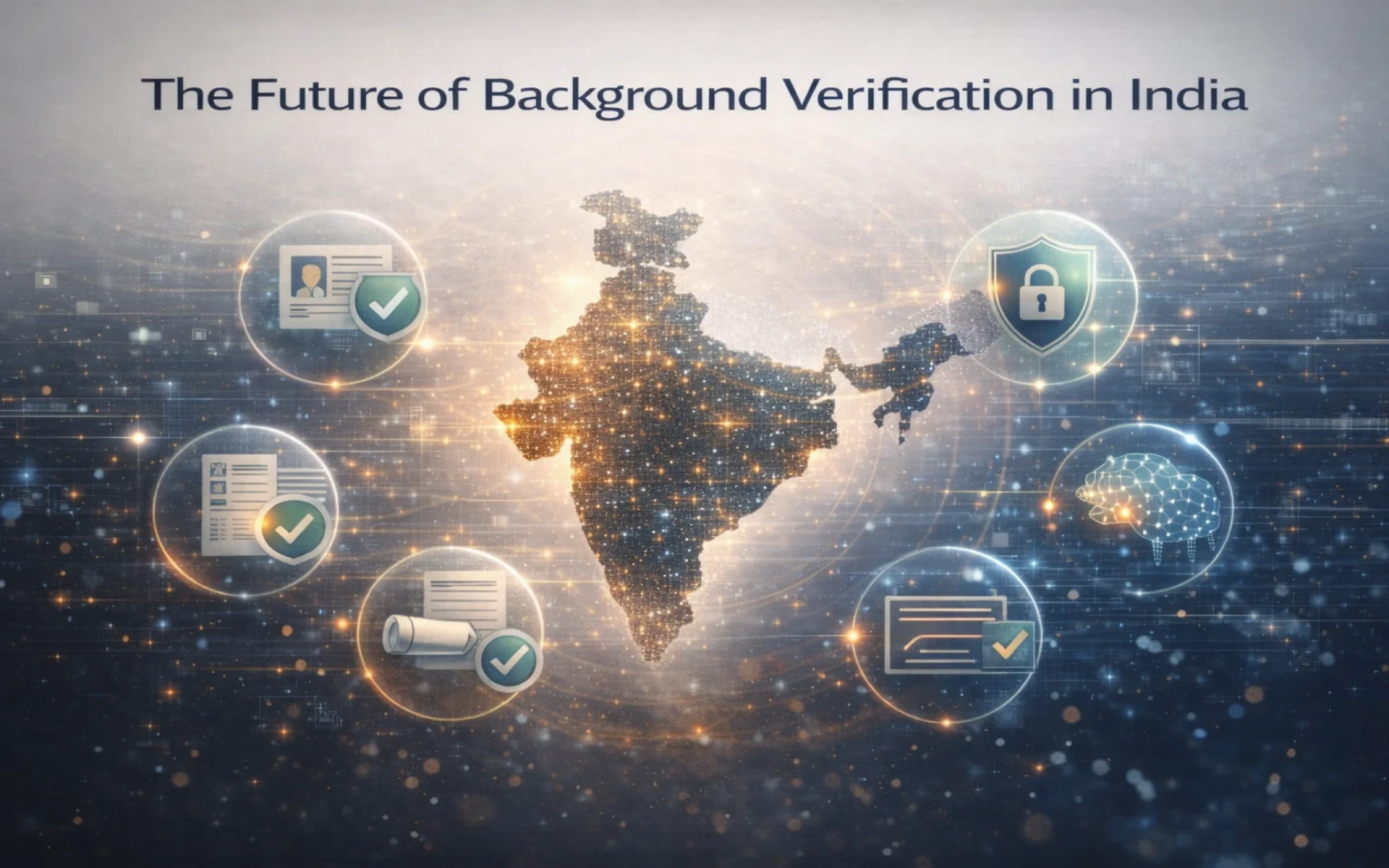
This article explores the future of background verification in India, including trends in technology, AI, employee lifecycle screening, data protection, and emerging hiring risks. The direction is toward verification processes that are more digital, structured, scalable, and carefully governed.
From One-Time Checks to Employee Lifecycle Verification
Traditionally, background verification has often been associated with the hiring stage. However, some organisations are also considering whether verification should be revisited when an employee's circumstances change.
For example, a role change, promotion, increased system access, transfer to a sensitive function, or other significant change may lead an organisation to reassess its verification requirements.
This does not mean every employee needs continuous screening. Whether re-verification is appropriate depends on the role, access, applicable requirements, company policy, and the purpose of the check.
The broader trend is toward viewing verification as part of an employee lifecycle framework rather than automatically treating it as a single event at the point of hiring.
Technology and Automation Continue to Expand
Technology is likely to remain a major driver of change in background verification.
Digital document collection, automated workflow management, electronic status tracking, identity verification, data integrations, and structured reporting can reduce manual administrative work and make verification processes easier to manage at scale.
Automation can be particularly useful for repetitive tasks such as collecting information, checking workflow status, identifying missing documents, and routing cases.
However, automation does not eliminate the need for human review. Complex cases, conflicting information, unusual records, or discrepancies may require contextual assessment rather than an automated outcome.
The likely direction is therefore greater automation of routine processes combined with human involvement where interpretation and judgement are required.
AI's Growing but Bounded Role
Artificial intelligence may increasingly support background verification by helping identify patterns, flag inconsistencies, classify information, and assist with workflow management.
For example, AI could help identify potential inconsistencies between dates, documents, or records that require further review.
However, AI-generated signals should not automatically be treated as proof of fraud, misconduct, or ineligibility. Verification findings can have significant consequences for candidates, making accuracy, explainability, appropriate oversight, and human review important considerations.
The likely role of AI is therefore to assist verification professionals rather than replace responsible decision-making entirely.
Organisations adopting AI-enabled verification should also consider how models are trained and evaluated, how errors are handled, how personal information is processed, and what human oversight exists for consequential decisions.
Data Protection and Governance Will Matter More
As background verification involves personal information, data protection and governance will remain important considerations for organisations operating in India.
Future verification processes will need to pay close attention to issues such as:
- Appropriate notice, consent, or other applicable legal basis
- Purpose and relevance of data collection
- Data minimisation
- Secure handling and access controls
- Appropriate retention and deletion practices
- Transparency around verification activities
- Procedures for handling inaccurate or disputed information
The exact requirements depend on the type of processing, organisation, information involved, and applicable legal framework.
Rather than treating data protection as an additional step after verification, organisations can build privacy and security considerations into the verification workflow from the beginning.
New Hiring Models Create New Verification Considerations
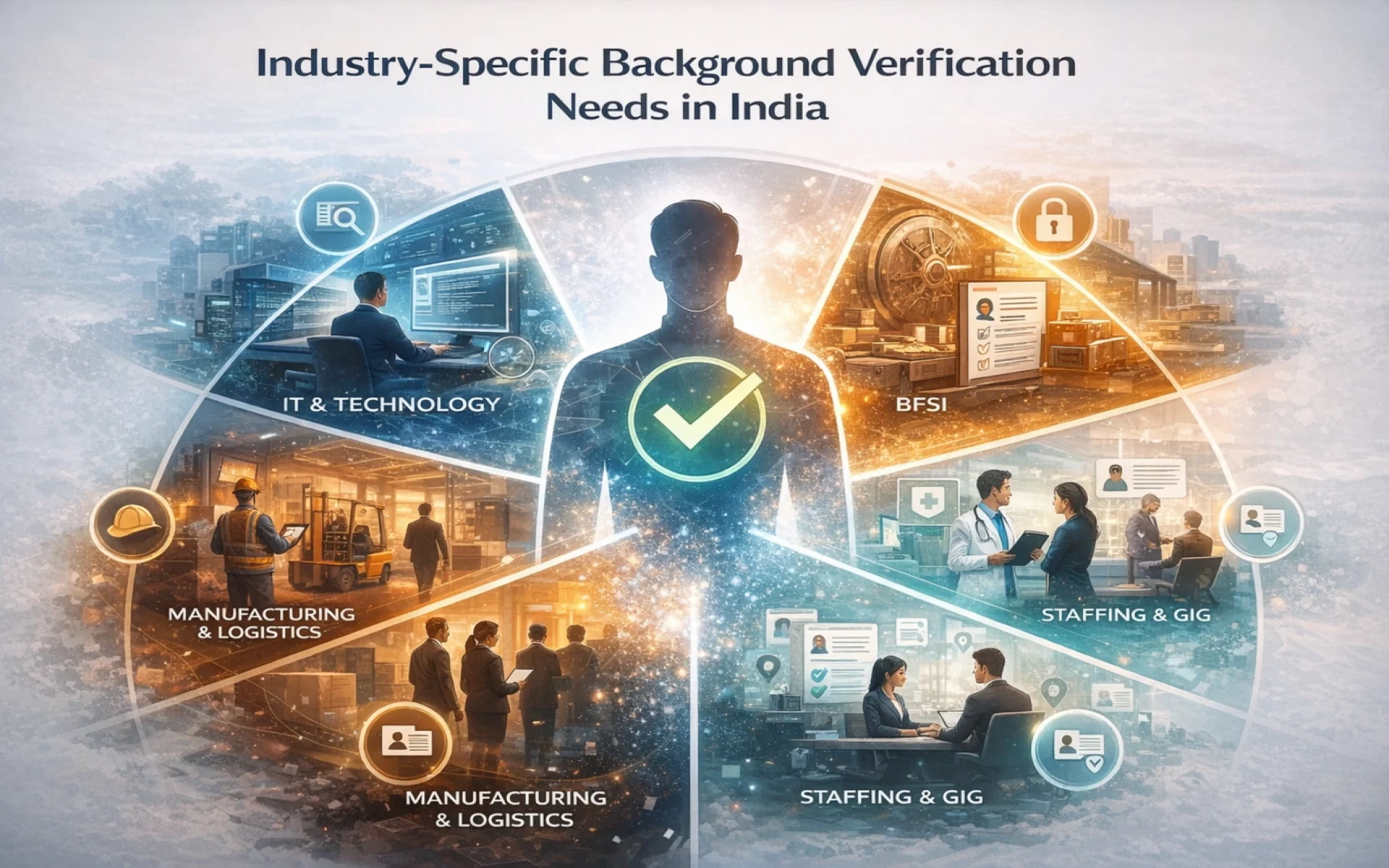
The workforce itself is changing. Remote and hybrid hiring, gig work, contingent employment, cross-border teams, and distributed workforces can create different verification requirements and operational challenges.
For example, remote hiring may increase the importance of reliable identity and digital verification workflows, while gig and contingent workforces may require processes designed for high-volume onboarding.
Moonlighting or concurrent-employment checks may also be relevant to certain organisations and roles, depending on employment policies, contractual arrangements, and applicable requirements.
The key point is not that every emerging work model creates the same risk. Instead, verification frameworks may need to evolve as organisations adopt new ways of hiring and working.
Verification as Part of Organisational Risk Management
As verification technology develops, organisations may increasingly view BGV as part of a broader risk-management and governance framework rather than simply an administrative HR activity.
Background verification can sit alongside other controls such as access management, cybersecurity, financial controls, employment policies, and compliance processes.
This broader perspective can help organisations decide:
- Which roles require which checks
- When verification should be completed
- Which checks may need to be revisited
- Who is responsible for reviewing findings
- How verification information should be protected
- How exceptions and discrepancies should be handled
The strategic value comes from designing the overall framework appropriately, rather than simply increasing the number of checks performed.
How HR Leaders Should Prepare
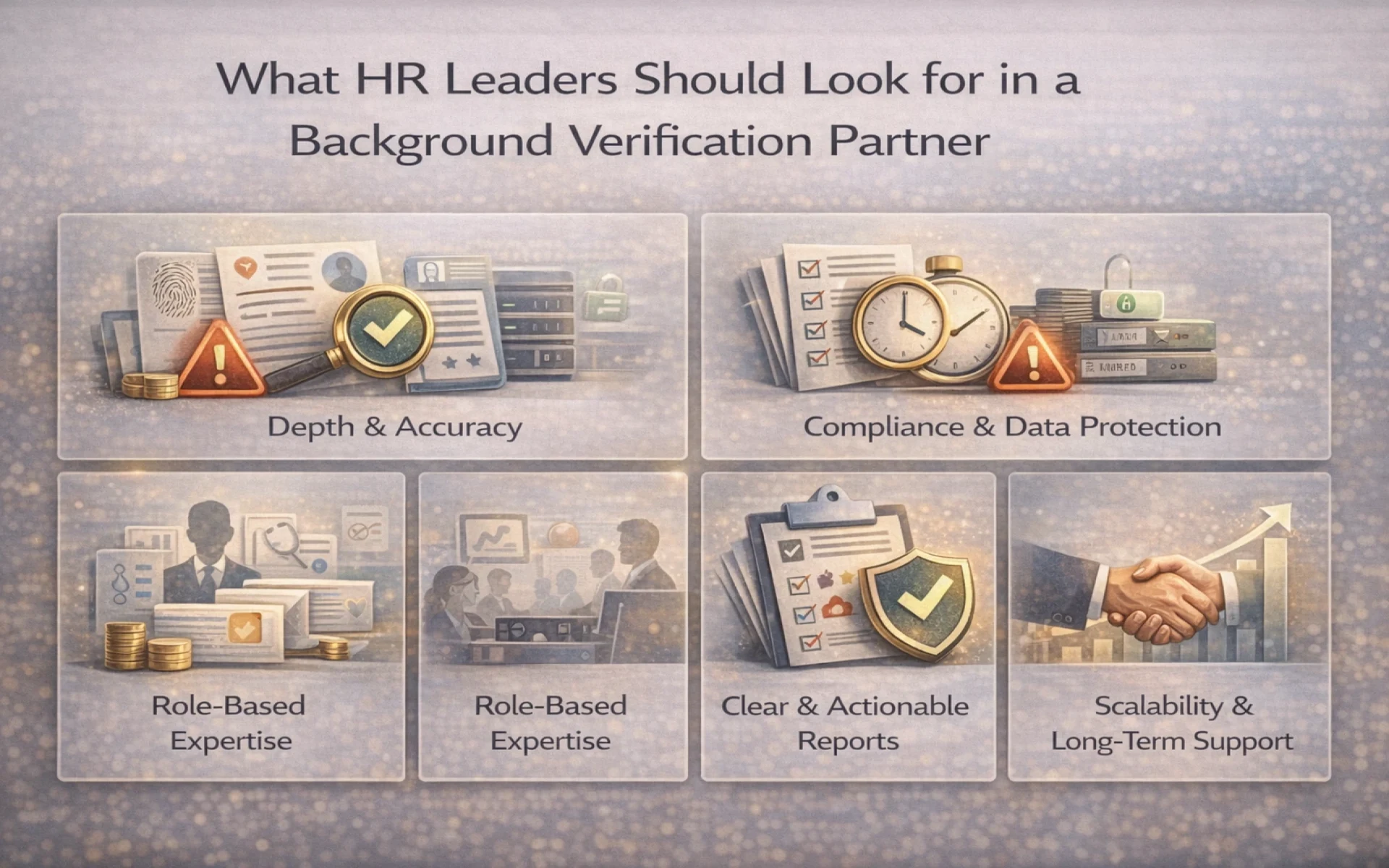
HR leaders can prepare for the changing verification landscape by reviewing their current processes and identifying areas where technology, governance, or role-based design can improve the workflow.
A practical approach includes:
- Review verification requirements by role — Match checks to responsibilities, access, and relevant risks.
- Digitise appropriate workflows — Use technology to reduce repetitive administrative work and improve tracking.
- Evaluate AI carefully — Use AI where it can assist with pattern detection or workflow support while retaining appropriate human review.
- Strengthen data governance — Build privacy, security, retention, and access controls into verification processes.
- Plan for changing roles — Define when additional verification may be appropriate after hiring.
- Monitor emerging risks — Review verification requirements as remote work, gig work, technology, and fraud methods evolve.
- Review vendors and processes periodically — Ensure s and internal workflows continue to meet organisational requirements.
Key Takeaways
Here are the essential points to carry forward from this guide:
- Background verification is becoming increasingly digital and technology-enabled.
- Employee lifecycle verification may become more relevant for specific roles and circumstances.
- Automation can streamline routine verification activities but does not eliminate the need for human review.
- AI can assist with identifying patterns and inconsistencies but should be used with appropriate oversight.
- Data protection, privacy, security, and governance will remain important parts of BGV.
- Remote, hybrid, gig, and distributed workforces can create different verification requirements.
- HR leaders should design verification around role responsibilities, access, and relevant risks rather than adopting a one-size-fits-all model.
Conclusion
The future of background verification in India is likely to be increasingly digital, automated, scalable, and governed by stronger expectations around responsible data handling.
Technology and AI can help organisations manage verification more efficiently, while human review remains important for complex cases and consequential findings. At the same time, changing workforce models are creating new considerations around identity, employment history, access, and employee lifecycle verification.
For HR leaders, the priority is not simply to adopt the newest verification technology. It is to build a verification framework that combines appropriate technology with relevant checks, responsible data practices, human oversight, and clear internal policies.
Organisations that regularly review their verification processes can adapt more effectively as hiring models, technology, workforce risks, and regulatory expectations continue to evolve.
The future of background verification is not simply more automation — it is smarter, more relevant, and better-governed verification designed around the realities of modern work.
Ready for what's next. CaseXpert combines automation, expert judgement and built-in compliance to keep your verification ready for tomorrow's risks. Talk to our verification specialists or send an enquiry to get started.