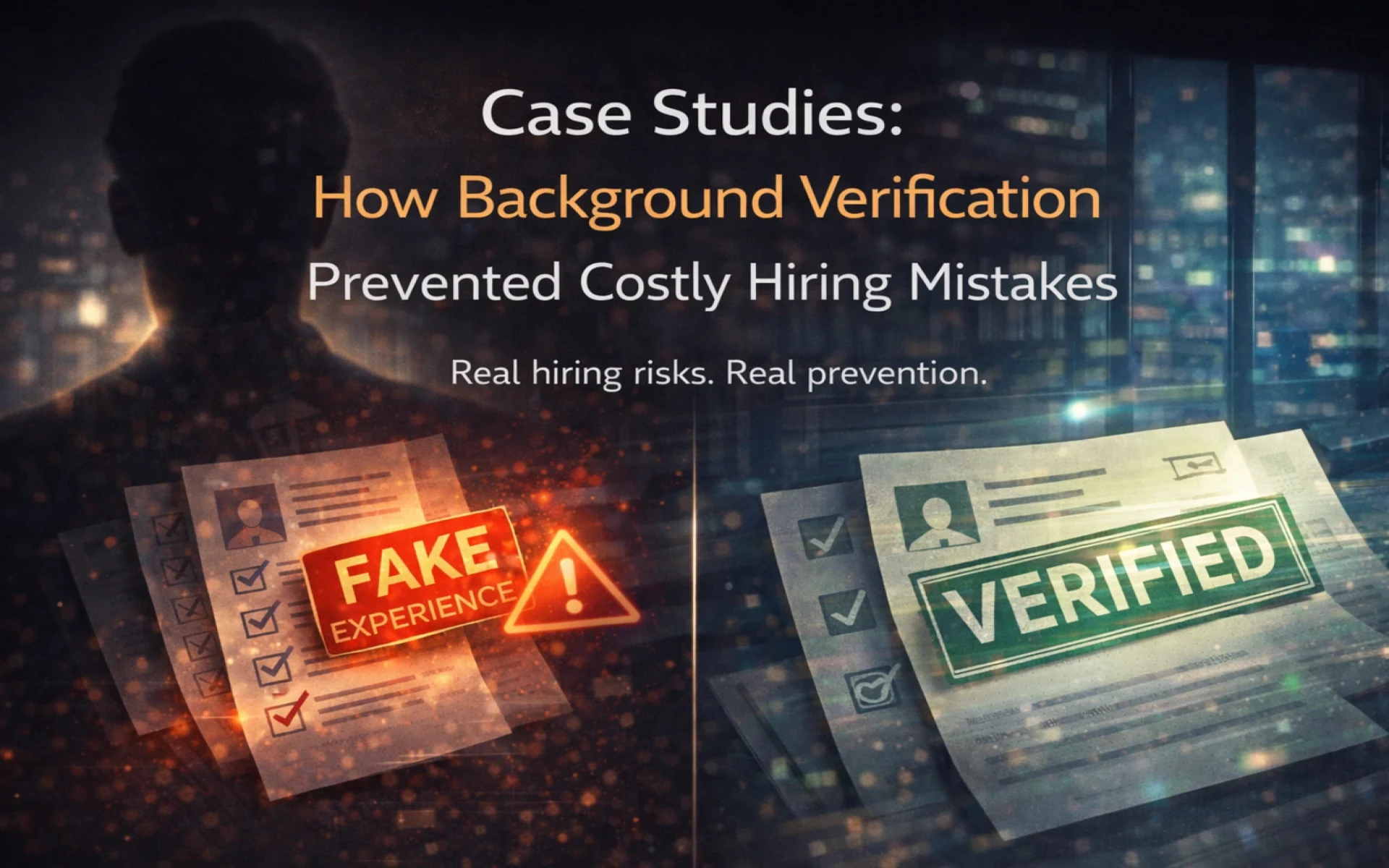
Nothing illustrates the value of background verification better than real-world scenarios where independent checks reveal risks that may not be visible during the hiring process. While the examples below are illustrative composites created to protect confidentiality, they reflect common types of issues that organisations may encounter during hiring — from fabricated credentials and concealed employment history to identity discrepancies and undisclosed overlapping employment.
This article presents representative scenarios showing how background verification can help organisations identify potential hiring risks before they become costly problems. Each example highlights a specific risk, how verification may uncover it, and why early detection matters.
The Fabricated Degree
A fast-growing company was preparing to hire a senior technical lead whose impressive resume included a degree from a well-known institution. The candidate performed strongly throughout the interview process, and the hiring team was ready to move forward.
During background verification, the education credential was checked directly with the institution. The institution could not confirm that the candidate had been awarded the claimed degree, raising a significant discrepancy that required further review before the hiring decision could be finalised.
Had the discrepancy gone unnoticed, the company could have placed an inadequately qualified individual in a role involving important technical responsibilities. Verification provided an opportunity to investigate the claim before granting access and responsibility.
The Concealed Employment History
A candidate applying for a finance position presented a continuous employment history with no apparent gaps. During employment verification, information received from a previous employer did not fully align with the candidate's stated employment details.
The discrepancy involved the candidate's dates of employment and circumstances surrounding their departure. Further review revealed information that had not been disclosed during the hiring process.
For roles involving financial responsibility, such discrepancies can be particularly important. Verification does not replace the employer's judgement, but it gives the organisation relevant information that can be considered before making a final decision.
The Moonlighting Overlap
During verification of a remote software engineer, employment timeline analysis identified an overlap between two claimed full-time positions. The dates suggested that the candidate may have been employed by two organisations during the same period without disclosing the overlap.
The finding raised questions about availability, contractual obligations, confidentiality and potential conflicts of interest. Rather than discovering the issue after onboarding, the company had an opportunity to discuss the discrepancy with the candidate and assess it against its employment policies.
This example demonstrates why employment verification should look beyond individual employer confirmations. Mapping dates across the complete employment history can reveal inconsistencies that may otherwise remain hidden.
The Identity Mismatch
During a high-volume hiring campaign, identity verification identified inconsistencies across the candidate's submitted documents. Personal details did not align consistently, and some credentials could not be reliably connected to the individual being screened.
Further investigation raised concerns that the documents may not belong to the applicant.
Identity verification is particularly important because it provides the foundation for other checks. If the identity being verified is not correctly established, education, employment and other records may not reliably relate to the person being considered for employment.
The Unverifiable Address
A candidate applying for a field-based role provided an address that could not be independently verified. The information did not correspond consistently with the available verification details, creating a discrepancy that required clarification.
For roles involving customer visits, field operations, asset handling or access to residential premises, address verification can be an important part of establishing a candidate's identity and background.
An address discrepancy does not automatically indicate misconduct. However, when combined with other inconsistencies, it can provide an important signal for further review before the organisation grants the individual significant responsibility or access.
What These Cases Have in Common
Although each scenario involves a different type of risk, the underlying principle is the same: information provided during recruitment may require independent confirmation.
A strong interview can demonstrate communication skills and professional experience, but it does not independently verify every qualification, employment claim or personal detail. Background verification adds another layer of evidence by checking relevant information against available sources.
These examples also highlight the importance of timing. Identifying a discrepancy before onboarding or before significant access is granted generally gives an organisation more opportunity to investigate, clarify the information and make a considered decision.
Turning These Lessons Into Practice
Organisations can reduce hiring risk by making background verification a consistent and role-appropriate part of their recruitment process.
- Verify important credentials and employment claims independently.
- Confirm the candidate's identity before relying on other verification results.
- Map employment timelines to identify gaps and potential overlaps.
- Investigate discrepancies rather than treating every mismatch as automatic proof of misconduct.
- Complete appropriate checks before granting sensitive access whenever practical.
- Apply documented verification policies consistently across relevant roles.
The goal is not to assume that every discrepancy indicates fraud. It is to ensure that hiring decisions are supported by reliable information and that candidates have an appropriate opportunity to clarify genuine errors or inconsistencies.
Key Takeaways
- Education verification can identify discrepancies in claimed qualifications.
- Employment verification can uncover inconsistencies in roles, dates and employment history.
- Timeline analysis can highlight potential overlapping employment.
- Identity verification helps ensure that other checks relate to the correct individual.
- Address verification can provide an additional layer of identity and background validation.
- Early identification of discrepancies gives organisations more time to investigate and respond appropriately.
- Effective verification combines technology, independent sources and human judgement.
Conclusion
These representative scenarios demonstrate how background verification can uncover information that may not be apparent from a resume or interview alone. Fabricated credentials, inconsistent employment histories, potential overlapping employment, identity discrepancies and unverifiable addresses can all create questions that deserve attention before a hiring decision is finalised.
The value of verification lies not simply in finding problems. It is in giving organisations reliable information early enough to investigate discrepancies, seek clarification and make informed decisions based on their policies and the requirements of the role.
For growing organisations, a consistent and risk-based verification process can turn background screening from a routine administrative step into an important part of responsible hiring. When verification is supported by independent sources, appropriate technology and human review, companies can build a clearer picture of the people they are bringing into their organisation.
The strongest hiring decisions are built on more than what a candidate says. Independent verification helps organisations confirm the facts before trust becomes responsibility.
Prevent the costly mistake. CaseXpert's thorough verification surfaces fabricated credentials, concealed histories and fraud before they reach your team. Talk to our verification specialists or send an enquiry to get started.