HR teams often recognise the value of background verification, yet securing the right budget can still be challenging when leadership sees it primarily as an expense. Making a strong business case requires translating the benefits of verification into the language leadership understands: risk, return, liability, reputation, and growth.
This article explains how HR teams can justify background verification costs to leadership by positioning verification as a strategic risk-management tool rather than a routine hiring expense. It outlines the key arguments that matter in the boardroom and the practical ways HR leaders can turn a budget request into a clear business case.
Speak the Language of Risk and Return
Leadership evaluates investments through the lens of risk and return, so background verification should be presented in the same terms. Instead of simply requesting a budget for "background checks," explain the specific risks the organisation is managing — particularly the financial, operational, legal, and reputational consequences of a poor hiring decision.
Where possible, quantify these risks. Consider the cost of replacing a bad hire, lost productivity, management time, potential fraud, legal exposure, and disruption to the wider team. Comparing these potential costs with the predictable expense of verification makes its business value easier to understand.
The conversation shifts from "How much will verification cost?" to "What risk are we managing, and what could it cost if we do not?"
Make the Cost of a Bad Hire Concrete
Leadership may underestimate the true cost of a bad hire because the impact is spread across multiple areas of the business. Recruitment and replacement costs are only part of the equation. Lost productivity, onboarding time, management effort, team disruption, and potential financial or reputational damage can add significantly to the overall impact.
Bringing these costs together creates a clearer picture of the value of prevention.
HR teams can also compare the cost of verification across multiple candidates with the potential cost of a single serious hiring failure. This simple comparison can make the financial rationale much easier to communicate.
Where the organisation has experienced a hiring issue in the past, or has encountered a situation where verification identified a discrepancy, using that internal example can make the business case even more relevant.
Emphasise Legal and Compliance Exposure
Background verification can also support an organisation's broader compliance and risk-management framework. Depending on the industry, role, client requirements, and applicable regulations, employers may need appropriate controls around employee credentials, identity, access, data handling, and workforce integrity.
For companies working with regulated industries or enterprise clients, verification may also form part of contractual or client-mandated requirements. Failing to meet those requirements can create operational, contractual, or reputational consequences that are far greater than the cost of conducting the checks.
Positioning verification within the wider compliance framework helps leadership see it as part of organisational governance rather than simply an HR process.
Connect Verification to Reputation and Brand
A company's reputation can take years to build, yet a serious incident involving an employee can damage it quickly. Background verification provides one layer of preventive control by helping organisations identify discrepancies before they become larger problems.
It can also reinforce trust among clients, partners, employees, and other stakeholders by demonstrating that the organisation follows a structured and responsible hiring process.
HR teams can highlight benefits such as:
- Reducing the risk of reputational damage linked to hiring incidents
- Strengthening trust with clients and business partners
- Supporting a culture of integrity and accountability
- Demonstrating responsible hiring practices to investors and stakeholders
This positions verification as a company-wide risk-management measure rather than an administrative HR activity.
Show How Verification Supports Growth
Background verification does more than reduce risk. For many organisations, it can also support business growth.
Enterprise clients may require suppliers and service providers to maintain defined workforce-screening standards. Demonstrable verification processes can therefore help organisations meet client due-diligence requirements and participate in opportunities where workforce compliance is part of the qualification process.
A structured verification programme can also support fundraising, acquisitions, international expansion, and vendor assessments by providing evidence that workforce controls are documented and consistently applied.
The message for leadership is simple: verification can help the organisation pursue opportunities with greater confidence while strengthening the controls needed to scale responsibly.
Address the "We've Never Had a Problem" Objection
One of the most common objections is: "We've never had a serious problem, so why do we need to spend more on verification?"
The absence of a known incident does not necessarily mean the absence of risk. Some issues may never be detected, while others may only become visible after an employee has already received access to systems, data, customers, or financial resources.
Background verification is a preventive control. Its purpose is to identify relevant discrepancies before they become larger operational or business problems.
A useful way to explain this to leadership is to compare verification with other preventive controls: organisations do not necessarily wait for a major security incident before investing in security measures. Similarly, hiring controls are designed to reduce exposure before an incident occurs.
Build a Concise, Evidence-Based Business Case
The strongest budget proposal does not need to be complicated. HR teams should bring together the specific risks verification addresses, the potential costs of a poor hiring decision, the compliance and contractual requirements involved, and the operational benefits of a structured process.
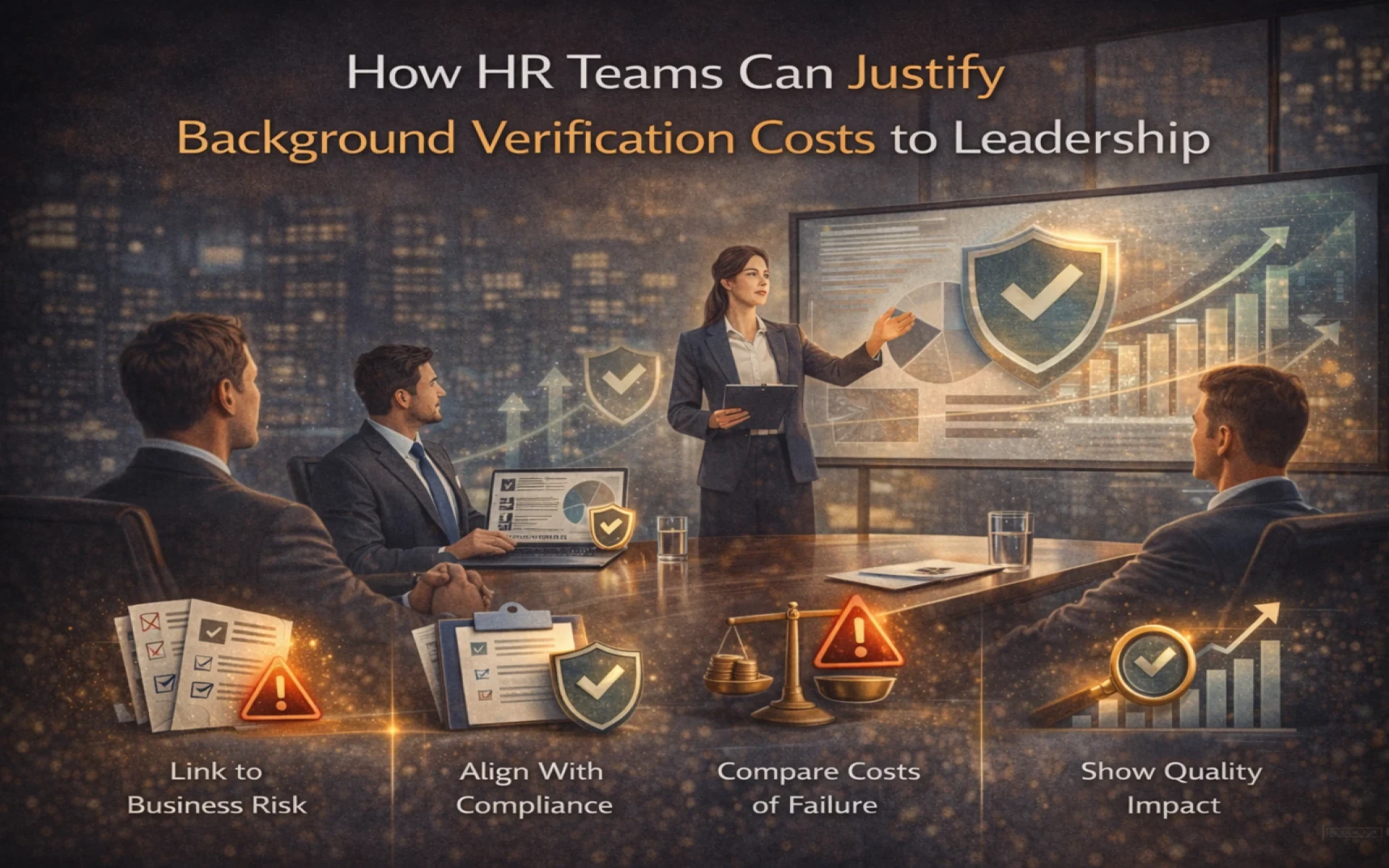
A practical business case can focus on four points:
- Define the risk: Explain the types of hiring risks relevant to the organisation and its roles.
- Quantify the potential impact: Include replacement costs, productivity loss, management time, compliance exposure, and potential financial or reputational damage.
- Explain the control: Show how background verification helps identify relevant risks before or during onboarding.
- Connect it to business goals: Demonstrate how verification supports compliance, client requirements, workforce trust, and responsible growth.
The objective is not to present verification as an expense that HR wants approved. It is to demonstrate how a structured verification programme fits into the organisation's broader approach to managing people and business risk.
Key Takeaways
Here are the essential points to carry forward:
- Present background verification in terms of risk, return, and business impact rather than cost alone.
- Make the full cost of a bad hire visible, including replacement, productivity, management, and reputational costs.
- Explain how verification can support applicable compliance and contractual requirements.
- Connect verification with reputation, workforce trust, and responsible business growth.
- Address the "we've never had a problem" objection by explaining the preventive purpose of verification.
- Build a concise, evidence-based business case that connects verification with wider organisational goals.
Conclusion
Justifying background verification costs to leadership is ultimately about connecting the process to the issues that matter most at an organisational level: risk, financial impact, compliance, reputation, and growth.
When HR teams quantify the potential cost of a poor hiring decision, explain the risks being managed, and demonstrate how verification supports client and compliance requirements, the conversation becomes much broader than the price of an individual background check.
The strongest business case also recognises that verification is not designed to eliminate every hiring risk. Instead, it provides a structured layer of due diligence that helps organisations make more informed decisions and identify relevant discrepancies before they develop into larger problems.
For HR leaders, the goal is therefore not simply to secure a verification budget. It is to demonstrate how a well-designed, proportionate verification programme supports the organisation's wider risk-management and growth strategy.
Background verification is easier to justify when leadership sees not just what it costs, but what it helps the organisation protect, prevent, and enable.
Win the budget argument. CaseXpert helps HR teams demonstrate the risk-reduction and return that justify verification to any leadership team. Talk to our verification specialists or send an enquiry to get started.