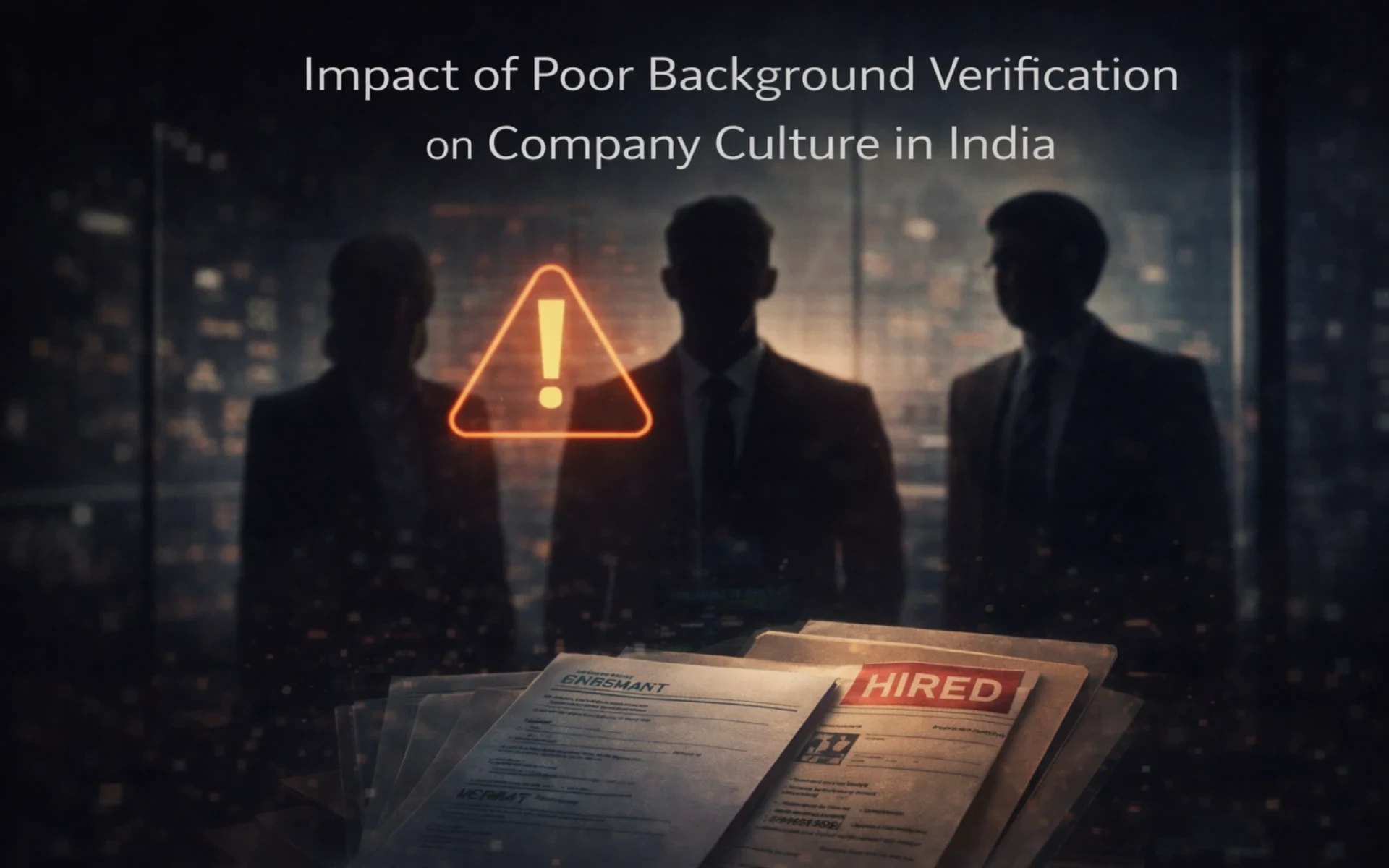
When companies discuss the cost of poor background verification, they often focus on fraud, financial loss, operational disruption, and compliance concerns. But there can also be a less visible consequence: the effect on company culture.
When a significant discrepancy is discovered after hiring, particularly if it affects colleagues or business operations, employees may begin questioning the organisation’s hiring processes and internal controls. Over time, unresolved hiring issues can affect trust, morale, collaboration, and perceptions of fairness.
This article examines how weaknesses in background verification can affect company culture — from trust in leadership and team dynamics to employee morale, retention, and organisational reputation. The aim is to show why verification can be relevant not only to risk management, but also to maintaining a consistent and trusted workplace environment.
Erosion of Trust in Leadership
Employees generally expect organisations to have appropriate processes for hiring and managing people. When a significant hiring issue emerges and employees believe that relevant checks were overlooked, they may question how effectively the organisation manages risk.
The impact can extend beyond the individual case. Employees may become more cautious about management decisions or wonder whether similar issues exist elsewhere in the organisation.
Trust can take time to rebuild once employees perceive a gap between the standards an organisation communicates and the processes it actually follows.
The Burden on Honest Employees
A problematic hiring decision can sometimes create additional work for other team members.
For example, if an employee lacks the experience or qualifications expected for a role, colleagues may need to provide additional training, correct errors, redistribute responsibilities, or spend management time addressing performance issues.
This additional workload does not necessarily result from background verification failures alone, but weak or incomplete screening can contribute to situations where relevant information was not identified before hiring.
If these situations persist, they may affect morale and perceptions of fairness among employees who consistently meet their responsibilities.
The Risk of Normalising Poor Standards
Company culture is influenced by the behaviours that organisations tolerate and the standards they consistently reinforce.
If material misrepresentations or other serious hiring-related issues are identified but handled inconsistently, employees may question how seriously the organisation takes accuracy and integrity.
This does not mean that every verification discrepancy represents dishonesty. Records can contain legitimate errors, and candidates may have reasonable explanations for differences in their information.
The cultural concern arises when organisations fail to establish clear standards or apply them consistently.
Impact on Team Cohesion
Teams rely on trust, communication, and confidence in one another’s roles and responsibilities.
A significant hiring issue can affect that confidence, particularly if colleagues must repeatedly compensate for gaps in experience, capability, or reliability.
Employees may become frustrated when responsibilities are redistributed or when additional checks and oversight are introduced after a problem occurs.
A structured hiring and verification process can help reduce these situations by identifying relevant discrepancies before they become workplace issues.
Reputational and Retention Considerations
Cultural and operational problems can eventually influence employee experience and organisational reputation.
If employees repeatedly encounter poor hiring decisions, unclear standards, or inconsistent responses to serious issues, some may become less satisfied with the organisation.
Possible consequences may include:
- Increased frustration among team members
- Additional workload for existing employees
- Reduced confidence in hiring and management processes
- Challenges maintaining consistent team performance
- Potential effects on employee retention and employer reputation
These outcomes are not inevitable, but they demonstrate why hiring controls can have effects beyond the individual recruitment decision.
How Strong Verification Can Support Company Culture
A consistent and proportionate verification process can support a workplace culture built around transparency, accountability, and fair standards.
Appropriate verification helps organisations identify relevant discrepancies before employment decisions are finalised. It can also demonstrate that hiring requirements are applied systematically rather than inconsistently.
- Apply appropriate verification criteria consistently
- Match checks to the requirements and responsibilities of the role
- Review discrepancies based on evidence and context
- Communicate clear expectations around accuracy and integrity
- Maintain consistent processes as the organisation grows
Background verification is not a substitute for good management or workplace culture. Instead, it can support the broader systems that help organisations maintain consistent hiring standards.
Rebuilding Culture After a Verification Failure
If a significant hiring issue has already exposed weaknesses in the verification process, organisations can use the experience to review and improve their approach.
The first step is to understand what went wrong. Was the relevant check omitted? Was information unavailable? Was a discrepancy identified but not followed up? Or did the organisation lack a clear process for handling the finding?
Once the cause is understood, the company can strengthen its procedures where appropriate.
Rebuilding confidence may also require clear communication, consistent application of updated processes, and attention to employees who were affected by the original issue.
Culture is influenced by repeated actions over time. Strengthening processes and consistently applying them can help demonstrate that the organisation takes hiring standards seriously.
Key Takeaways
Here are the essential points to carry forward from this guide:
- Weak verification processes can contribute to hiring-related issues that affect employee trust.
- Significant hiring problems may create additional workload for existing employees.
- Inconsistent handling of discrepancies can affect perceptions of fairness and organisational standards.
- Hiring-related issues can influence team collaboration and employee experience.
- Cultural and operational consequences may eventually affect retention or employer reputation.
- Consistent, role-appropriate verification can support stronger hiring processes.
- Background verification is one part of a broader approach to building a healthy workplace culture.
Conclusion
The impact of poor background verification can extend beyond fraud, financial loss, or compliance concerns. When significant hiring issues arise, they can affect employee confidence in leadership, increase the workload on existing teams, and influence perceptions of fairness and organisational standards.
Strong verification can help reduce these risks by creating a more structured approach to validating relevant candidate information before employment decisions are finalised.
However, background verification alone does not create or protect company culture. Culture is shaped by leadership, management practices, communication, employee experience, accountability, and many other factors. Verification is one supporting control within that broader system.
For growing organisations, the practical lesson is simple: establish clear screening standards, apply them consistently, review discrepancies fairly, and improve the process when weaknesses are identified.
When hiring processes are transparent and appropriately structured, employees have greater reason to trust that the organisation takes its standards seriously.
Strong hiring processes do more than identify potential risks — they help reinforce the consistency, transparency, and trust that a healthy workplace depends on.
Protect your culture. CaseXpert's consistent, thorough verification protects the trust, morale and integrity that hold your best teams together. Talk to our verification specialists or send an enquiry to get started.