Hiring decisions are only as reliable as the information they are based on. Background verification helps confirm whether a candidate's identity, credentials, employment history, and other relevant information are accurate and consistent with the information provided during the hiring process.
For this process, certain documents are commonly requested. The exact requirements depend on the checks being conducted, the role, the industry, and the organisation's verification policy. These documents help HR teams and verification providers validate identity, address, education, employment, and other relevant information efficiently and accurately.
Identity Documents
The first step in many verification processes is establishing the candidate's identity. Commonly accepted documents may include:
-
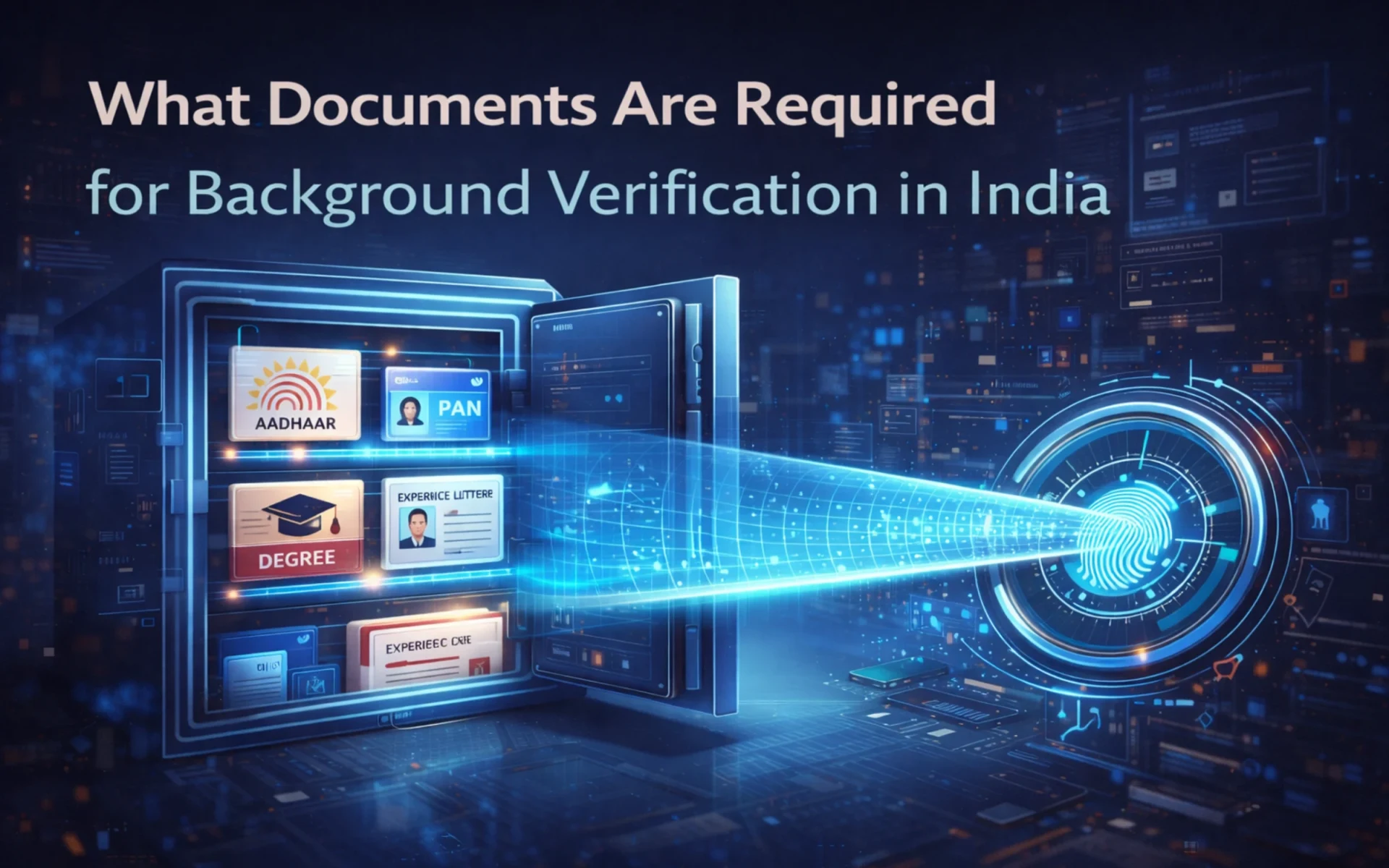
Aadhaar Card — may be used for identity verification and, where appropriate, address information.
-
PAN Card — commonly used for identity or financial-related verification where relevant to the role or check.
-
Passport, Voter ID, or Driving Licence — may provide additional identity or address information, depending on the document and verification requirement.
The specific document requested should depend on the purpose of the check. Organisations should collect only the information that is relevant and necessary for the verification being conducted.
Address Proof
Address verification may be required for certain roles or verification processes. Common documents can include:
-
Utility bills, such as electricity, water, or gas bills
-
Rental or lease agreements
-
Bank statements
-
Passport or other accepted address documents
-
Aadhaar, where appropriate and permitted for the relevant purpose
Address verification can help identify discrepancies between the address information provided by a candidate and the information that can be reasonably verified.
Educational Documents
Education verification confirms whether the candidate's stated qualifications can be validated. Documents commonly requested include:
-
Degree certificates or diplomas
-
Mark sheets or academic transcripts
-
Professional certifications, where relevant
-
Course completion certificates or letters
Depending on the verification process, the information may be checked against records or confirmation from the relevant educational institution or authorised source.
Education verification can be particularly important for roles where specific academic qualifications, professional certifications, or regulated credentials are relevant to the position.
Employment Documents
Employment verification helps confirm details such as an individual's previous employer, designation, employment period, and other relevant experience. Commonly requested documents include:
-
Experience or employment letters
-
Relieving letters or separation documents
-
Offer or appointment letters
-
Salary slips, where relevant to the verification process
-
Other employment records that can support the information provided by the candidate
These documents can help identify inconsistencies in employment history, such as differences in reported tenure, designation, or employer information.
Additional Documents (Role-Specific)
Depending on the role, industry, location, and scope of verification, additional documents or information may be required, such as:
-
Court or criminal-record-related information for roles where such checks are relevant and lawfully conducted
-
Medical or health-related documentation where appropriate for the role and applicable requirements
-
Reference contact details for professional reference checks
-
Work permits or visa documents for international or cross-border employment
-
Professional licences or registrations for regulated or specialised positions
Additional checks should be proportionate to the role and conducted in accordance with applicable legal, privacy, and organisational requirements.
Why Proper Document Submission Matters
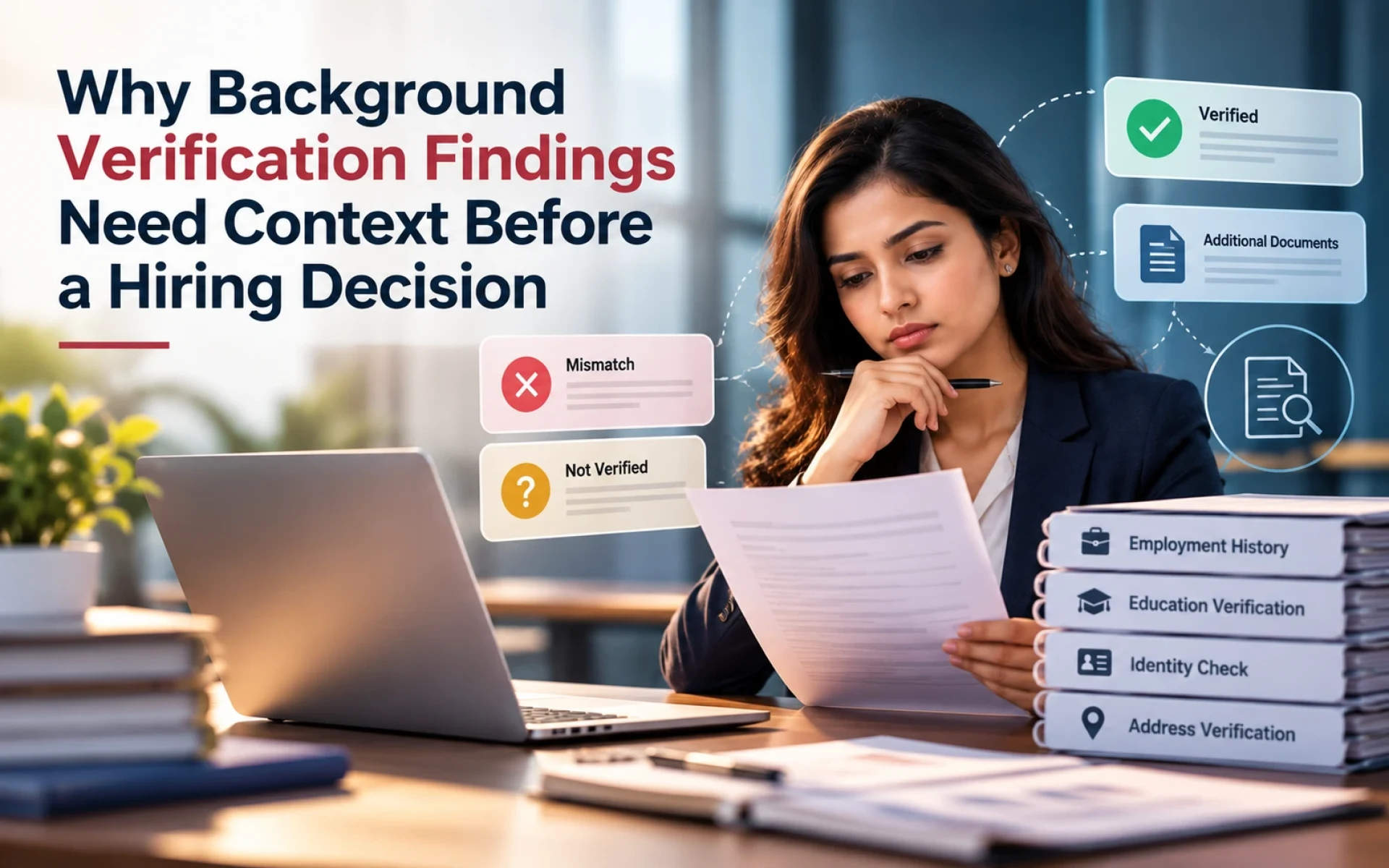
Incomplete or inconsistent documentation can delay the background verification process. Missing documents, incorrect information, mismatched details, or unclear copies may require additional clarification before a check can be completed.
Providing accurate and relevant documents helps HR teams and verification providers process checks more efficiently and identify discrepancies at an early stage.
Organisations working with verification providers such as CaseXpert can establish a structured document-collection process, helping candidates understand what information is required, how it should be submitted, and what may be needed if a discrepancy arises.
Ultimately, there is no single document checklist that applies to every background verification process. The right documents depend on the purpose, scope, role, and applicable requirements of the verification. A well-designed BGV process collects relevant information without requesting unnecessary documents, helping organisations balance verification needs with responsible data handling.
Final Thought
Background verification is a process built on evidence, and accurate documentation forms an important part of that evidence. Providing complete, relevant, and verifiable documents helps organisations identify discrepancies, reduce hiring risks, and support informed employment decisions. With the right documentation and a well-structured verification process, HR teams, recruiters, and decision-makers can make more confident decisions based on information that has been appropriately verified.
Verify at any stage. CaseXpert supports conditional onboarding, promotions and periodic re-verification with consent-driven, policy-aligned checks. Talk to our verification specialists or send an enquiry to get started.