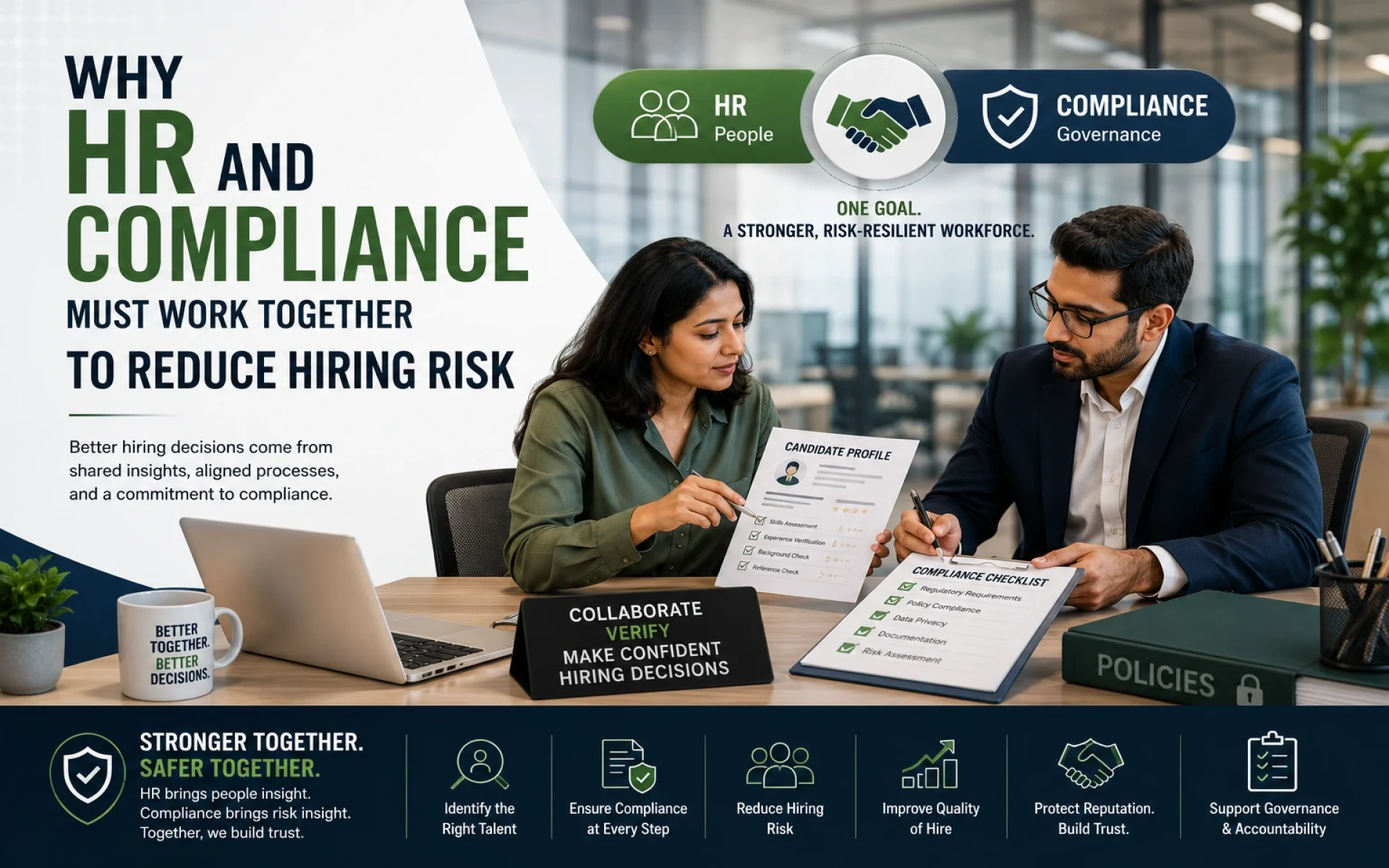
Hiring in India today is no longer just about filling positions quickly. It is a strategic responsibility closely connected to compliance, data protection, workplace safety, and brand reputation.
As companies scale faster, manage distributed teams, and handle sensitive customer, employee, and financial information, the risks associated with an unsuitable or fraudulent hire have increased. This has made Background Verification (BGV) an important part of modern hiring and workforce management.
The Evolution of Background Verification in India
In the past, many Indian companies relied primarily on personal references, interviews, and basic document checks when evaluating candidates. Hiring decisions were often based on the information provided directly by applicants.
As India's IT services, BPO, fintech, healthcare, e-commerce, logistics, and global outsourcing sectors expanded, hiring volumes increased and organizations encountered more sophisticated forms of candidate fraud. These included forged educational certificates, inaccurate employment histories, identity-related discrepancies, and misrepresented professional experience.
At the same time, organizations became increasingly conscious of risks associated with employee misconduct, unauthorized access to information, workplace safety, and regulatory compliance.
These changes encouraged companies to adopt more structured verification processes. Background verification gradually evolved from an occasional precaution into an established part of hiring across industries such as IT, BFSI, healthcare, manufacturing, logistics, staffing, and gig work.
Today, BGV is an important hiring safeguard that helps organizations validate candidate information before granting access to sensitive systems, customers, assets, and responsibilities.
What Does Background Verification Actually Mean?
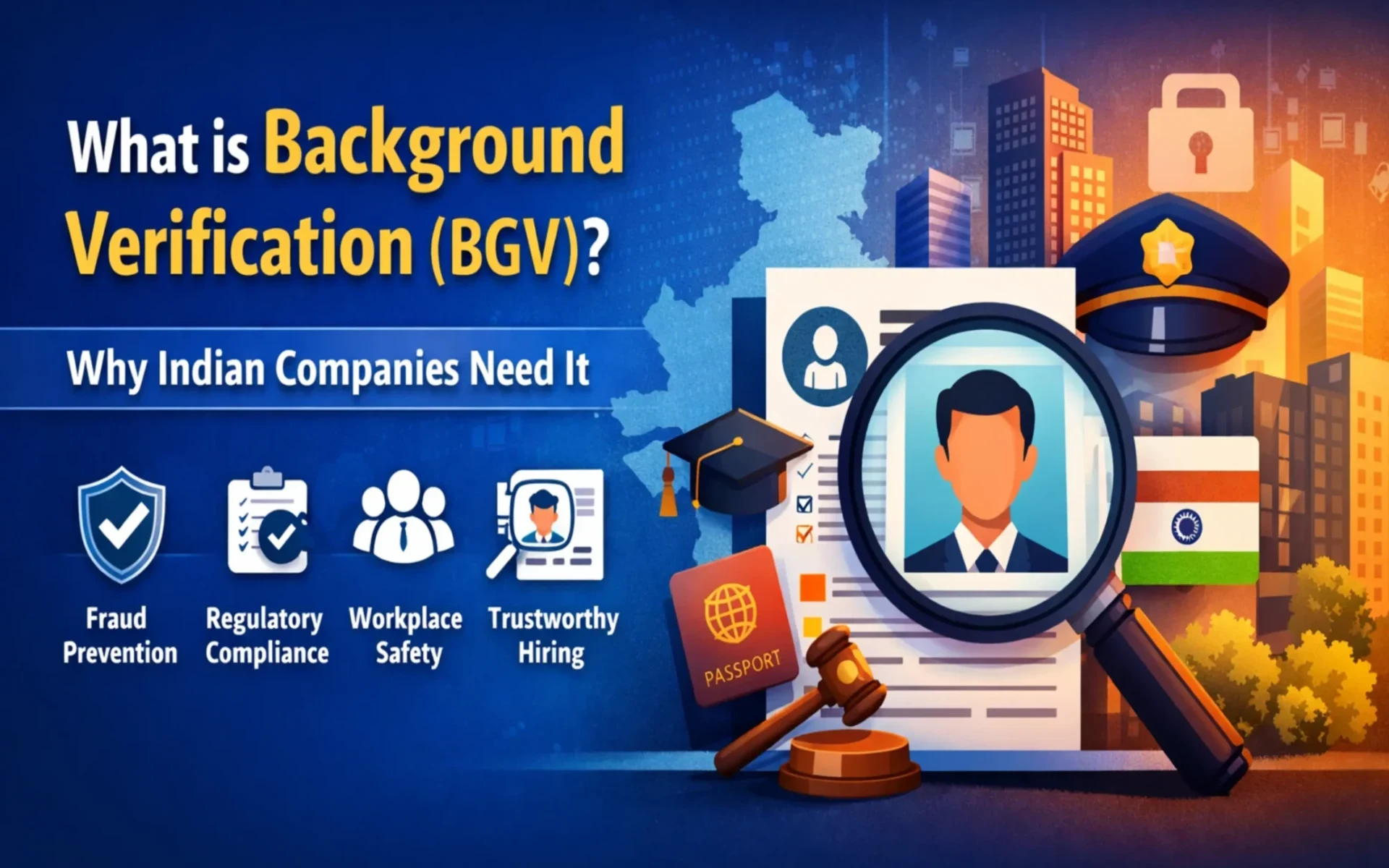
Background Verification (BGV) is the process of validating information provided by a candidate against relevant and authorized sources.
Depending on the organization, industry, and role, BGV may include checks such as:
- Identity verification
- Address verification
- Educational qualification verification
- Previous employment verification
- Professional reference checks
- Criminal record or court-record checks, where appropriate
- PAN and other identity-related checks
- Global database or compliance screening for relevant roles
- Employment gap verification
- Additional role-specific checks
The checks performed should depend on the requirements and risks associated with the position.
At its core, background verification helps employers answer an important question:
Does the information provided by the candidate accurately represent their identity, qualifications, and professional history?
How Does the Background Verification Process Work in India?
While the exact process differs between organizations and verification providers, a typical BGV workflow involves several stages.
1. Candidate Consent and Information Collection
The employer generally initiates verification after deciding to conduct screening and provides the candidate with the appropriate disclosures and consent mechanisms.
The candidate may then be asked to provide relevant information and documents, such as identity documents, educational certificates, employment details, and address information.
Because background verification involves processing personal information, organizations should follow applicable privacy, data-protection, employment, and sector-specific requirements.
2. Document and Information Validation
The information submitted by the candidate is reviewed and validated against appropriate sources.
For example, educational qualifications may be verified with the relevant institution, while employment history may be checked with previous employers or through authorized verification channels.
3. Address Verification
Address verification may be conducted through digital or physical methods, depending on the organization's requirements and the type of check being performed.
The objective is to determine whether the candidate's declared residential information can be reasonably validated.
4. Criminal and Court-Record Checks
Where relevant and legally permissible, organizations may conduct criminal or court-record checks using appropriate sources.
Such checks should be interpreted carefully. A record match should not automatically be treated as proof of wrongdoing, and organizations should have appropriate processes for reviewing discrepancies and allowing candidates to clarify potentially incorrect or incomplete information.
5. Verification Review and Reporting
Once the required checks are completed, the findings are consolidated into a verification report.
The report can identify information that has been successfully verified, discrepancies that require review, and checks that could not be completed because of unavailable or insufficient information.
Verification timelines vary depending on the checks involved, the responsiveness of institutions or employers, geographic coverage, and the quality of information provided by the candidate. Therefore, there is no universal turnaround time for every BGV case.
Why Is Background Verification Important for Indian Companies?
A hiring decision can affect far more than an individual position. Employees may have access to confidential information, financial systems, customer data, physical assets, intellectual property, or critical business operations.
A structured BGV process can help organizations reduce several types of hiring-related risk.
1. Reducing Credential and Experience Fraud
Candidates may sometimes provide inaccurate information about educational qualifications, previous employment, job titles, or professional experience.
Verification helps employers identify discrepancies before they become part of the organization's workforce.
2. Protecting Sensitive Business Information
Employees in technology, BFSI, healthcare, fintech, and other sectors may have access to sensitive information.
Verifying relevant aspects of a candidate's background can form part of a broader workforce-risk management framework.
3. Supporting Compliance
Many organizations operate under industry-specific regulations, contractual requirements, internal policies, and client-mandated screening standards.
A documented verification process can help organizations demonstrate that appropriate hiring controls are in place.
4. Improving Workplace Safety
For roles involving customer interaction, field work, healthcare services, security responsibilities, or access to private premises, appropriate background checks can support broader workplace and operational safety practices.
5. Protecting Employer and Client Reputation
A serious employee-related incident can affect customer confidence, business relationships, and an organization's reputation.
BGV cannot eliminate every workforce risk, but it can help organizations identify certain discrepancies and make more informed hiring decisions.
Who Needs Background Verification the Most?
Background verification can be relevant to organizations of all sizes, but its importance can be particularly significant for businesses where employees have access to sensitive information, financial systems, customers, physical assets, or critical infrastructure.
This includes:
- IT and technology companies
- BFSI and fintech organizations
- Healthcare institutions
- BPO and KPO companies
- E-commerce businesses
- Logistics and transportation companies
- Manufacturing organizations
- Staffing and recruitment agencies
- Startups and SMEs
- Gig and platform-based businesses
- Organizations handling sensitive customer or financial information
The scope of verification should be proportionate to the role and the risks involved rather than applying the same checks to every employee.
Is Background Verification Mandatory in India?
There is no single blanket requirement that makes the same set of background checks mandatory for every employee and every company in India.
However, background verification may be required or strongly relevant in certain industries, roles, client contracts, internal policies, or regulatory environments.
Organizations should therefore determine their screening requirements based on the nature of the role, information and assets the employee will access, applicable laws and regulations, contractual obligations, and organizational risk policies.
Most importantly, verification should be conducted through a transparent process that respects applicable privacy and data-protection requirements.
What Happens If a BGV Check Finds a Discrepancy?
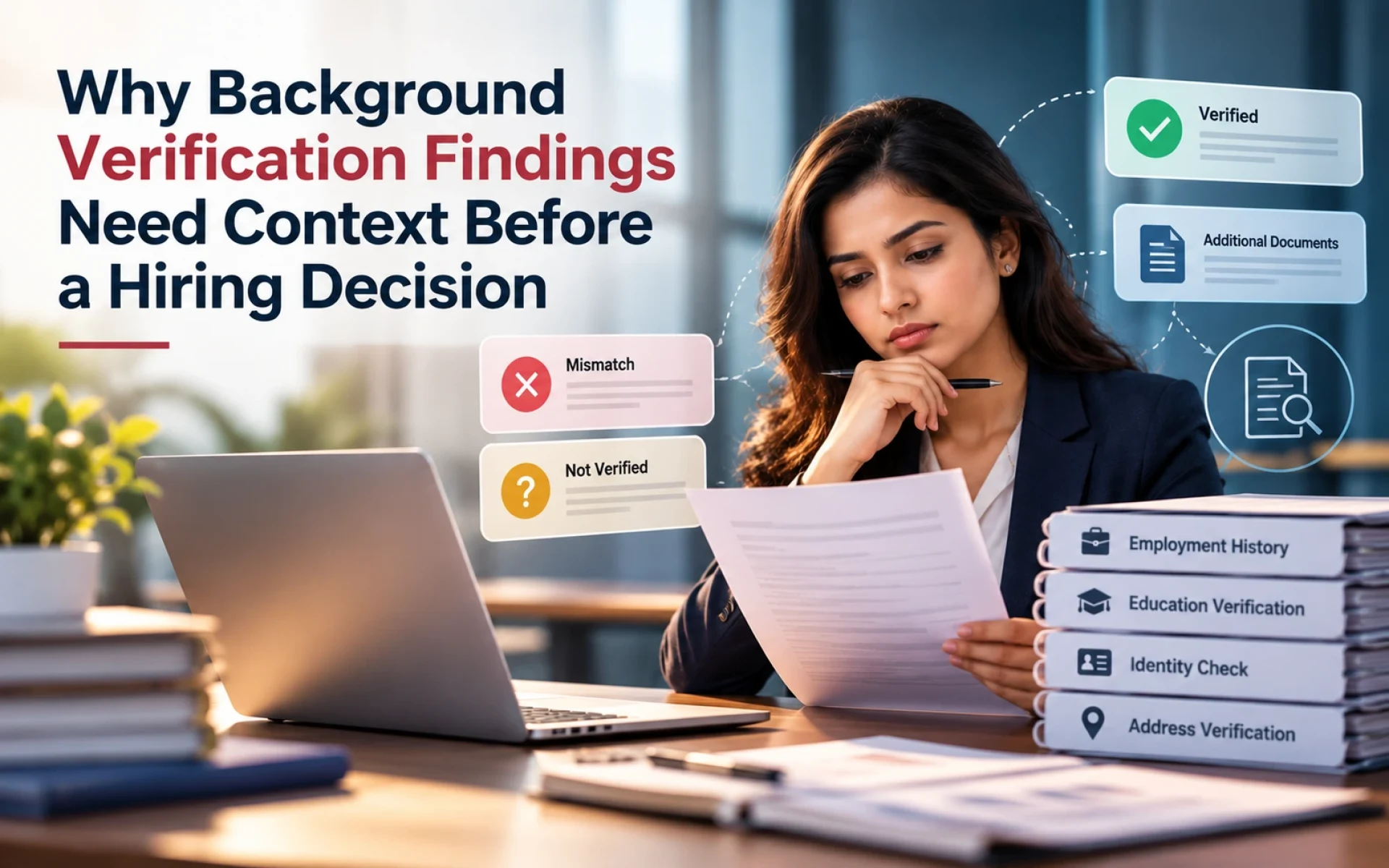
A discrepancy does not necessarily mean that a candidate has committed fraud or is unsuitable for employment.
For example, differences in employment dates may result from notice periods, payroll records, company mergers, or simple administrative errors. Similarly, an address mismatch may have an innocent explanation.
Organizations should therefore distinguish between:
- Verified information
- Minor discrepancies
- Unverifiable information
- Material discrepancies
- Potentially fraudulent information
A fair verification process should allow relevant discrepancies to be reviewed and, where appropriate, clarified by the candidate before an employment decision is finalized.
How Technology Is Changing Background Verification
Traditional BGV processes can involve multiple emails, documents, spreadsheets, phone calls, and manual follow-ups. As hiring volumes increase, these processes can become difficult to manage efficiently.
Technology is changing how organizations conduct and monitor verification.
Modern BGV platforms can help HR and compliance teams with:
- Digital candidate onboarding
- Automated verification workflows
- Real-time status tracking
- Centralized documentation
- Faster communication with candidates
- Standardized verification reports
- Audit trails
- Role-based access
- Dashboard-based monitoring
- Integration with HR and recruitment systems
Automation can reduce repetitive administrative work while giving HR teams greater visibility into the verification lifecycle.
Why Companies Choose CaseXpert
CaseXpert provides technology-driven background verification solutions designed for modern Indian businesses.
Its platform supports organizations across different hiring environments with structured verification workflows, centralized tracking, and compliance-focused reporting.
From employee screening and address verification to education, employment, criminal-record, and other role-specific checks, organizations can manage relevant verification requirements through a centralized workflow.
With technology-enabled processes and PAN-India coverage, CaseXpert helps HR and compliance teams build a more consistent approach to workforce verification.
Final Thought
Background Verification has evolved significantly in India. What was once treated as a basic document-checking exercise has become an important component of workforce risk management.
A well-designed BGV process can help organizations verify candidate information, identify discrepancies, support compliance requirements, protect sensitive business assets, and make more informed hiring decisions.
However, effective BGV is not simply about running more checks.
The process should be relevant to the role, based on appropriate sources, transparent to candidates, and aligned with applicable privacy and regulatory requirements.