Hiring in India has become faster and more competitive, but speed can sometimes create pressure to reduce the time spent on due diligence. Background verification plays an important role in helping organisations validate relevant candidate information and manage risks associated with hiring.
The consequences of inaccurate or incomplete information can extend beyond the hiring decision itself, potentially affecting compliance, data security, workplace safety, financial controls, and brand reputation.
This article explains why background verification is important for companies operating in India today. It is not about distrusting candidates; it is about establishing a consistent process for verifying relevant information and identifying discrepancies before they create avoidable challenges for an organisation.
The Rising Cost of a Wrong Hire
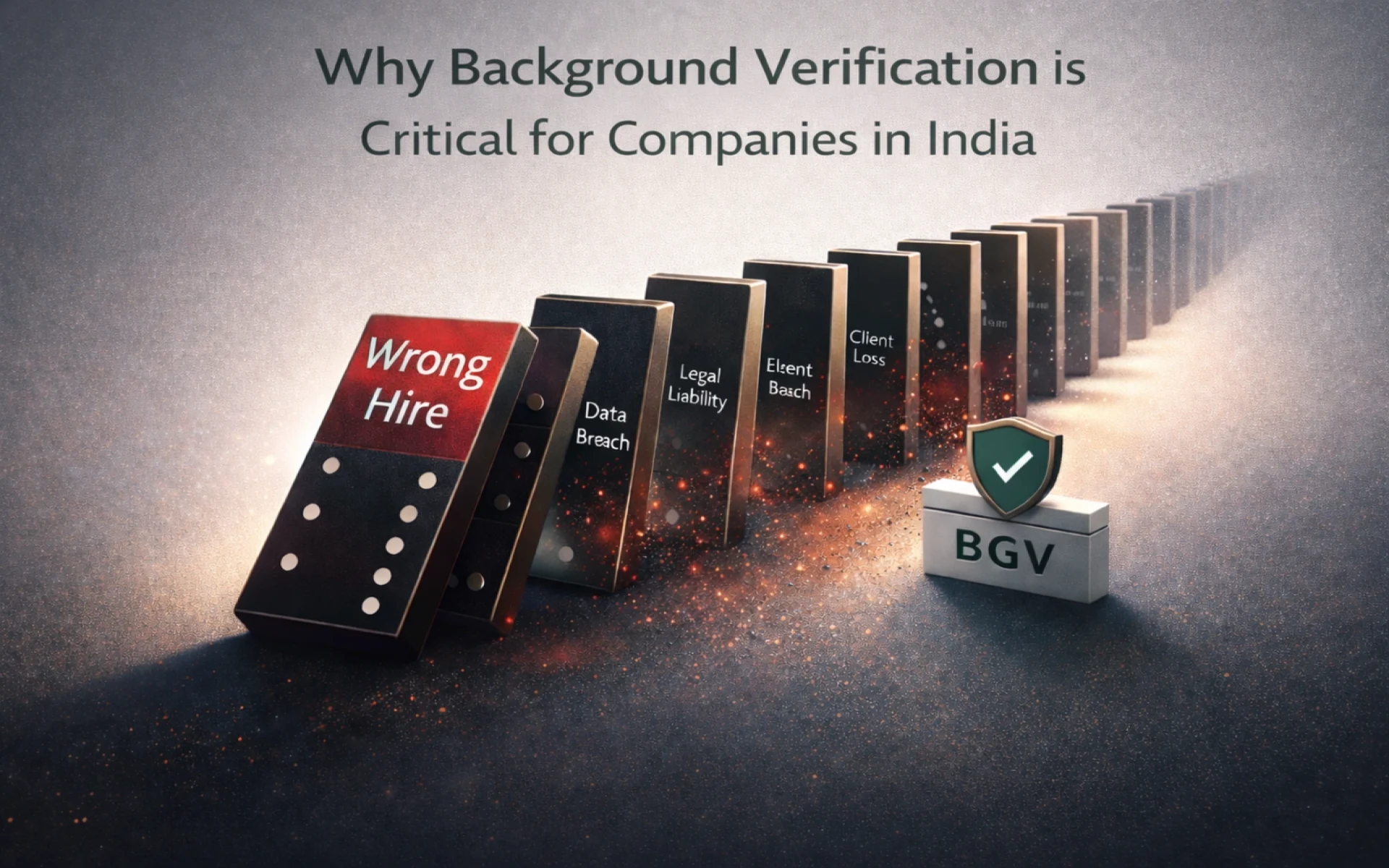
The impact of an unsuitable hire can extend well beyond salary costs. Organisations may incur additional expenses related to recruitment, onboarding, training, replacement hiring, and lost productivity. Where a hiring issue involves misrepresentation, misconduct, or access to sensitive resources, the potential financial, operational, and reputational consequences can be considerably greater.
Background verification can help reduce these risks by independently checking information that is relevant to the role. While verification cannot eliminate every hiring risk, it provides organisations with additional evidence on which to base employment decisions.
Fraud and Misrepresentation Are Real
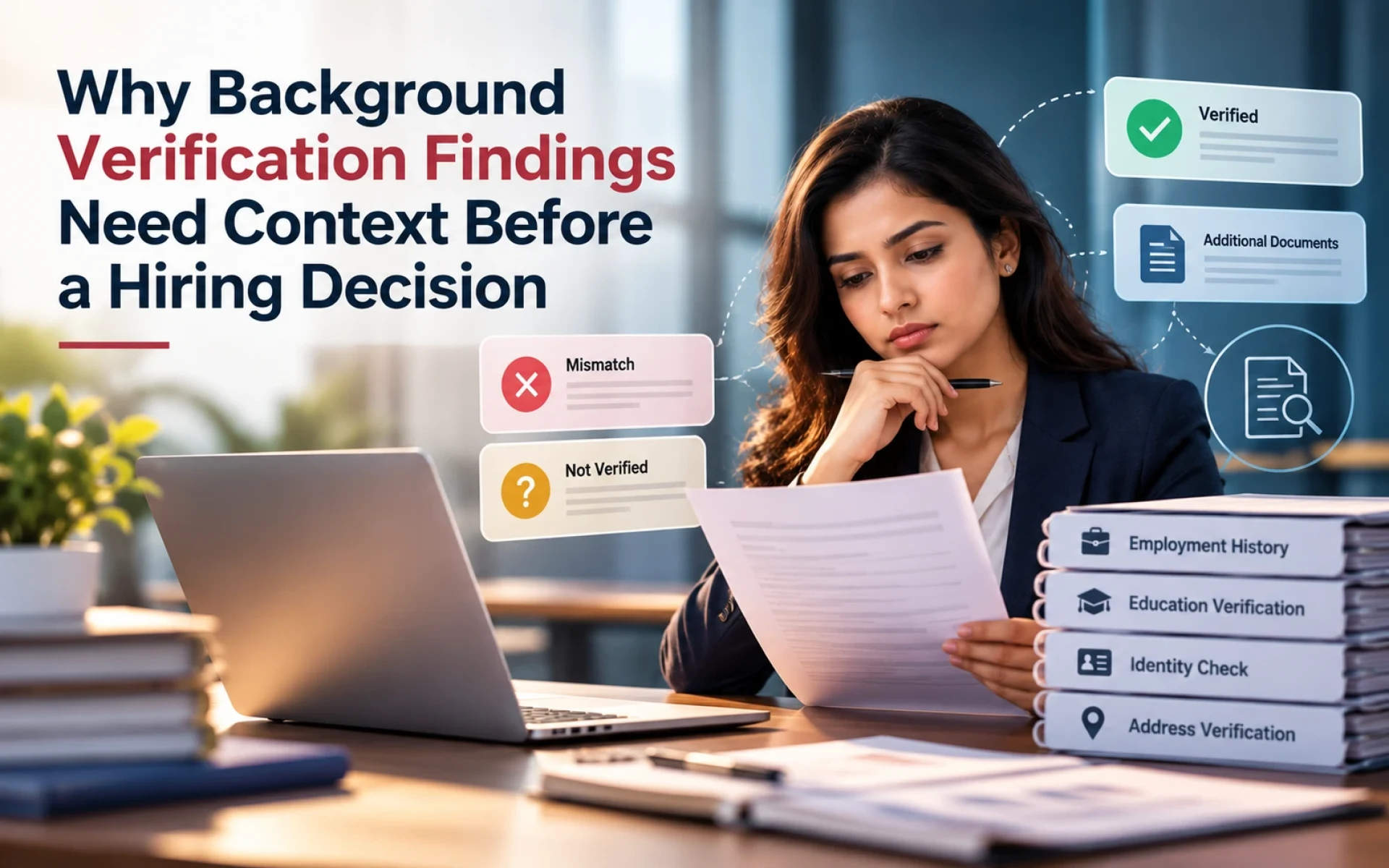
Candidate information can sometimes contain inaccuracies or discrepancies. These may range from differences in employment dates or job titles to more serious concerns involving qualifications, employment history, or identity information.
Depending on the role and scope of verification, BGV can help organisations identify issues such as:
- Inaccurate or inconsistent educational information
- Fabricated or exaggerated employment history
- Undisclosed overlapping employment periods
- Identity discrepancies
- Inconsistencies in professional credentials
- Other material discrepancies relevant to the position
The purpose of verification is not to assume that candidates are dishonest. It is to independently validate relevant information and give employers an opportunity to review discrepancies before making an informed decision.
Compliance and Data Protection Considerations
Organisations increasingly need to consider regulatory, contractual, and data-protection requirements when hiring and managing employees. The requirements can vary depending on the industry, role, organisation, client relationships, and type of information being processed.
For companies operating in regulated or highly sensitive sectors, background verification may form part of a broader risk-management or compliance framework. Enterprise clients may also require certain personnel checks as part of contractual or vendor requirements.
At the same time, verification involves the collection and processing of personal information. Organisations should therefore ensure that checks are conducted for appropriate purposes, with the applicable legal basis, suitable transparency, and responsible handling of candidate data.
Protecting Workplace Safety and Trust
Employees and customers expect organisations to take reasonable steps to create a safe and trustworthy working environment. Background verification can contribute to this by helping organisations validate information relevant to the responsibilities and risks associated with particular roles.
This can be especially relevant for positions involving:
- Access to sensitive or confidential information
- Financial assets or payment systems
- Customer homes or private premises
- Vulnerable individuals
- Critical infrastructure or operational systems
The scope of verification should remain proportionate to the role. Not every employee requires the same checks, and organisations can design verification programmes around the risks and responsibilities associated with different positions.
Verification as a Competitive Advantage
Strong verification practices can also support an organisation's broader reputation and governance standards. Clients may value partners that have structured processes for screening relevant personnel, while employees may appreciate workplaces that take security and responsible hiring seriously.
For organisations, an effective BGV programme can help to:
- Identify relevant discrepancies before they become larger problems
- Support applicable regulatory and contractual requirements
- Protect sensitive information, customers, and employees
- Create a consistent and documented hiring process
- Strengthen confidence among clients and business partners
Verification should not be viewed as a replacement for interviews, reference checks, skills assessments, or other hiring methods. Instead, it works alongside them to provide a more complete picture of the information relevant to a candidate's role.
The Hidden Risks of Skipping It
The risks associated with limited or inconsistent verification may not be immediately visible. An inaccurate qualification, employment detail, or identity record may remain undiscovered until it becomes relevant to an operational, compliance, or performance issue.
By that point, resolving the problem can require additional time and resources. A structured verification process can help identify certain discrepancies earlier, giving organisations an opportunity to review them before finalising or continuing an employment decision.
There can also be an organisational impact when verification standards are inconsistent. If employees or managers perceive that hiring controls are applied selectively, confidence in internal processes may be affected.
A clear, role-based verification policy helps create greater consistency. It also allows candidates to understand what is being checked and why, making the process more transparent for everyone involved.
Key Takeaways
Here are the essential points to carry forward from this guide:
- A poor hiring decision can create recruitment, operational, financial, and reputational costs.
- Background verification helps organisations independently validate relevant candidate information.
- BGV can identify discrepancies in areas such as identity, education, employment, and professional credentials.
- Regulatory, contractual, and data-protection considerations can influence how verification should be conducted.
- Verification can be particularly relevant for roles involving sensitive data, finances, customers, or vulnerable individuals.
- Checks should be proportionate to the role rather than applied identically to every employee.
- Background verification works best as part of a broader, structured hiring and risk-management process.
Conclusion
Background verification is an important component of responsible hiring in India because it gives organisations an additional way to validate information that may influence employment decisions.
The objective is not to assume that candidates are dishonest, but to establish a consistent and evidence-based process for identifying discrepancies, managing relevant risks, and supporting informed decisions.
As organisations hire faster, manage more sensitive information, and operate across increasingly complex regulatory and contractual environments, a structured BGV process can provide valuable support.
Ultimately, the value of background verification lies in better information, consistent processes, and informed decision-making. When checks are appropriately scoped, transparently communicated, and responsibly managed, they can help organisations build stronger foundations for hiring and workforce risk management.
Good hiring starts with good information. Background verification helps organisations turn candidate-provided information into verified evidence for more informed decisions.
Protect what you've built. CaseXpert delivers thorough, compliant, technology-driven checks that protect your business, your people and your reputation. Talk to our verification specialists or send an enquiry to get started.