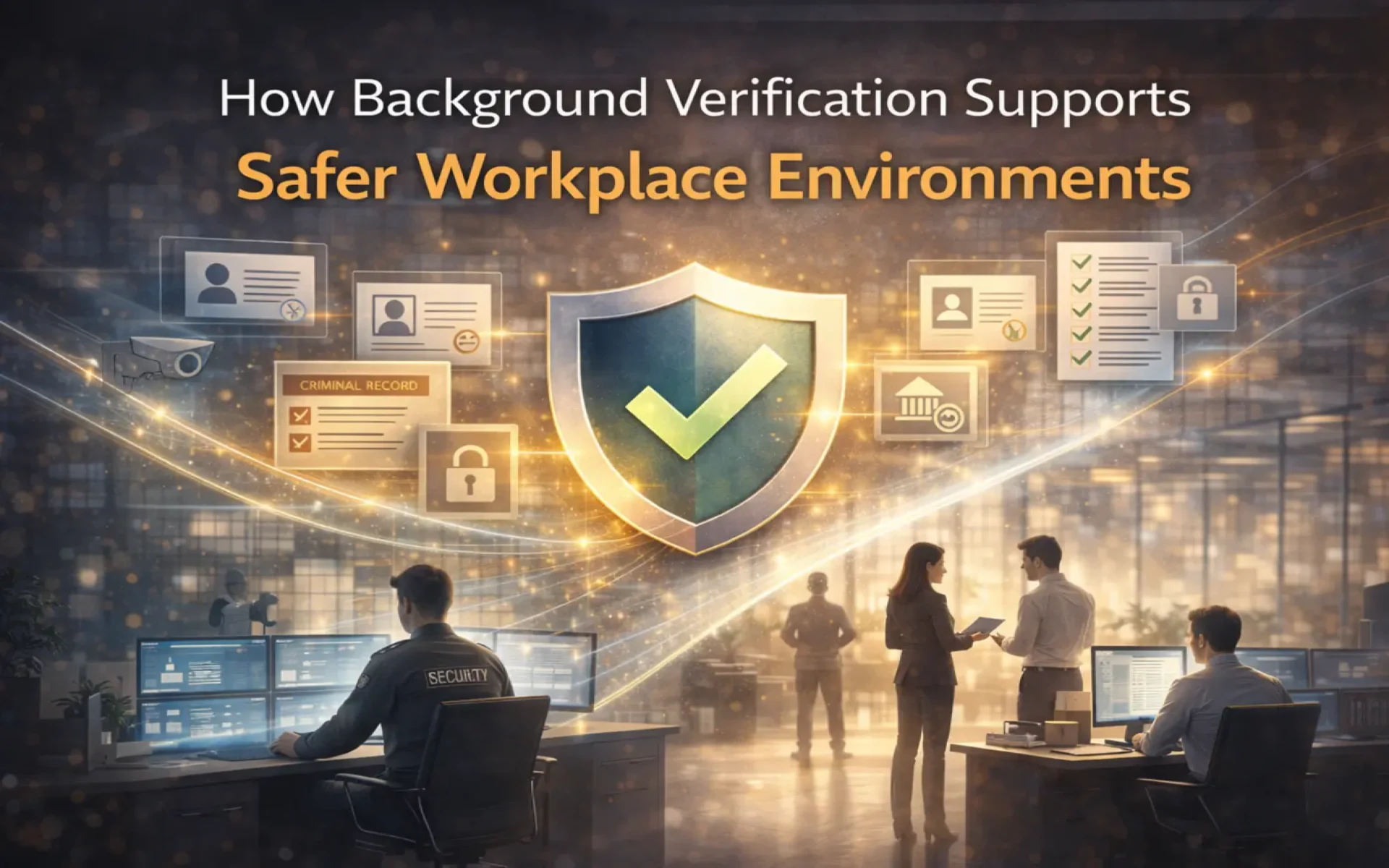
A safe workplace is built on many factors — thoughtful design, clear policies, effective training and attentive management. But workplace safety also begins with the people who are brought into the organisation. Employees, contractors and other individuals with access to workplaces and systems can introduce risks that may not be visible during recruitment. Background verification helps organisations identify relevant concerns before access and responsibilities are granted.
This article explores how background verification supports safer workplace environments. It examines the physical, financial and cultural dimensions of workplace safety and explains how appropriate verification can help organisations identify potential risks before they become workplace incidents.
Safety Starts at Hiring
Workplace safety is often associated with equipment, training and operational procedures, but hiring decisions are an important part of the overall risk environment. Every person joining an organisation receives a degree of access, responsibility and trust. Where relevant concerns are concealed or inaccurate information is provided, those risks may not become apparent until after onboarding.
Background verification provides an opportunity to validate important information before a candidate joins and receives access to people, systems, premises or sensitive information.
This makes verification more than an administrative hiring step. When designed appropriately, it can form part of an organisation's broader approach to workplace risk management.
Protecting Physical Safety
For roles involving regular interaction with employees, customers, patients, students or other vulnerable individuals, appropriate background checks can help organisations identify relevant information that may require further review.
Identity verification and, where legally and operationally appropriate, criminal record checks can provide additional information when assessing candidates for roles where physical safety is particularly important. Such checks may be especially relevant in sectors such as healthcare, education, security and other environments involving vulnerable populations.
The objective is not to make assumptions based on a record, but to ensure that relevant information is considered carefully in the context of the role and the organisation's policies.
Guarding Against Financial Harm
Workplace safety also includes protecting an organisation's financial resources and sensitive information. Employees in finance, accounting, procurement and other positions may have access to funds, financial systems or confidential business information.
Role-appropriate verification can help organisations validate employment history, qualifications and other relevant information before assigning such responsibilities. Where additional checks are appropriate and legally permissible, they can form part of a broader financial-risk control framework.
Background verification should complement — not replace — other safeguards such as access controls, segregation of duties, monitoring and financial controls.
Supporting Psychological Safety
A safe workplace is not limited to physical security. Employees also need an environment where they can work without unnecessary fear, intimidation or harassment.
Hiring decisions can influence this environment. Where relevant information about previous misconduct or workplace behaviour is available through appropriate verification processes, organisations may be better positioned to identify concerns before making a hiring decision.
Verification alone cannot guarantee a positive workplace culture. Strong policies, effective leadership, reporting mechanisms and appropriate employee support remain essential. However, responsible screening can form one part of a broader approach to maintaining a respectful and secure workplace.
Duty of Care and Responsible Hiring
Employers have responsibilities toward the people who work for and interact with their organisation. Appropriate background verification can support these responsibilities by demonstrating that reasonable, role-appropriate steps were taken to validate candidate information and identify relevant risks.
The exact legal requirements vary by jurisdiction, industry and role, so verification policies should be designed with applicable laws, consent requirements and organisational obligations in mind.
Beyond compliance, a structured verification process demonstrates that workplace safety is considered before access and responsibility are granted — rather than only after an incident occurs.
Verification for Contractors and Third Parties
Workplace access is not limited to permanent employees. Contractors, temporary workers, consultants and vendor personnel may also access company premises, systems, customer information or sensitive data.
Applying appropriate verification standards to these groups can help close gaps in an organisation's broader access and risk framework.
This may include:
- Contractors with access to company sites or systems
- Temporary and seasonal workers
- Vendor personnel working on-site
- Consultants handling sensitive information
The checks required should be proportionate to the individual's responsibilities, access level and associated risk.
Ongoing Safety Through Re-Verification
Background verification is often conducted before joining, but certain roles may require additional checks during employment. Circumstances, qualifications, licences and responsibilities can change over time.
For sensitive or regulated positions, organisations may consider periodic re-verification where there is a legitimate business and legal basis for doing so. This can help confirm that employees continue to meet relevant requirements throughout their tenure.
Re-verification should be governed by a clear policy, appropriate consent and defined criteria rather than being conducted inconsistently or without a clear purpose.
How a Verification Partner Can Support Workplace Safety
A professional background verification partner can help organisations apply screening processes consistently across different roles and hiring volumes.
A capable partner can support organisations by:
- Conducting role-appropriate verification checks
- Validating identity, education and employment information
- Supporting relevant criminal record checks where appropriate
- Maintaining documentation and verification records
- Providing clear reports for HR and compliance teams
- Supporting consistent processes across employees and third parties
The goal is not simply to generate verification reports. It is to provide reliable information that organisations can use as one component of their wider workplace risk-management framework.
Safety as a Shared Expectation
A safe workplace is built not only through controls but also through the standards an organisation communicates to its people.
When employees understand that hiring and access processes are structured, consistent and respectful, it can reinforce the organisation's commitment to integrity, accountability and workplace safety. Verification can contribute to these expectations when it is conducted transparently and consistently.
However, verification is only one part of the picture. A genuinely safe workplace also depends on leadership, employee conduct, reporting mechanisms, training, access controls and effective responses to workplace concerns.
Key Takeaways
- Workplace safety begins with responsible hiring and access decisions.
- Appropriate verification can help identify relevant risks before onboarding.
- Physical, financial and psychological safety require different safeguards.
- Contractors, temporary workers and vendors may also require appropriate screening.
- Re-verification can support ongoing assurance for sensitive or regulated roles.
- Background verification should complement broader workplace safety and risk-management controls.
- A structured verification partner can help organisations maintain consistency and documentation.
Conclusion
Background verification can play an important role in creating safer workplace environments by helping organisations validate candidate information and identify relevant risks before access and responsibilities are granted.
Its value extends beyond a single hiring decision. When integrated with workplace policies, access controls, compliance processes and ongoing risk management, verification becomes part of a broader framework for protecting employees, customers, business assets and organisational trust.
The safest approach is not to rely on verification alone, but to use it as one carefully designed control within a comprehensive workplace safety strategy.
Safer workplaces begin with responsible hiring — and knowing who you are bringing into the organisation.
Build a Safer Workplace. CaseXpert helps organisations build safer workplaces with consistent verification of every employee, contractor and third party who needs access. Talk to our verification specialists or send an enquiry to get started.