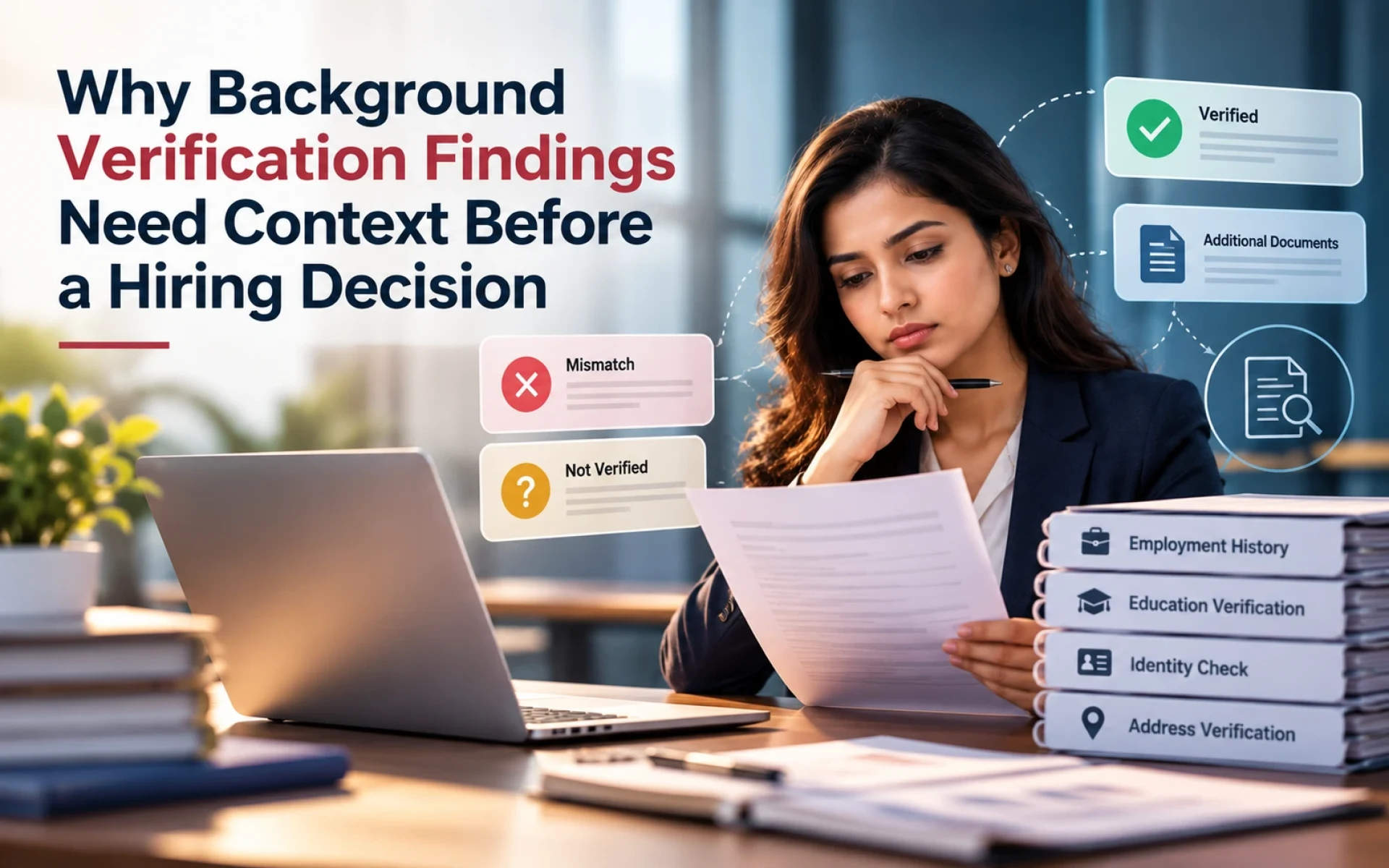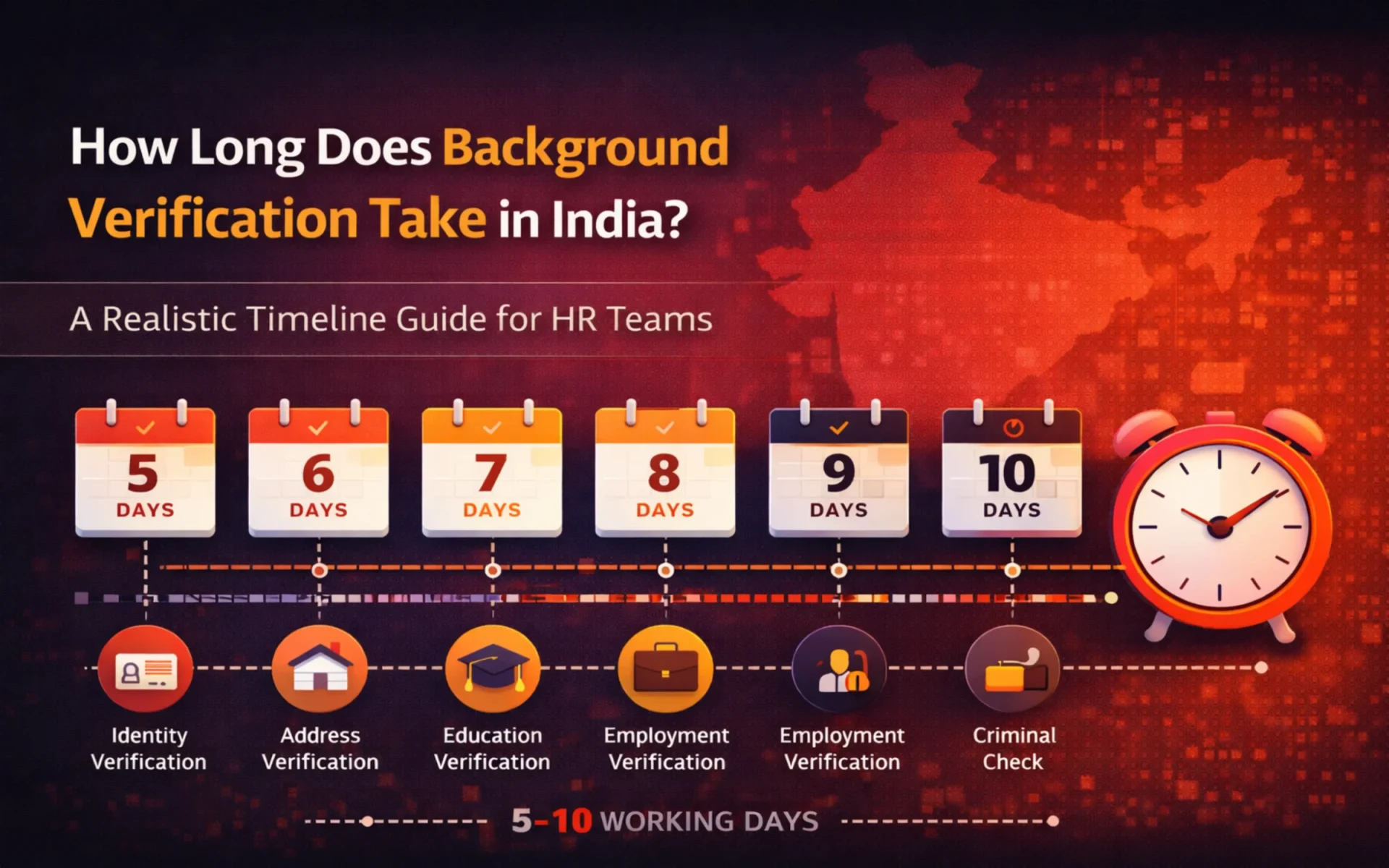
One of the first questions HR teams and candidates ask about background verification is simple: How long will it take?
In India, there is no single timeline that applies to every background verification. The duration depends on the types of checks involved, the completeness of the candidate's information, the responsiveness of third parties such as universities and previous employers, the location being verified, and whether the process is managed manually or through a technology-enabled verification platform.
Understanding these factors helps companies plan hiring and onboarding timelines more effectively and set realistic expectations with candidates.
For standard verification packages, many cases can be completed within a few working days when the required information is complete and verification sources respond promptly. However, some cases can take significantly longer when they involve difficult-to-reach institutions, manual records, multiple locations, or international education and employment history.
This guide explains what affects BGV timelines in India, how different checks can vary in duration, and how organizations can reduce avoidable delays without compromising verification quality.
What Does a Standard Verification Timeline Look Like?
A typical background verification package may include identity, address, education, employment, and relevant legal or court-record checks.
When the candidate provides complete information and verification sources respond promptly, several of these checks can progress simultaneously. However, the final turnaround time is generally determined by the slowest or most complex verification component.
For example, an employment verification may be completed quickly for one candidate but take considerably longer for another if a previous employer is difficult to reach or historical records are unavailable.
This is why a fixed turnaround time should not be assumed for every BGV case.
A technology-enabled verification partner can reduce avoidable delays by initiating eligible checks in parallel, monitoring their status, and identifying pending components early.
How Long Does Each Type of Background Verification Check Take?
Identity and Address Verification
Identity verification is often among the faster components when the required information can be digitally validated through appropriate sources.
Address verification can take longer, particularly when physical verification is required. The timeline may depend on the candidate's location, the availability of verification personnel, and whether the submitted address information is complete and current.
Education Verification
Education verification timelines can vary significantly between institutions.
Universities and colleges with established verification systems may respond relatively quickly, while older academic records, institutions with limited digital infrastructure, or records requiring manual confirmation may take longer.
International education verification may require additional coordination across countries and time zones, which can further extend the process.
Employment Verification
Employment verification depends heavily on the responsiveness of previous employers or their authorized verification providers.
Large organizations may have dedicated verification teams or automated systems, while smaller organizations may require manual follow-ups.
Discrepancies in employment dates, missing documents, or incomplete employer information can also result in additional clarification cycles.
Criminal and Court-Record Checks
The timeline for criminal or court-record checks can vary depending on the jurisdictions involved and the availability and accessibility of relevant records.
Some records may be easier to search digitally, while others may require additional research or verification.
A potential record match should also be reviewed carefully to ensure that the information relates to the correct individual rather than someone with similar identifying details.
What Factors Speed Up or Slow Down Background Verification?
The biggest factor organizations can control is the quality and completeness of information provided at the beginning of the process.
Incomplete documents, inconsistent personal information, incorrect employment details, and unreachable references can all create additional follow-ups and extend turnaround time.
Other factors include:
- Completeness and clarity of submitted documents
- Accuracy of candidate information
- Availability of previous employers
- Responsiveness of educational institutions
- Number of locations requiring verification
- Availability of relevant records
- Whether checks are processed simultaneously or sequentially
- Whether the process relies primarily on manual or digital workflows
- International education or employment history
- Additional role-specific verification requirements
A practical approach is to collect the required information and documents as early as possible so that verification can begin without unnecessary administrative delays.
Digital Verification vs. Manual Follow-Up
Technology has changed the way organizations manage background verification.
Digital identity validation, automated workflows, online document collection, status tracking, and system integrations can reduce repetitive administrative work and improve visibility throughout the verification process.
However, technology cannot eliminate delays caused by external sources. A university, previous employer, court record, or other verification source may still require manual confirmation.
For this reason, an effective BGV process often combines automation with human review and follow-up.
Automated workflows can handle routine activities efficiently, while experienced verification teams can focus on exceptions, discrepancies, and cases requiring additional investigation.
The objective is not simply to make verification faster, but to make the overall process faster, more transparent, and reliable.
How Can Companies Avoid BGV-Related Onboarding Delays?
Organizations can reduce avoidable delays by treating background verification as an integrated part of the hiring workflow rather than leaving it until the final stage.
Some practical measures include:
- Start verification early once the organization has decided to initiate the process.
- Communicate requirements clearly so candidates know which information and documents are needed.
- Collect complete information upfront to minimize clarification cycles.
- Run eligible checks in parallel instead of waiting for one check to finish before starting another.
- Monitor pending checks actively and follow up with slow-responding sources.
- Create an internal exception process for cases that require additional review.
- Use centralized tracking so HR teams can see the status of every verification in real time.
Organizations should also define their onboarding policy in advance for cases where verification is still in progress. Any decision to proceed with onboarding before completion should be based on the organization's internal policies, the role involved, and applicable legal or contractual requirements.
Setting Realistic Expectations With Stakeholders
Much of the frustration surrounding BGV timelines comes from unclear expectations.
Hiring managers may expect a verification report immediately, while candidates may interpret a delay as an indication that something is wrong. In reality, a delayed verification can simply result from a previous employer, university, or other external source taking longer to respond.
Clear communication at the beginning of the process can help avoid unnecessary anxiety.
HR teams should explain:
- Which checks are being conducted
- What information the candidate needs to provide
- That different checks can have different timelines
- That some delays are dependent on external sources
- How the organization handles pending or exception cases
It is also useful to distinguish between the expected turnaround for a standard case and the timeline for cases requiring additional investigation.
Key Takeaways
Here are the essential points to remember:
- There is no single BGV timeline that applies to every candidate in India.
- Standard cases can often be completed within a few working days when information is complete and verification sources respond promptly.
- Education and employment verification can take longer when institutions or previous employers are slow to respond.
- International records and manual verification requirements may extend the timeline.
- Complete and accurate candidate information helps reduce avoidable delays.
- Running eligible checks in parallel can shorten the overall process.
- Digital workflows improve speed and visibility, but some verification steps still depend on external sources.
- Clear communication between HR teams and candidates helps manage expectations throughout the process.
Conclusion
Background verification in India does not have to be a black box.
While some parts of the process depend on institutions, previous employers, record availability, and other factors outside an organization's direct control, companies can significantly reduce avoidable delays through better process design, complete documentation, parallel verification, and proactive follow-up.
The right goal is not simply to complete BGV as quickly as possible.
It is to deliver accurate and appropriately conducted verification within a predictable and efficient hiring workflow.
Verify faster with CaseXpert. CaseXpert runs parallel, technology-driven checks with real-time tracking so you know exactly where every case stands. Talk to our verification specialists or send an enquiry to get started.