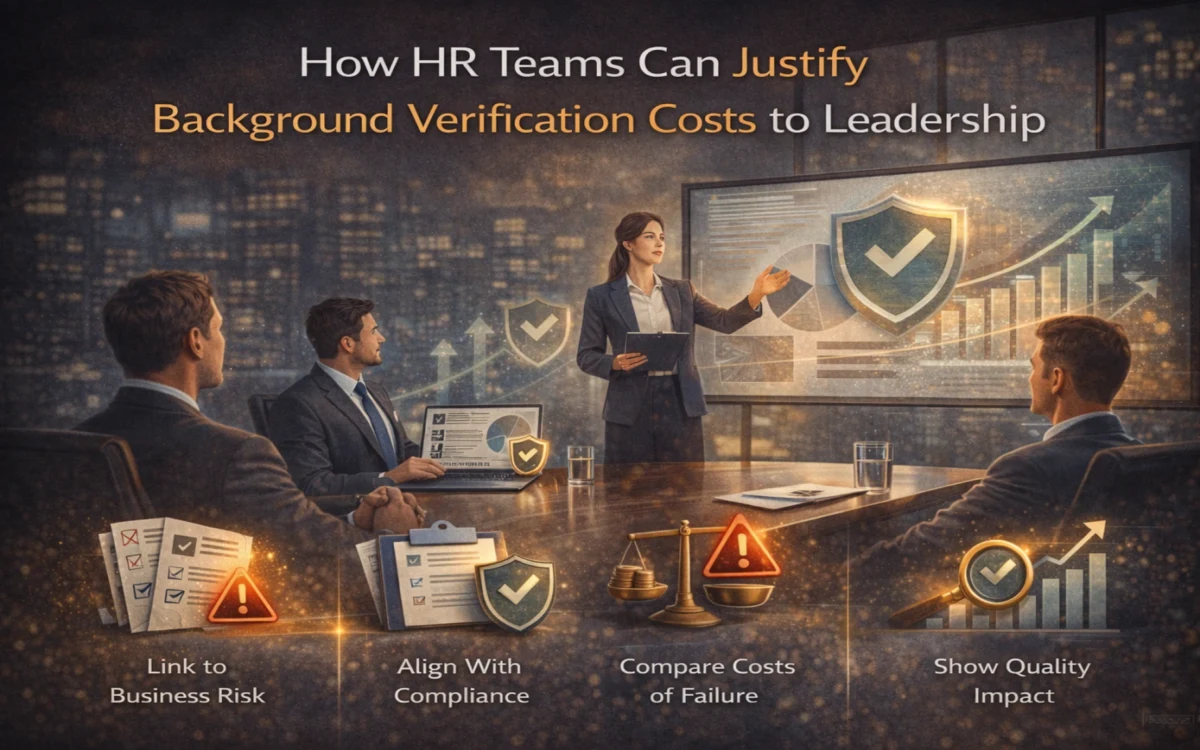
HR teams often believe deeply in the value of background verification, yet struggle to secure the budget for it because leadership sees only the cost. Winning that argument requires translating verification's benefits into the language leaders care about: risk, return, liability and reputation. Done well, the business case for verification is compelling ??? but it must be made deliberately.
This article equips HR teams to justify background verification costs to leadership. It lays out the arguments that resonate in the boardroom, the way to frame verification as risk management rather than expense, and the concrete points that turn a budget request into an obvious decision.
Speak the Language of Risk and Return #
Leaders evaluate spending through the lens of risk and return, so verification should be presented that way. Rather than asking for budget for 'background checks', frame the request as managing a specific, material risk ??? the risk of a costly bad hire ??? with a high return relative to its cost. This reframing shifts the conversation from expense to value.
Quantify where possible: the cost of replacing a bad hire, the potential losses from fraud, the legal exposure from negligent hiring. Set these against the modest, predictable cost of verification, and the return becomes self-evident to a numbers-focused leadership.
Make the Cost of a Bad Hire Concrete #
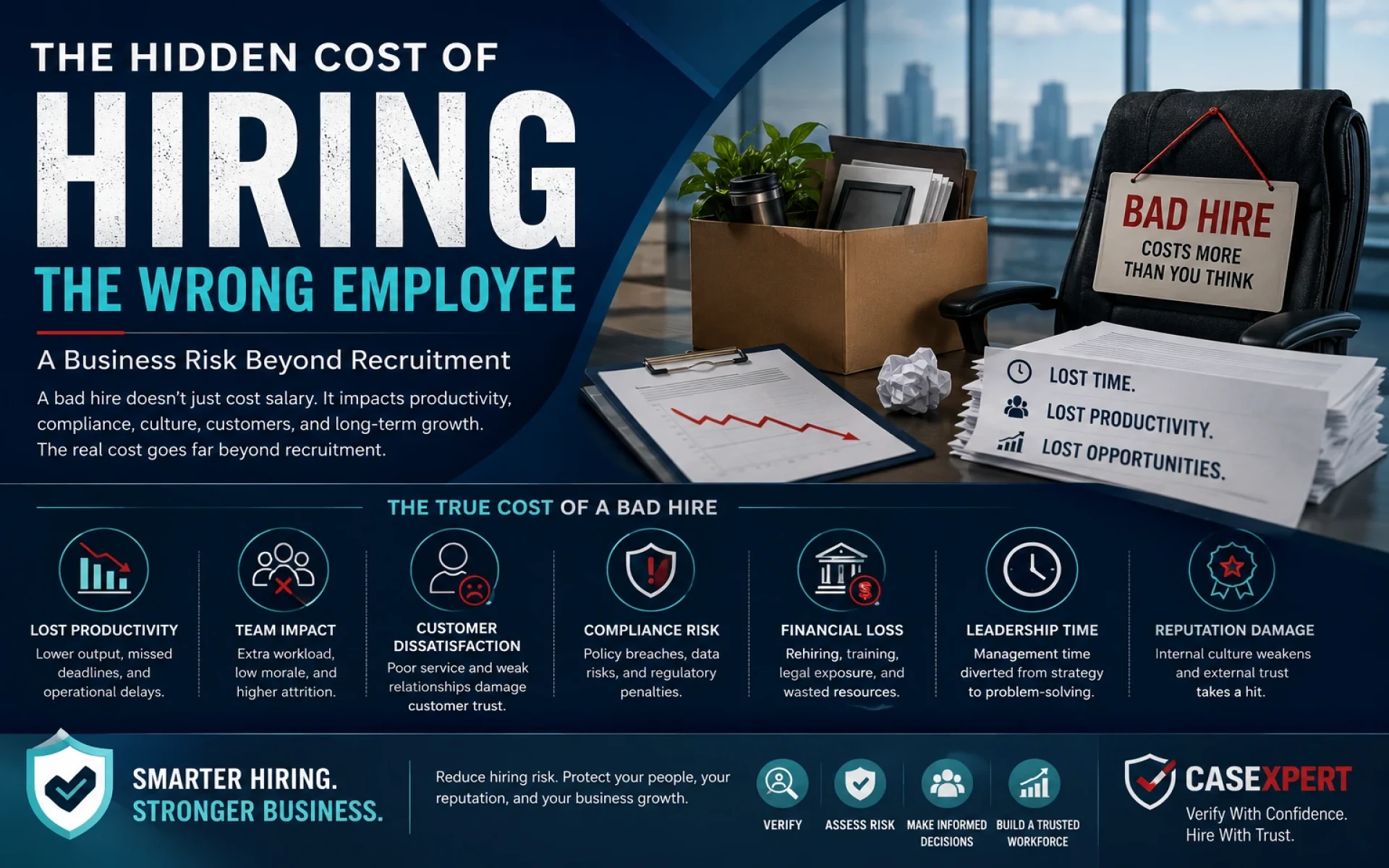
Leadership often underestimates what a bad hire actually costs because the costs are scattered and partly hidden. Bringing them together ??? recruitment and replacement, lost productivity, management time, disruption, and the potential for fraud or liability ??? makes the figure concrete and often startling. Verification's cost looks trivial beside it.
Frame it as a ratio: the cost of verifying many candidates is a fraction of the cost of one serious bad hire. Leaders respond to that asymmetry.
Where your industry or company has experienced or narrowly avoided such costs, those examples make the case far more vivid than abstract arguments.
Emphasise Legal and Compliance Exposure #
Leaders are acutely sensitive to legal and compliance risk. Verification supports the duty of care employers owe, helps meet regulatory expectations, and satisfies the contractual requirements that enterprise clients increasingly impose. Framing verification as protection against legal exposure and lost contracts speaks directly to leadership concerns.
For companies serving regulated or enterprise clients, the point is sharper still: inadequate verification can mean breach of contract or regulatory findings, with consequences far exceeding the cost of the checks.
Connect Verification to Reputation and Brand #
Reputation is a board-level concern, and verification protects it directly. A single scandal from a bad hire can damage a brand built over years, while a reputation for diligent hiring strengthens trust with clients, candidates and investors. Connecting verification to reputation elevates it from an HR task to a strategic safeguard.
- Protection against reputational damage from bad hires
- Stronger trust with clients and partners
- Enhanced appeal to quality candidates
- Reassurance for investors and acquirers
Show That Verification Enables Growth #
Leaders care about growth, and verification enables it. Demonstrable verification discipline unlocks enterprise contracts that require vetted staff, smooths due diligence in fundraising and acquisition, and supports confident scaling. Positioning verification as a growth enabler, not just a risk control, aligns it with leadership's most positive priorities.
This framing turns verification from a defensive cost into an offensive capability ??? something that opens doors rather than merely closing risks. That is a message leadership readily embraces.
Address the 'We've Never Had a Problem' Objection #
A common leadership objection is that the company has never had a serious bad-hire incident, so verification seems unnecessary. The response is that the absence of a known incident may reflect luck rather than safety, and that one serious case is all it takes to incur costs dwarfing years of verification. Verification is insurance against exactly the low-probability, high-impact event that has not happened yet.
Framing it as insurance reframes the objection: no one cancels insurance because they have not yet had a fire.
Build a Concise, Compelling Business Case #
To win the argument, present a concise business case: the specific risks verification manages, the concrete costs it prevents, the legal and reputational protection it provides, and the growth it enables ??? all set against its modest, predictable cost. A well-framed case turns a budget request into an obvious decision.
- Frame verification as risk management with clear return
- Quantify the concrete cost of a bad hire
- Highlight legal, compliance and reputational protection
- Position verification as an enabler of growth
Key Takeaways #
Here are the essential points to carry forward from this guide:
- Present verification in the language of risk and return, not expense.
- Make the full cost of a bad hire concrete and vivid.
- Emphasise legal, compliance and contractual exposure.
- Connect verification to reputation and brand protection.
- Show how verification unlocks enterprise contracts and growth.
- Reframe the 'no problem yet' objection as a case for insurance.
Conclusion #
Justifying background verification costs to leadership is a matter of translation ??? turning verification's real benefits into the language of risk, return, liability, reputation and growth that resonates in the boardroom. The case is strong; it simply needs to be made in terms leaders value.
By quantifying the cost of a bad hire, emphasising legal and reputational protection, and positioning verification as both a safeguard and a growth enabler, HR teams can transform a budget request into an obvious decision. The asymmetry between verification's modest cost and the losses it prevents does much of the persuading.
Ultimately, leadership wants to protect and grow the company, and verification does both. Framed correctly, it stops looking like a cost to question and starts looking like exactly the kind of high-return, risk-reducing investment that good leaders are eager to make.
The case for verification is strong ??? it just needs to be spoken in the language leadership values: risk, return, liability and growth.
Win the budget argument. CaseXpert helps HR teams demonstrate the risk-reduction and return that justify verification to any leadership team. Talk to our verification specialists or send an enquiry to get started.