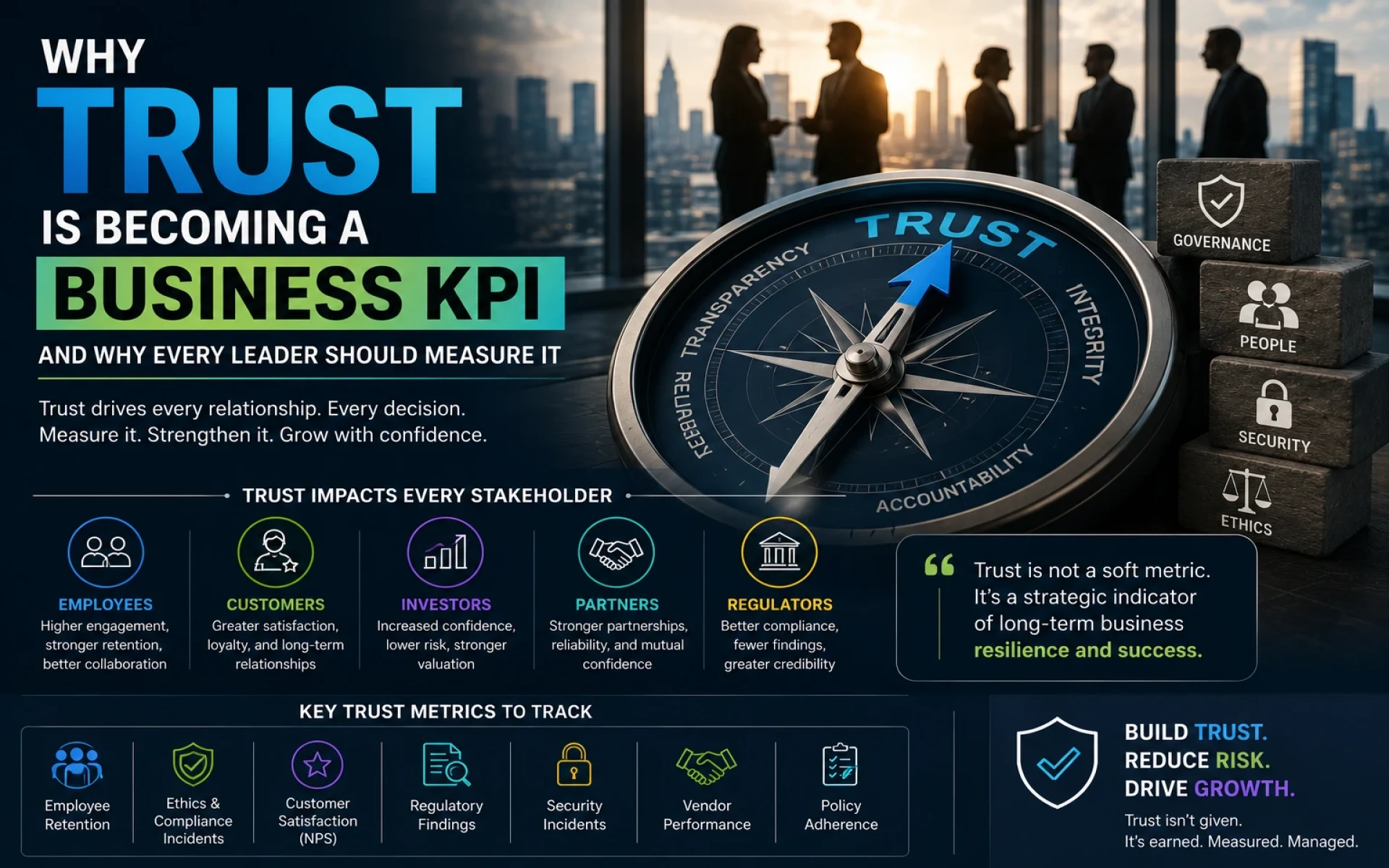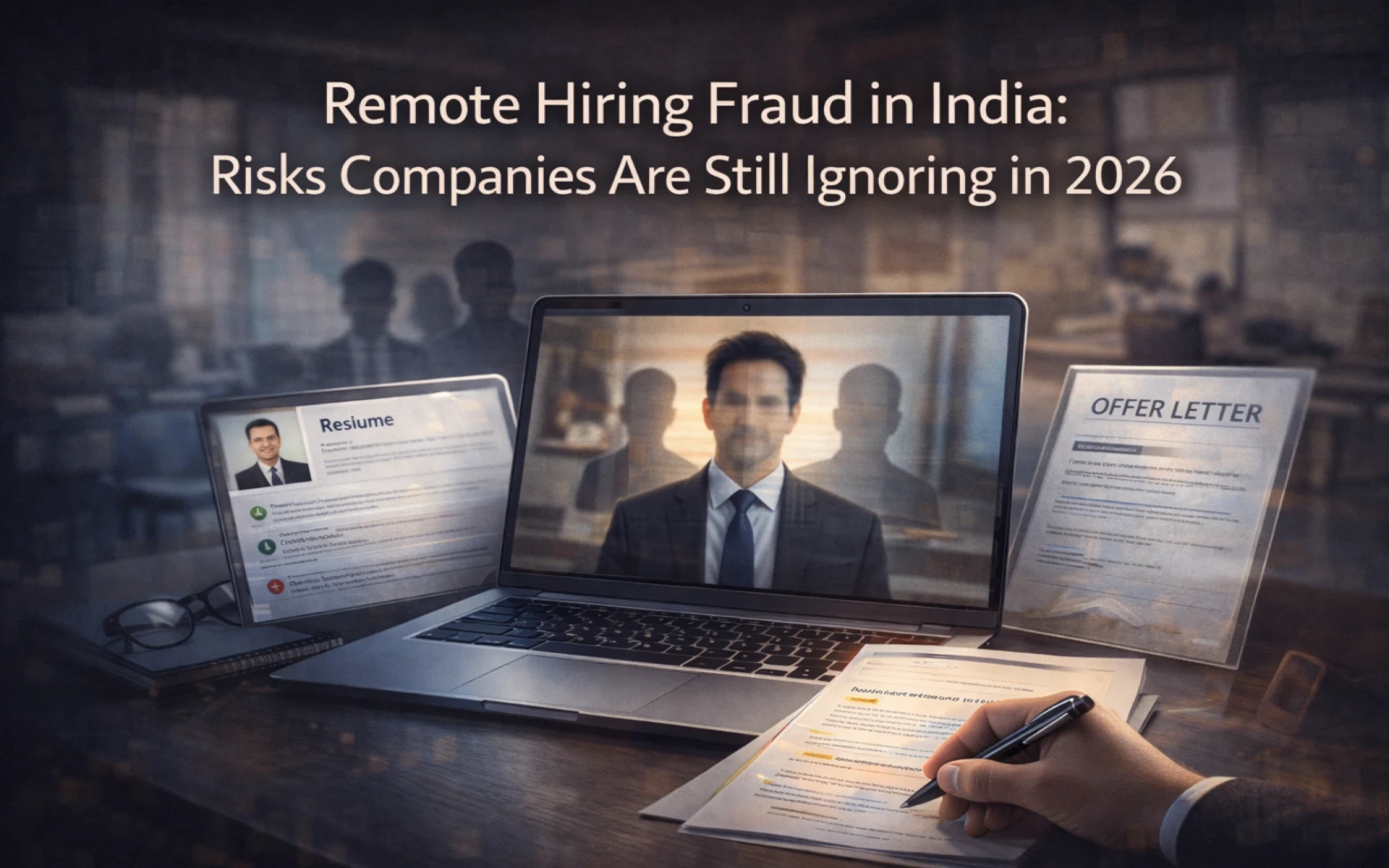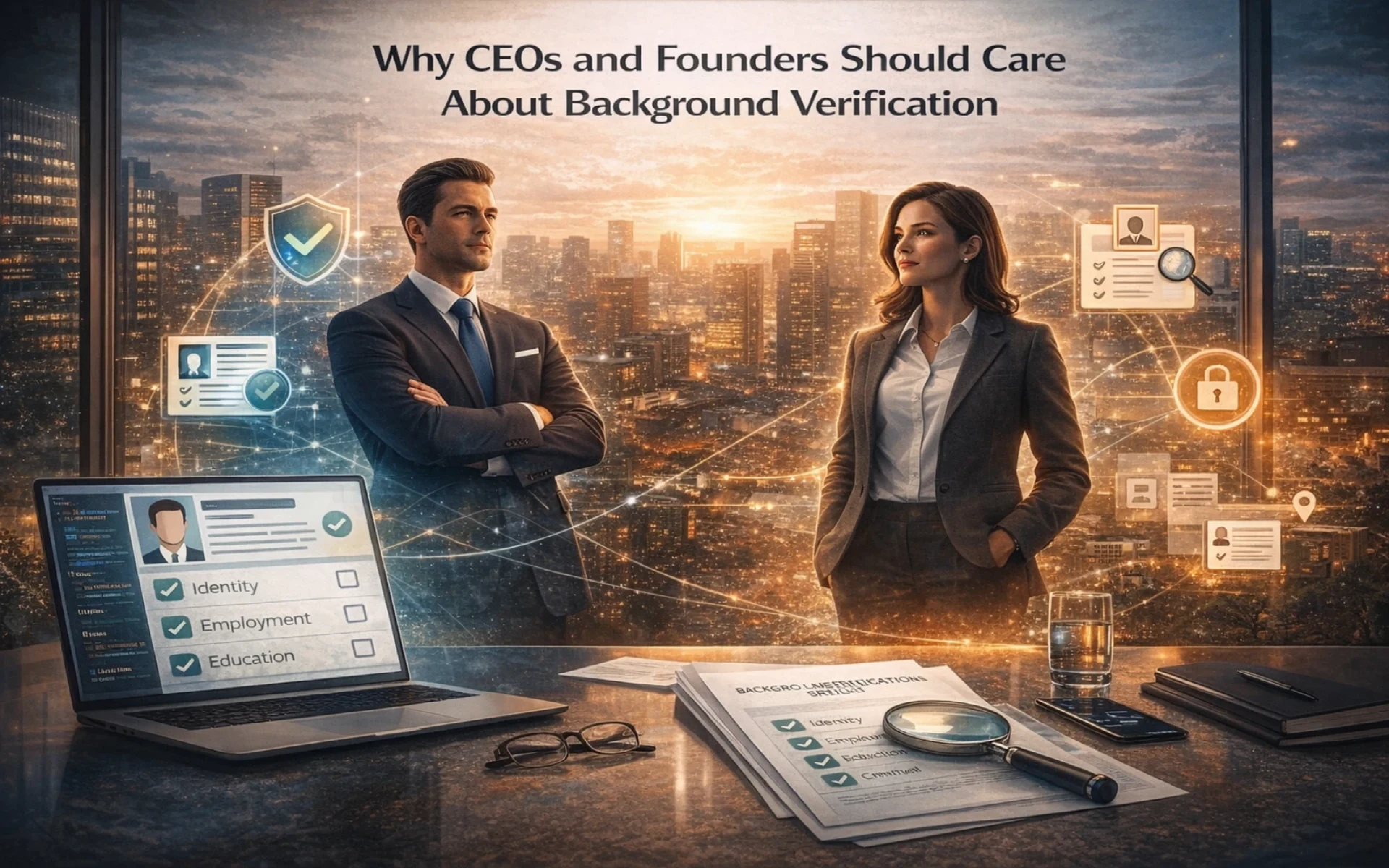
Background verification is often filed under HR — a process founders and CEOs may be happy to delegate and forget. But the risks that verification is designed to help manage can extend well beyond HR: fraud, credential discrepancies, inappropriate access, compliance concerns, reputational harm, and threats to organisational trust can all become leadership concerns.
This article explains why CEOs and founders should care about background verification — not to micromanage the process, but to ensure that an appropriate framework exists, is taken seriously, and reflects the standards of integrity and risk management they want their company to maintain.
The Risks Can Reach Leadership's Desk
When a hiring-related issue involves fraud, inappropriate access, inaccurate credentials, or reputational concerns, the consequences may extend beyond the HR function. Leadership may need to respond to questions from employees, customers, investors, partners, or other stakeholders.
For founders, reputational considerations can be particularly important because the identity of the founder is often closely associated with the company, especially during its early stages.
Background verification cannot eliminate every hiring or people-related risk, but it can provide an additional layer of evidence when organisations assess whether a candidate's relevant information and credentials can be independently verified.
Verification and Business Risk
For CEOs and founders focused on building a sustainable business, hiring controls are one part of broader organisational risk management.
Appropriate verification can help organisations identify discrepancies in areas such as identity, education, employment history, or other role-relevant information before making or finalising employment decisions.
Strong internal processes can also help companies maintain more consistent hiring practices as they grow. However, background verification should be viewed as one component of risk management rather than a guarantee against fraud, loss, legal exposure, or reputational damage.
During fundraising, acquisitions, or other forms of business due diligence, the quality of a company's internal processes may also become relevant. The specific information investors, acquirers, or other stakeholders review varies by transaction and circumstances, so companies should not assume that background verification will directly affect valuation or deal outcomes.
Leaders Set the Standard
Leadership priorities influence how processes are implemented across an organisation.
When founders and CEOs make responsible hiring practices a clear organisational priority, HR and hiring teams are more likely to have the resources, policies, and accountability needed to apply those processes consistently.
Background verification can therefore form part of a broader culture of responsible hiring. The objective is not to treat every candidate as a potential risk, but to establish appropriate, consistent standards for verifying information that is relevant to the role.
A well-designed process should also ensure that findings are reviewed objectively and that discrepancies are not automatically treated as proof of misconduct.
Founders Should Consider Verification for Critical Roles
The people closest to the centre of an organisation can have significant access, responsibility, and influence. This can make appropriate due diligence particularly relevant when appointing co-founders, senior executives, key financial personnel, or other critical individuals.
Depending on the circumstances, organisations may consider:
- Appropriate verification of senior executives and key hires
- Confirmation of relevant educational or professional credentials
- Employment-history verification
- Identity and address verification where relevant
- Appropriate due diligence for board or advisory appointments
- Role-specific checks based on access and responsibilities
For co-founders or other closely connected individuals, the scope and method of due diligence should be appropriate to the relationship and applicable legal and privacy requirements.
The principle is simple: greater responsibility and access may justify greater scrutiny, but checks should remain relevant and proportionate.
Verification and Fundraising Readiness
As companies prepare for fundraising, acquisition, or other significant transactions, founders often review their internal processes, documentation, financial records, contracts, and governance practices.
Background verification can form part of this broader organisational readiness.
Maintaining clear records of relevant verification processes can demonstrate that the company has established structured hiring controls. However, the importance placed on such records varies between investors, acquirers, industries, and transactions.
Rather than treating verification as a guaranteed fundraising advantage, founders should view it as one element of building a well-organised and responsibly managed company.
What Leaders Should Actually Do
Caring about verification does not mean running the process personally.
For CEOs and founders, leadership involvement is primarily about setting expectations, allocating responsibility, and ensuring that an appropriate framework exists.
A practical leadership checklist includes:
- Establish a documented verification policy — Define which roles and checks require verification and when.
- Use a risk-based approach — Match verification requirements to role responsibilities, access, and relevant risks.
- Apply the process consistently — Avoid making verification decisions solely on an ad hoc or individual basis.
- Review critical hires appropriately — Give suitable attention to roles involving significant access, responsibility, or sensitive information.
- Choose capable verification partners — Where verification is outsourced, establish appropriate expectations around accuracy, data handling, turnaround, and reporting.
- Review the framework periodically — Update policies as the organisation, workforce, technology, and applicable requirements change.
Leadership does not need to manage individual verification cases. It needs to ensure the system itself is appropriate and functioning as intended.
Making Verification Part of Good Governance
For founders and CEOs, one of the most sustainable approaches is to embed background verification into the company's broader people and risk-management framework rather than treating it as an occasional decision.
A documented policy, defined ownership, consistent procedures, and periodic review can reduce dependence on individual managers remembering to initiate the appropriate checks.
This governance approach becomes increasingly relevant as companies grow. Processes that work informally with a small founding team may become inconsistent when hiring expands across multiple departments, locations, or business units.
By institutionalising appropriate verification practices, leadership can create greater consistency while allowing HR and specialised partners to manage day-to-day execution.
Key Takeaways
Here are the essential points to carry forward from this guide:
- Background verification can involve risks that extend beyond the HR function.
- CEOs and founders should understand how verification fits into broader organisational risk management.
- Critical and senior roles may require appropriate additional scrutiny based on responsibilities and access.
- Verification should be relevant, proportionate, and consistently applied.
- Leadership should establish the framework rather than micromanage individual verification cases.
- Documented verification processes can form part of broader governance and organisational readiness.
- Background verification is one risk-management tool and does not eliminate every hiring or business risk.
Conclusion
CEOs and founders should care about background verification because the issues it helps organisations identify can extend beyond HR and affect broader business operations, reputation, governance, and stakeholder trust.
Verification is not simply an administrative task to delegate and forget. It is one component of a responsible hiring and risk-management framework that can help organisations make decisions using independently verified information.
Leaders do not need to run verification themselves. Their role is to ensure that an appropriate framework exists, that it is applied consistently, and that verification requirements reflect the responsibilities and risks associated with different roles.
As companies grow, this becomes increasingly important. A structured verification policy can help turn responsible hiring from an informal expectation into a repeatable organisational process.
Background verification is more than an HR process — it is one part of the broader framework leaders use to manage people, access, trust, and organisational risk.
A leadership priority. CaseXpert partners with founders and CEOs to ensure verification protects your company, your value and your reputation. Talk to our verification specialists or send an enquiry to get started.